Search Stories
MIT Sport Shorts — NCAA Championship news and NEWMAC honors
Roundup of news from MIT's fall sports season

Explained: RNA interference
Exploiting the recently discovered mechanism could allow biologists to develop disease treatments by shutting down specific genes.

A faraway planet intrigues
An exoplanet with an extremely tilted orbit raises new interest in stellar astronomy.

Good food nation
MIT researchers think America's obesity epidemic can be reversed via ‘foodsheds,’ in which healthier, more affordable food is produced and consumed regionally.

Reporter's Notebook: Inventing language
MIT’s Barbara Liskov, winner of the Turing Award, describes how she helped lay the foundations for today’s programming languages.
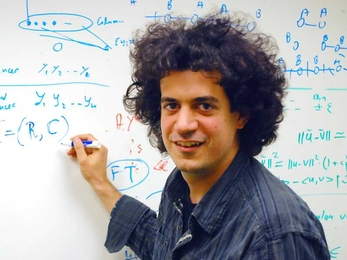
What computer science can teach economics
Constantinos Daskalakis applies the theory of computational complexity to game theory, with consequences in a range of disciplines.

Energy, behavior, and climate: Many answers, no miracles
BP CEO Tony Hayward Discusses the Harsh Realities at MITEI Colloquium
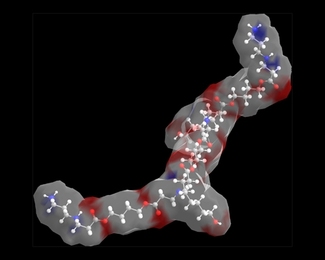
Nanoparticles for gene therapy improve
MIT team’s nanoparticles could become a safer alternative to gene therapy delivered by viruses.

The politics of climate fixes
Judith Layzer says there’s no easy way out when it comes to climate change — but that geo-engineering might be a last-ditch solution.

Blowin' in the wind
Students bring wind-speed monitoring equipment to campus to evaluate potential sites for a wind turbine.

3 Questions: Sergey Paltsev on the costs of climate-change legislation
MIT’s Joint Program on the Science and Policy of Global Change has pegged the annual cost of the proposed cap-and-trade legislation in Congress at $400 per U.S. household. But estimating the cost of doing nothing is far more difficult.

The math gap
MIT economists find a new reason to think that environment, not innate ability, determines how well girls do in math class