Search Stories

How to program unreliable chips
A new language lets coders reason about the trade-off between fidelity of execution and power or time savings in the computers of the future.

Eliminating unexplained traffic jams
If integrated into adaptive cruise-control systems, a new algorithm could mitigate the type of freeway backup that seems to occur for no reason.

Building culture in digital media
Fox Harrell’s new book presents a ‘manifesto’ detailing how computing can create powerful new forms of expression and culture.

Automatic speaker tracking in audio recordings
A new system dispenses with the human annotation of training data required by its predecessors but achieves comparable results.
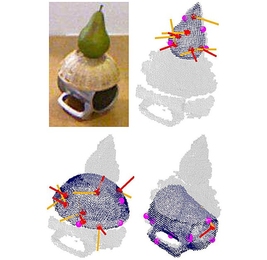
Better robot vision
A neglected statistical tool could help robots better understand the objects in the world around them.
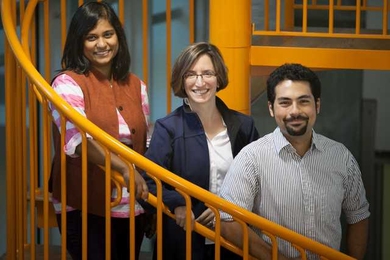
Taking a new look at subway map design
CSAIL researchers are using a computational model that better understands peripheral vision to test the usability of MBTA subway maps.
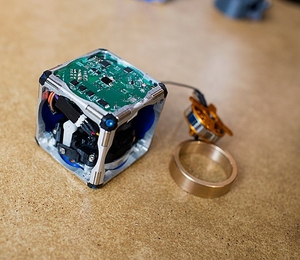
Surprisingly simple scheme for self-assembling robots
Small cubes with no exterior moving parts can propel themselves forward, jump on top of each other, and snap together to form arbitrary shapes.

Building disaster-relief phone apps on the fly
Researchers combine powerful new Web standards with the intuitive, graphical MIT App Inventor to aid relief workers with little programming expertise.

3 Questions: Scott Kemp on North Korea’s nuclear program
New study suggests that the secretive rogue state may have found a way to circumvent international controls on nuclear materials.
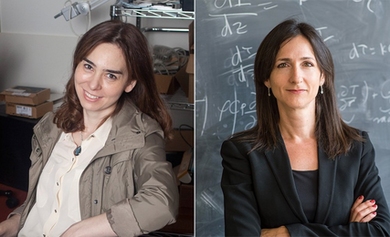
Dina Katabi and Sara Seager win MacArthur ‘genius grants’
Two MIT professors are among 24 recipients nationwide of this year’s unrestricted $625,000 prizes from the MacArthur Foundation.

Bringing ‘common sense’ to text analytics
Luminoso Technologies uses artificial-intelligence research as a commercial springboard.
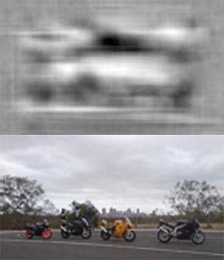
Teaching computers to see — by learning to see like computers
By translating images into the language spoken by object-recognition systems, then translating them back, researchers hope to explain the systems’ failures.