Too much information? MIT Sloan marketing professor Catherine Tucker analyzes the boundaries of privacy in a connected world. October 2, 2012 Read full story →
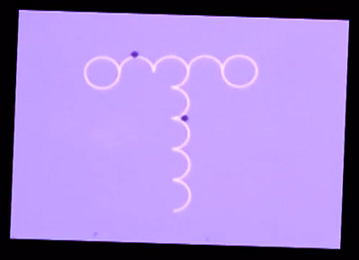
Oscillating microscopic beads could be key to biolab on a chip MIT team finds way to manipulate and measure magnetic particles without contact, potentially enabling multiple medical tests on a tiny device. September 25, 2012 Read full story →
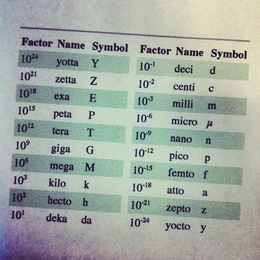
Explained: Femtoseconds and attoseconds As electronic and optical devices get ever faster, terms for ever-smaller increments of time are coming into wider use. September 18, 2012 Read full story →
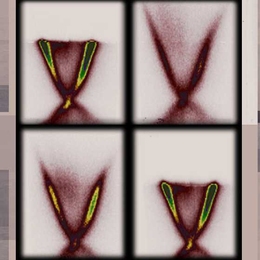
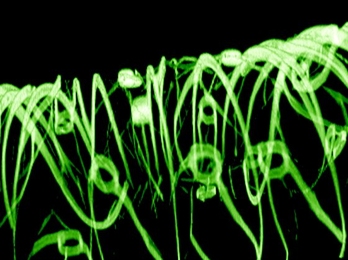
Watching electrons move at high speed New MIT system allows femtosecond-resolution movie of electrons in a topological insulator, a promising new electronic material. September 18, 2012 Read full story →
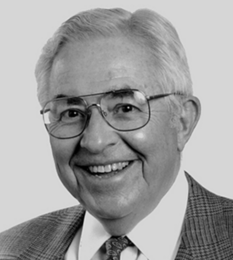
Fujimoto, Swanson awarded the 2012 António Champalimaud Vision Award Share honor with colleagues for pioneering work in the development of optical coherence tomography. September 17, 2012 Read full story →
The Edgerton Center turns 20 Professor J. Kim Vandiver on the history and future of the Edgerton Center. September 17, 2012 Read full story →
Leonard A. Gould, EECS emeritus professor, dies at 85 Joined MIT faculty in 1953; studied control problems and dynamic modeling. September 13, 2012 Read full story →
U.S. News ranks MIT sixth overall among U.S. universities Institute’s undergraduate engineering program is again ranked No. 1; undergraduate business program is No. 2. September 12, 2012 Read full story →
Understanding gambling addiction For machine gamblers, it’s not whether they win or lose — it’s how much they play the game. September 4, 2012 Read full story →
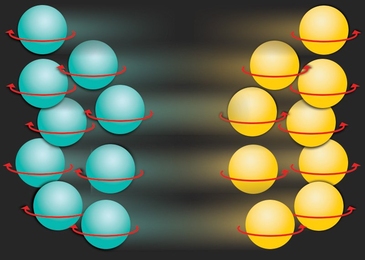
A one-way street for spinning atoms Work correlating ultracold atoms’ spin with their direction of motion may help physicists model new circuit devices and unusual phases of matter. August 30, 2012 Read full story →
Merging tissue and electronics New tissue scaffold could be used for drug development and implantable therapeutic devices. August 27, 2012 Read full story →
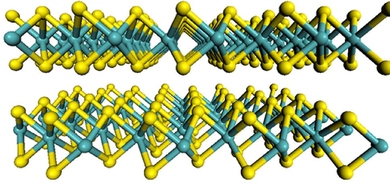
One-molecule-thick material has big advantages MIT researchers produce complex electronic circuits from molybdenum disulfide, a material that could have many more applications. August 23, 2012 Read full story →
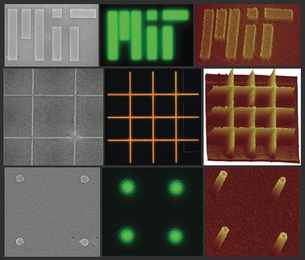
Patterning defect-free nanocrystal films with nanometer resolution New process developed at MIT could enable better LED displays, solar cells and biosensors — and foster basic physics research. August 20, 2012 Read full story →