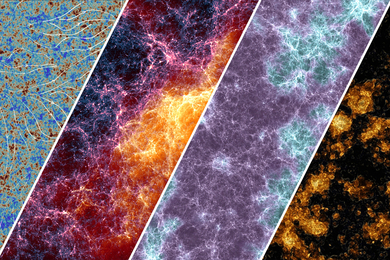
The new simulation tracks dark matter, galaxies, stars, and cosmic structures over the universe’s first 2 billion years, in greater detail and volume than ever before.
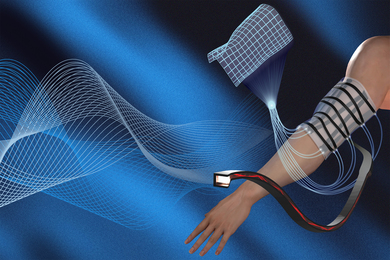
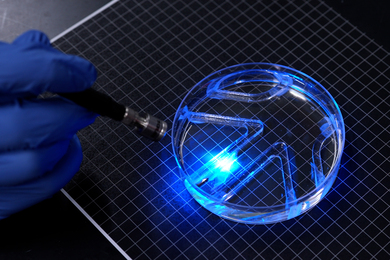
Developed by MIT engineers, this flexible material could be used as a wearable, motion-monitoring “skin” in physical therapy, virtual reality, and gaming.
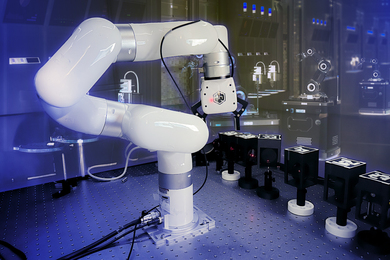
The autonomous system could speed up testing of high-tech materials for applications such as solar cells, sensors, video displays, and quantum technologies.
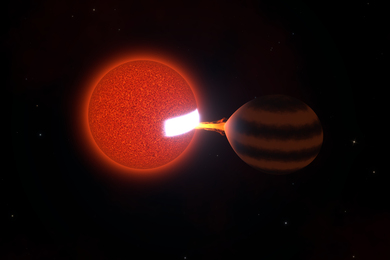
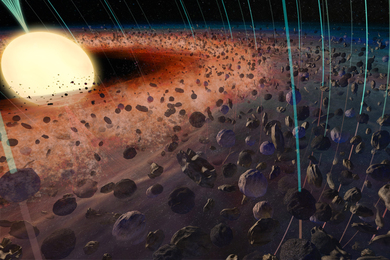
The mashup of a black hole and an enormous star has never been seen before and could explain the mysterious little red dots often found in deep-space images.