Search Stories

Computer learns language by playing games
By basing its strategies on the text of a manual, a computer infers the meanings of words without human supervision.

Health care of the future
The Clinical Decision Making Group looks to advance health care by applying natural-language processing techniques to make better sense of medical records.
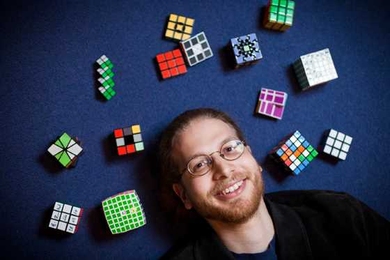
The math of the Rubik’s cube
New research establishes the relationship between the number of squares in a Rubik’s-cube-type puzzle and the maximum number of moves required to solve it.

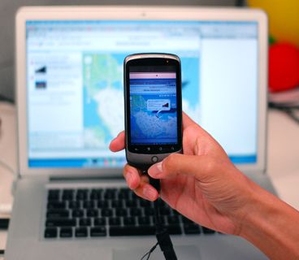
You can take it with you
A new system lets you transfer open applications between a computer and a cellphone simply by pointing the phone’s camera at the computer’s screen.

Faster computer graphics
Digitally mimicking the photographic blur caused by moving objects is surprisingly hard, but new research offers ways to make it easier.

Streamlined rules for robots
New algorithms make it easier to write rules for distributed-computing systems, such as networks of sensors, servers or robots.
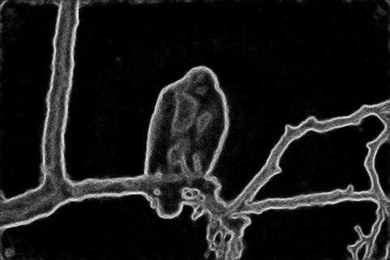
Finding an edge
An algorithm for identifying the boundaries of objects in digital images is 50,000 times more efficient than its predecessor.
School of Engineering honors staff with Infinite Mile Awards
11th annual ceremony recognizes outstanding employee contributions.
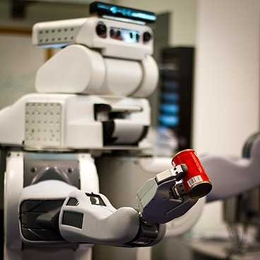
Honing household helpers
MIT computer scientists work toward improving robots’ ability to plan and perform complex actions, domestically and elsewhere.

What makes an image memorable?
Hint: We tend to remember pictures of people much better than wide open spaces.
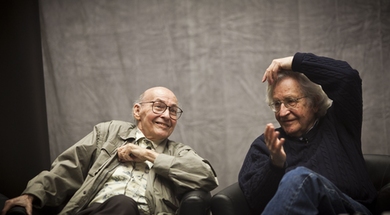
Of minds and machines
Final installment of MIT’s 150th anniversary symposia explores intelligence — both human and artificial.

Demaine’s artwork selected for Smithsonian exhibit
Part of the 40 Under 40: Craft Futures exhibition, which will run starting in 2012.
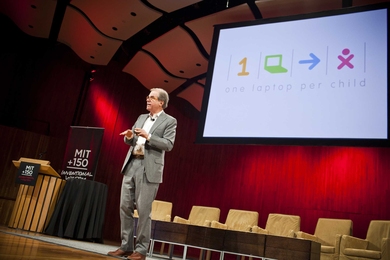
Information Age
As part of MIT’s 150th-birthday celebration, computer science luminaries — many from MIT's faculty — gathered on campus for a two-day symposium.