In the World: Health care in the palm of a hand MIT-led student team develops mobile-device software to help improve health-care accessibility in remote regions. September 27, 2010 Read full story →
Shape-shifting robots Self-folding sheets of a plastic-like material point the way to robots that can assume any conceivable 3-D structure. August 5, 2010 Read full story →
A plane that lands like a bird An innovative control system allows a foam glider to touch down on a perch or a wire like a pet parakeet. July 20, 2010 Read full story →
Broadband picture may not be so bleak A new study disputes the claim that Internet data rates in the U.S. are only half as high as advertised; study’s authors call for better data. July 16, 2010 Read full story →
Computer automatically deciphers ancient language A new system that took a couple hours to decipher much of the ancient language Ugaritic could help improve online translation software. June 30, 2010 Read full story →
Toward the Semantic Web A new standard from the World Wide Web Consortium brings the Web a step closer to realizing the vision of its inventor, Tim Berners-Lee. June 22, 2010 Read full story →
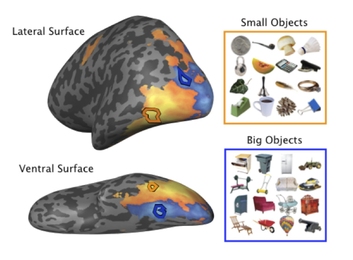
How the brain recognizes objects A new computational model sheds light on the workings of the human visual system and could help advance artificial-intelligence research, too. June 7, 2010 Read full story →
Gesture-based computing on the cheap With a single piece of inexpensive hardware — a multicolored glove — MIT researchers are making Minority Report-style interfaces more accessible. May 20, 2010 Read full story →
Rivest wins faculty’s Killian Award MIT encryption pioneer recognized for ‘extraordinary’ contributions in computer science May 19, 2010 Read full story →
Machines that learn better New math will make it much easier to build machine-learning systems that tackle a wider range of problems. May 18, 2010 Read full story →
When good enough is better By exploiting a simple but counterintuitive trick, a new system finds sections of computer programs where accuracy can be traded for speed. May 13, 2010 Read full story →
Seeing the forest for the trees Object recognition systems that break images into ever smaller parts should be much more efficient and may shed light on how the brain works. May 7, 2010 Read full story →
Should Google stay in China? A panel discussion suggests that if the goal is to promote Chinese democracy, a censored Google is better than no Google at all. April 30, 2010 Read full story →
Computing, Sudoku-style Computer scientists generally see computation as something like following a recipe. Alexey Radul sees it as more like a puzzle with interconnecting parts. April 28, 2010 Read full story →