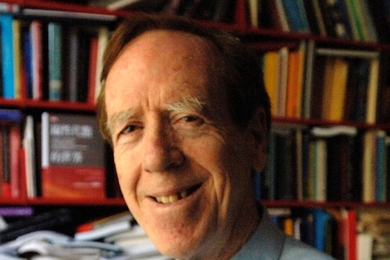
MIT announces Professor Gilbert Strang as first MathWorks Professor of Mathematics
Endowment underscores value commercial industry places on science, technology, engineering and mathematics education
Endowment underscores value commercial industry places on science, technology, engineering and mathematics education
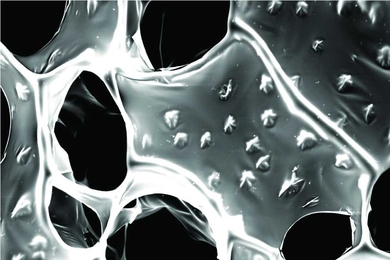
New cardiac patch uses gold nanowires to enhance electrical signaling between cells, a promising step toward better treatment for heart-attack patients.

MIT physicist Peter Fisher answers questions about reports that experiments in Switzerland and Italy show neutrinos can break light’s speed limit.
Brain-imaging study suggests that reading difficulties are the same regardless of overall intelligence — and that more children could benefit from support in school.
Neuroscientists find that Ritalin could help bring surgical patients out of surgery much more quickly, with less grogginess.
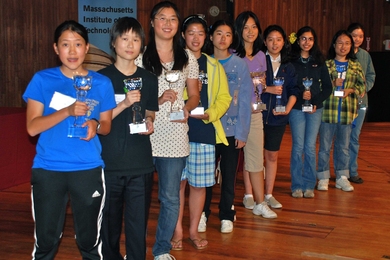
More than 250 high school girls converge on campus for competition and community.
Grants support biomedical research that will ‘challenge the status quo’ with risk-taking, innovative ideas.

MIT and the Broad Institute open their doors to the judicial community for a workshop at the intersection of science and the law.
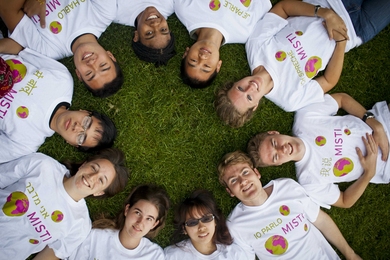
MIT program sends students abroad for experiences tailor-made for their academic and professional interests.

Sept. 11, 2001, is a day that lives in infamy. But how accurately do we remember it?

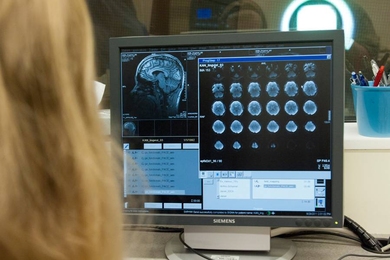
New study pinpoints areas of the brain used exclusively for language, providing a partial answer to a longstanding debate in cognitive science.
MIT researchers improve upon methods to model atmospheric aerosols.