Hacking microbes
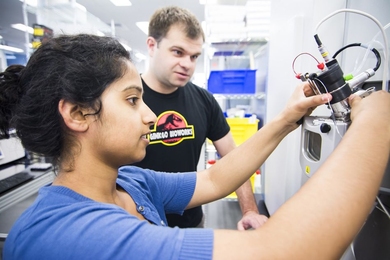
Startup’s engineered yeast helps clients produce fragrances and flavors more efficiently.
Startup’s engineered yeast helps clients produce fragrances and flavors more efficiently.
New technique offers precise manipulation of when and where genes are targeted.
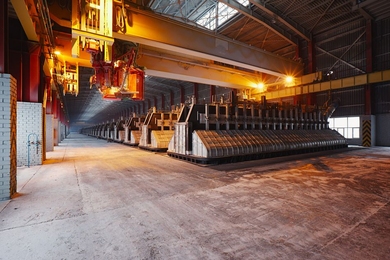
Using electricity rather than heat can reduce both energy costs and greenhouse gas emissions.
MegaMIMO system from the Computer Science and Artificial Intelligence Lab speeds data transfer by coordinating multiple routers at the same time.

New design should enable much more flexible traffic management, without sacrificing speed.

A talented scholar and athlete, the MIT rising senior “never failed to see the good in others.”

Professor Philip Gschwend discusses the importance of comprehensive systems approaches to curing environmental ills.

Key flow mechanisms, crucial to carbon sequestration and fuel-cell operation, have been visualized.
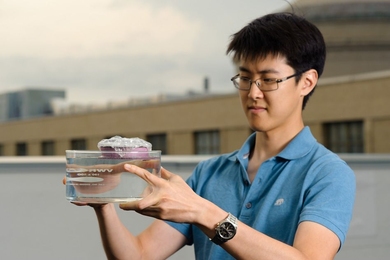
Bubble-wrapped structure requires no mirrors or lenses to focus the sun’s heat.
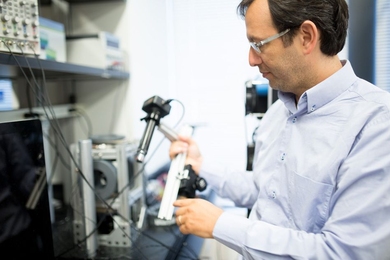
Alfredo Alexander-Katz probes systems in action, from clotting blood to walking molecules.
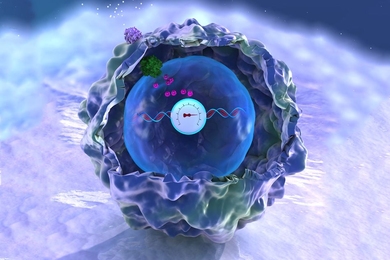
Engineers program human cells to store complex histories in their DNA.
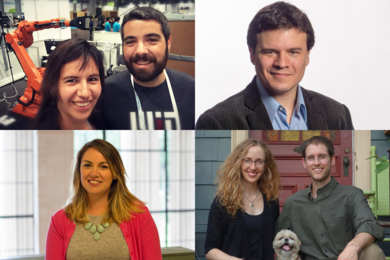
Areas of expertise include robotics, writing, physics, jewelry-making, and breakfast cereal.
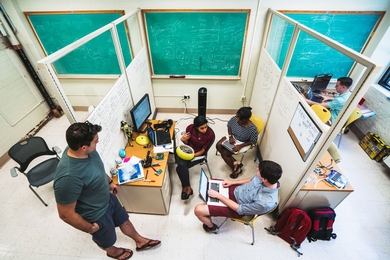
Students in a new innovation program are using the summer, their new connections, and their funding to move their ideas forward.
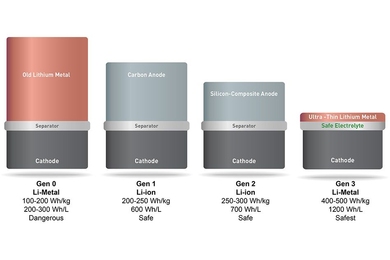
New lithium metal batteries could make smartphones, drones, and electric cars last twice as long.
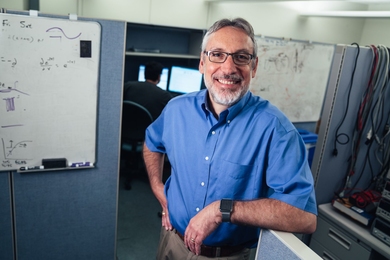
Boning succeeds David Simchi-Levi as engineering faculty director of master’s program.