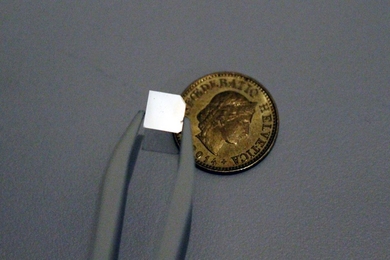
Scientists observe a single quantum vibration under ordinary conditions
Studying a common material at room temperature, researchers bring quantum behavior “closer to our daily life.”
Studying a common material at room temperature, researchers bring quantum behavior “closer to our daily life.”

MIT engineers develop a model that predicts how the cornstarch-water mixture turns from liquid to solid, and back again.

The MIT Concrete Sustainability Hub will continue to study the environmental impacts of concrete and the hazard resilience of the built environment.
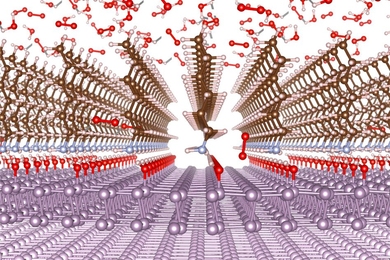
Ultrathin coating could protect 2D materials from corrosion, enabling their use in optics and electronics.

Associate Professor Juejun Hu shines a light on the impact machine learning and AI are having on materials science and engineering.
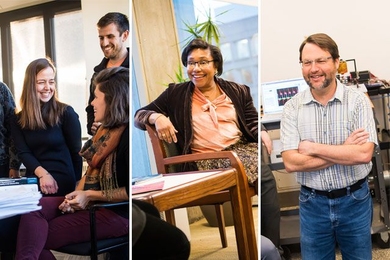
Gabriella Carolini, Paula Hammond, and David Trumper honored as Committed to Caring graduate student mentors.
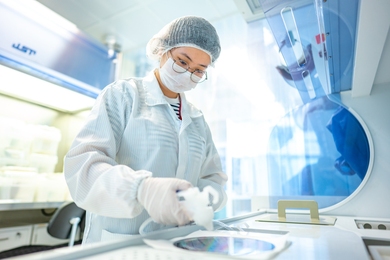
New method from MIT’s research enterprise in Singapore paves the way for improved optoelectronic and 5G devices.

By tweaking bacteriophage genomes, MIT team creates a new weapon to combat infection.

Connected devices can now share position information, even in noisy, GPS-denied areas.
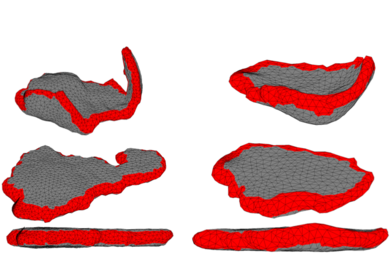
New technique stretches out MRI scans of placentas so they can be more accurately analyzed, and shows the potential of MRI for pregnancy monitoring.
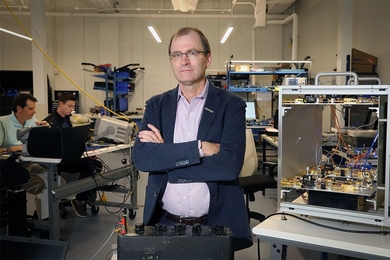
Professor’s startup brings millimeter-scale location tracking to factories, ports, and other industrial environments.
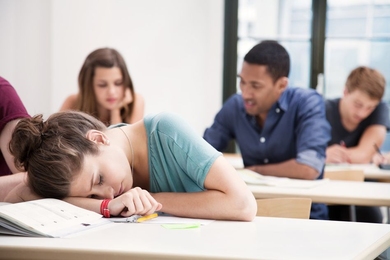
Data on MIT students underscore the importance of getting enough sleep; bedtime also matters.

MIT researchers employ low-cost sensors to detect and track the origins of air pollutants in India.
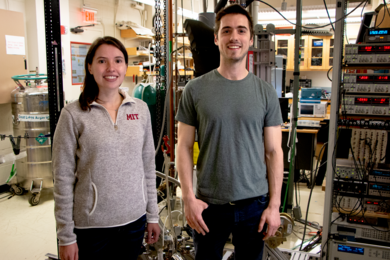
MIT researchers discover why magnetism in certain materials is different in atomically thin layers and their bulk forms.

Five software and hardware projects will launch the MIT.nano Immersion Lab Gaming Program.