Scientists find ozone depletion began decades before discovery of ozone hole
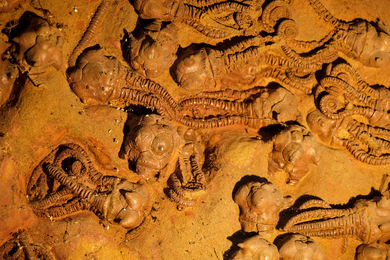
Using modern tools, they also determined that carbon tetrachloride, used as a dry-cleaning and degreasing agent as early as the 1930s, was at the root of early ozone loss.
A new model links Earth’s mass extinctions to mismatches between rates of environmental change and biological adaptation.
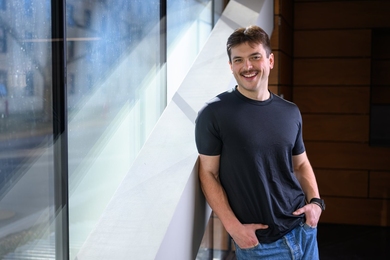
Fourth-year PhD candidate Perrin Davidson studies the carbon cycle to understand how the planet responds to global disturbances.
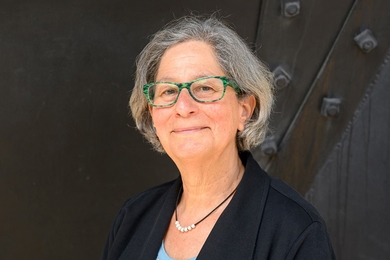
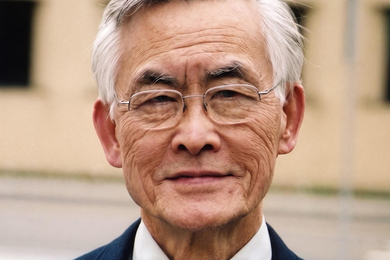
The MIT professor’s groundbreaking work on atmospheric chemistry helped lay steps towards recovery of the ozone layer and demonstrated the lasting impacts of carbon emissions on Earth’s climate.
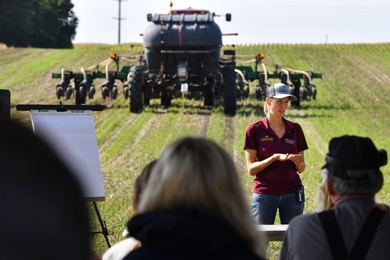
A new impact report shows how the MIT Environmental Solutions Journalism Fellowship has brought community-centered climate coverage to nearly 3 million readers and listeners.
Study shows the tradeoff between conservation and growth is less stark with a locally adjusted policy featuring both tradeable offsets and taxes.
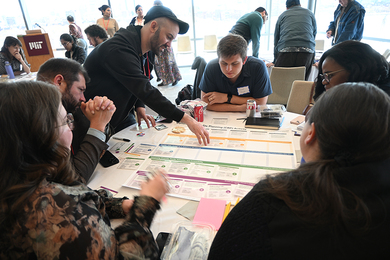
Living Climate Futures Symposium explores climate challenges and solutions at the community level.
MIT senior Nik Sandu bridges scientific research with a strong commitment to teaching and community.
Students developed and pitched local climate stories, then worked with visual journalists from the AP over an intensive four-day weekend.
Akorfa Dagadu, an MIT senior in chemical engineering, learns the importance of community-engaged research and innovation through the PKG Center for Social Impact.
In a nod to the prank that first introduced the smoot, an MIT team rolls out the “klein” in homage to Martin Klein ’62 and playfully renames a beloved Charles River span the “Shortfellow Bridge.”
New research suggests constructing a simple building from interlocking subunits should be mechanically feasible and have a much smaller carbon footprint.
The “EnergAIzer” method generates reliable results in seconds, enabling data center operators to efficiently allocate resources and reduce wasted energy.
Experiments by MIT engineers show rice seeds sprout faster to the sound of rain.
Mitali Chowdhury ’24 and Christina Kim ’24 will pursue graduate studies at Cambridge University in the UK.