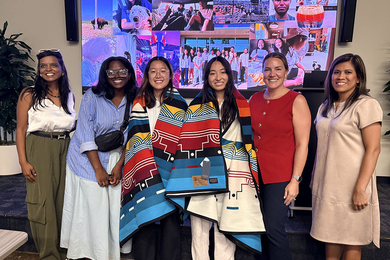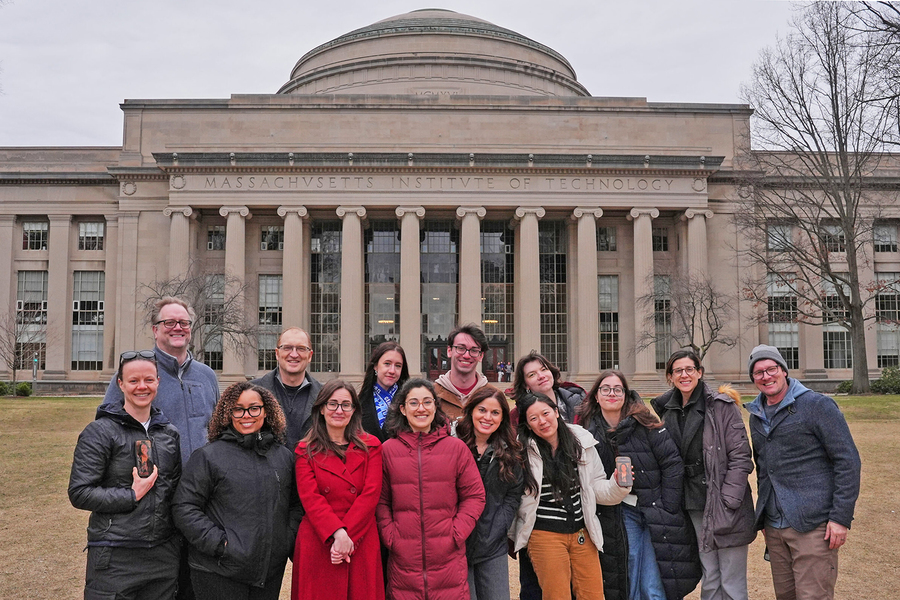
This spring, six reporters from The Associated Press’ climate desk traveled from cities across the United States to work with students from the MIT Graduate Program in Science Writing. Students developed and pitched local climate stories, then, over a four-day intensive weekend, worked with visual journalists from the AP to report and produce their pieces. Articles cover a broad spectrum of environmental topics, ranging from area kelp harvests that are used to produce biofuels to efforts to restore cranberry bogs in environmentally friendly ways, and include visual elements, like photography and videography.
The four collaborative pieces include:
- “How a retired cranberry bog helped change the game for wetland restoration,” by Jamie Jiang and Julia Vaz
- “Planes and ships could run on kelp someday, but there are serious hurdles,” by Zoe Beketova and Ana Georgescu
- “Massachusetts is dumping sewage into waterways. Grassroots organizations are fighting back,” by Ashley D’Souza and Lucie McCormick
- “One of America’s oldest weather observatories shows people the science behind our climate,” by Laura Martin Agudelo and Alex Megerle
“This workshop was an intense few days that offered a unique opportunity for MIT journalists to get feedback while in the field, reporting. The students brought enthusiasm and passion to the reporting, heading out before the sun came up and working long into the nights over the weekend for stories in the Boston area and beyond,” says AP’s Climate Photo Editor Alyssa Goodman, the workshop’s lead organizer. “For the AP team members who participated, it was also a rewarding opportunity, allowing us to share our passion for climate storytelling while getting to know these students, watching them build strong stories and gain experiences that will help them as they continue in journalism.”
The collaboration is unique, even among journalism programs. The Associated Press is one of the most prestigious, longest-running news wire services in existence. Nearly 4 billion people worldwide come in contact with AP journalism every day. The publication has won 59 Pulitzer Prizes, including 36 in photojournalism.
MIT student reporters say that the opportunity to directly work with journalists from the AP’s climate team and have their own stories published has been a highlight of their time in the Graduate Program in Science Writing.
“It was great to be in the field with a reporter and photographer from the AP News team, learning directly from her as the reporting unfolded,” says Zoe Beketova, whose story focused on kelp biofuels. “That kind of expertise is difficult to get in a static classroom setting, and I think my team learned a lot.”
Ana Georgescu says that the experience of working with the AP team was “like stepping into a real newsroom.” Georgescu adds that coordinating with AP editors and reporting teams in real time and under tight deadlines provided valuable on-the-ground experience.
“What made the biggest difference for me was being in the field alongside an experienced photojournalist and seeing how they read a scene in practice,” she says. “We were able to get immediate feedback on how we directed subjects, which scenes we chose, and how we integrated photography into the reporting process. That kind of hands-on, in-the-moment experience was incredibly helpful, and it’s made me really excited to keep exploring climate stories, as well as the visual side of journalism.”