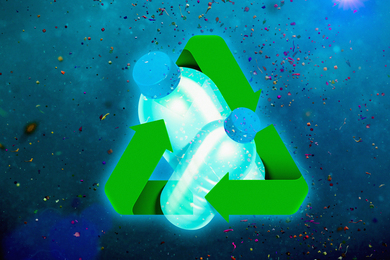
Ocean bacteria team up to break down biodegradable plastic
MIT researchers uncovered the roles of bacterial species from the environment as they consume biodegradable plastic.
MIT researchers uncovered the roles of bacterial species from the environment as they consume biodegradable plastic.

Professor Jesse Thaler describes a vision for a two-way bridge between artificial intelligence and the mathematical and physical sciences — one that promises to advance both.
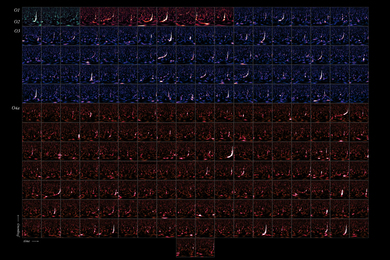
The latest crop of space-time wobbles includes a variety of heavy, fast-spinning, and lopsided colliding black holes.
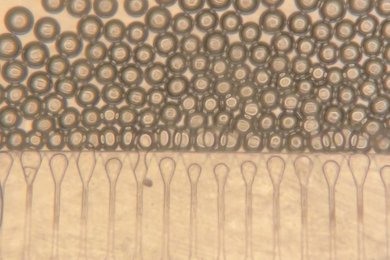
The engineered tissue grafts could take on the liver’s function and help thousands of people with liver failure.
By leveraging idle computing time, researchers can double the speed of model training while preserving accuracy.
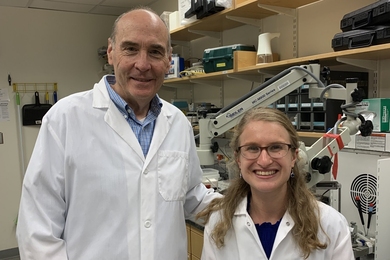
Researchers find mice modeling the autism spectrum disorder fragile X syndrome exhibit the same pattern of differences in low-frequency waves as humans — a new marker for treatment studies.

By minimizing the need to drive around looking for a parking spot, this technique can save drivers up to 35 minutes — and give them a realistic estimate of total travel time.
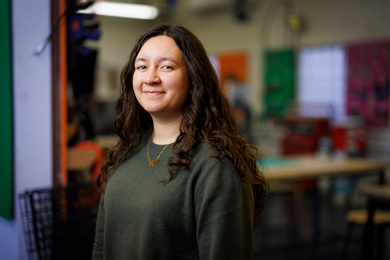
Through research with MIT D-Lab, MIT engineering student Kiyoko “Kik” Hayano worked with Keo Fish Farms to build a model for regenerative water systems.

Removing just a tiny fraction of the crowdsourced data that informs online ranking platforms can significantly change the results.
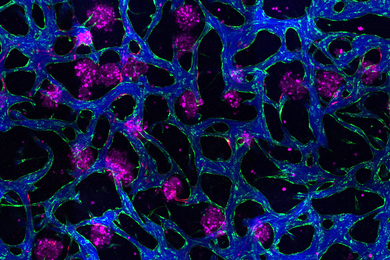
Two models more accurately replicate the physiology of the liver, offering a new way to test treatments for fat buildup.
MIT researchers’ DiffSyn model offers recipes for synthesizing new materials, enabling faster experimentation and a shorter journey from hypothesis to use.
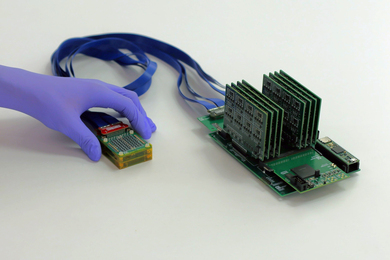
The new system could be used at home or in doctors’ offices to scan people who are at high risk for breast cancer.
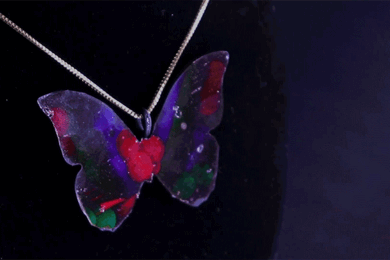
“MorphoChrome,” developed at MIT, pairs software with a handheld device to make everyday objects iridescent.
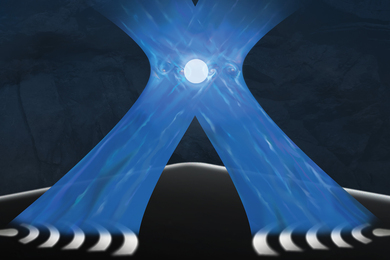
New technique could improve the scalability of trapped-ion quantum computers, an essential step toward making them practically useful.
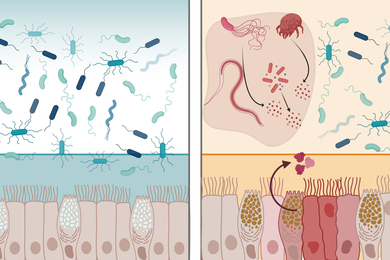
The protein, known as intelectin-2, also helps to strengthen the mucus barrier lining the digestive tract.