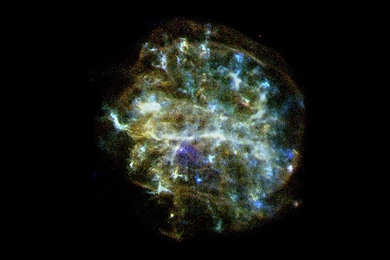
Researchers identify one of the earliest stars in the universe
The discovery suggests that the very first generation of stars may not have been as powerful as previously thought.
The discovery suggests that the very first generation of stars may not have been as powerful as previously thought.
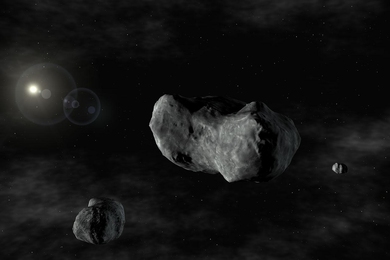
A new map of the solar system’s asteroids shows more diversity than previously thought.
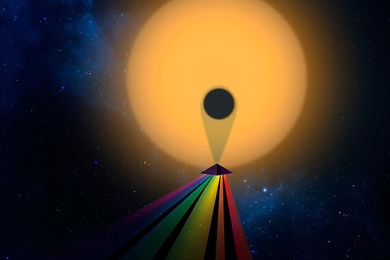
Method will help scientists determine the mass of exoplanets that are not measurable in any other way.
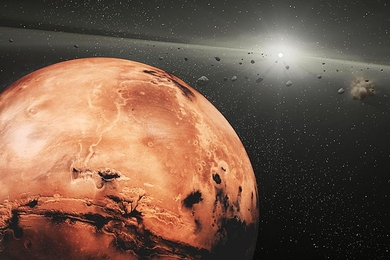
Scientists find that Mars, not Earth, shakes up some near-Earth asteroids.
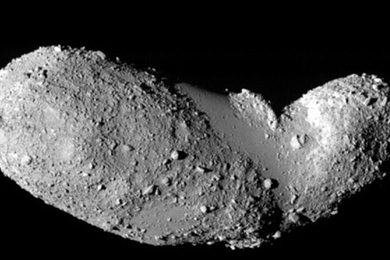
The largest asteroid is 12 miles in diameter, but poses little immediate threat to Earth.
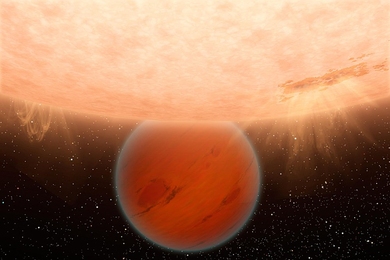
While too hot to support life, Kepler 78b is roughly the size of the Earth.
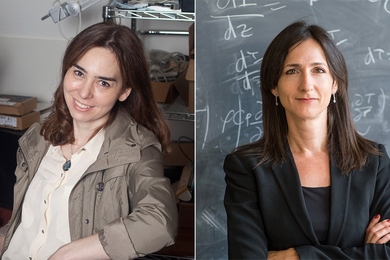
Two MIT professors are among 24 recipients nationwide of this year’s unrestricted $625,000 prizes from the MacArthur Foundation.
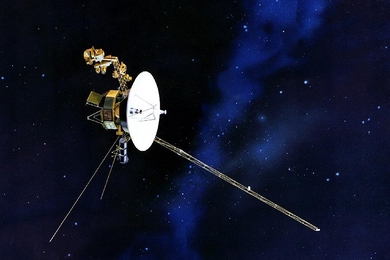
Beyond the solar system, a probe launched in 1977 is likely to find a cold, dense sea of cosmic rays.
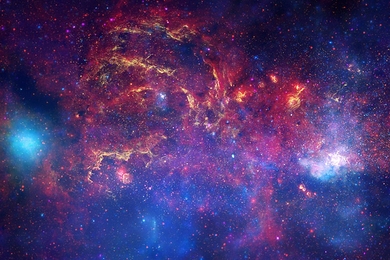
Researchers find material ejects itself before black hole can devour it.
Study finds behavior of the turbulent flow of superfluids is opposite that of ordinary fluids.
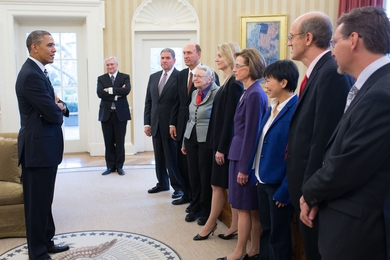
The three MIT scientists are among six winners of the 2012 Kavli Prizes to visit the White House.
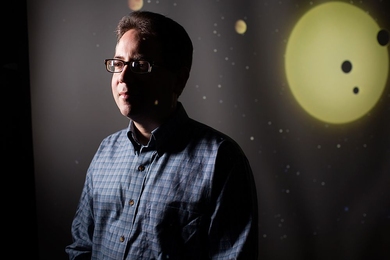
Josh Winn’s hunt for exoplanets may someday reveal habitable, Earth-like worlds.
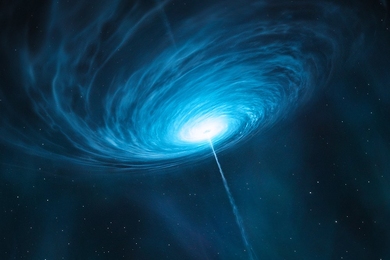
The very first stars may have turned on when the universe was 750 million years old.
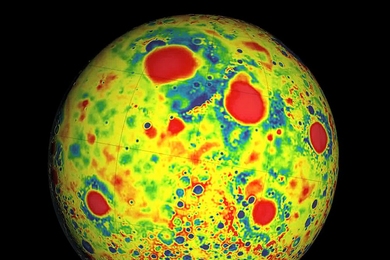
Twin spacecraft create a highly detailed gravity map of the moon, finding an interior pulverized by early impacts.
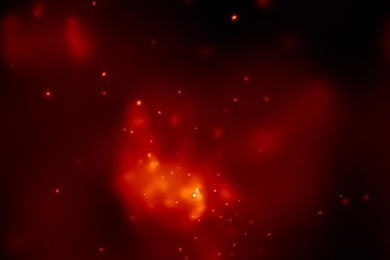
Researchers detect the brightest flare ever observed in our galaxy’s black hole.