
How well can computers connect symptoms to diseases?
Models that map these relationships based on patient data require fine-tuning for certain conditions, study shows.
Models that map these relationships based on patient data require fine-tuning for certain conditions, study shows.

Two staff members from Lincoln Laboratory and a professor in the School of Engineering are recognized for their influential research.

Using mathematical theory, Virginia Williams coaxes algorithms to run faster or proves they’ve hit their maximum speed.
Machine-learning system should enable developers to improve computing efficiency in a range of applications.
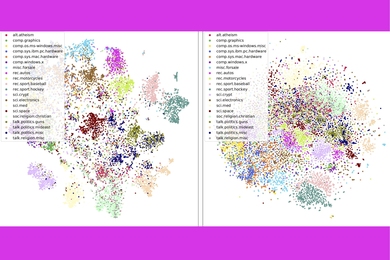
As natural language processing techniques improve, suggestions are getting speedier and more relevant.
![Designed by an MIT team using artificial intelligence, “The [R]evolution of Hip Hop Breakbeat Narratives” is an immersive art installation designed for the forthcoming Universal Hip Hop Museum in New York City.](/sites/default/files/styles/term_page__news_article/public/images/201912/mit-hip-hop-museum-breakbeat-narratives-A1.jpg?itok=yVVI7kZi)
With its centerpiece exhibit for the forthcoming Universal Hip Hop Museum, an MIT team uses artificial intelligence to explore the rich history of hip hop music.

Using limited data, this automated system predicts a company’s quarterly sales.

Objects are posed in varied positions and shot at odd angles to spur new AI techniques.
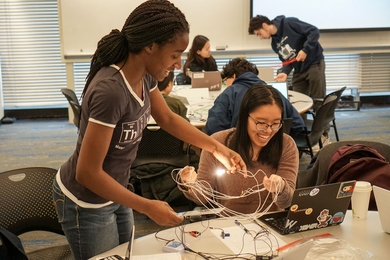
In 8.02 (Electricity and Magnetism), students explore the practical application of electromagnetic concepts.
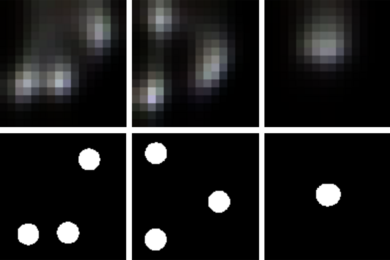
A new computational imaging method could change how we view hidden information in scenes.
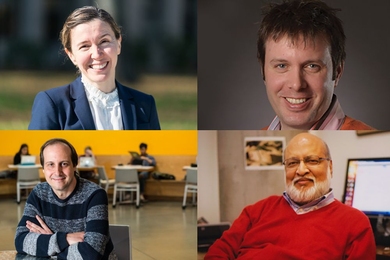
The Institute's largest academic department reorganizes with new leadership as part of the formation of the MIT Schwarzman College of Computing.
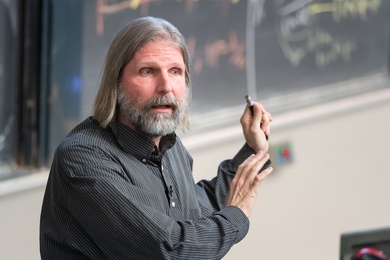
Cornell University professor and physicist uses nanoscale parts to create smart, active microbots.

Two alumni have also been selected; the scholars will study global affairs at Beijing’s Tsinghua University.

Model registers “surprise” when objects in a scene do something unexpected, which could be used to build smarter AI.
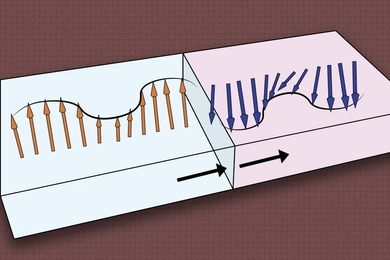
Circuit design offers a path to “spintronic” devices that use little electricity and generate practically no heat.