
Department
Electrical Engineering and Computer Science
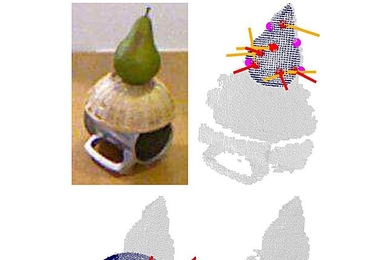
Better robot vision
A neglected statistical tool could help robots better understand the objects in the world around them.
MITx introduces ‘XSeries’ course-sequence certificates on edX
EdX also introduces new ID verification service.
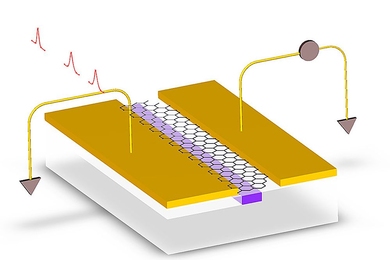
Graphene could yield cheaper optical chips
Researchers show that graphene — atom-thick sheets of carbon — could be used in photodetectors, devices that translate optical signals to electrical.
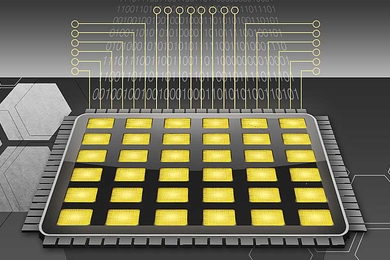
Managing multicore memory
MIT research shows that it may be time to let software, rather than hardware, manage the high-speed on-chip memory banks known as ‘caches.’
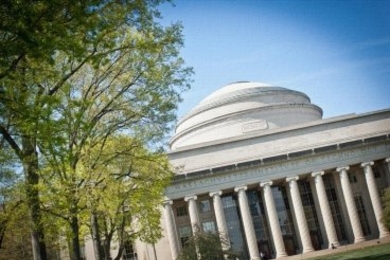
U.S. News ranks MIT seventh overall among U.S. universities
Institute’s undergraduate engineering program is again ranked No. 1; undergraduate business program is No. 2.
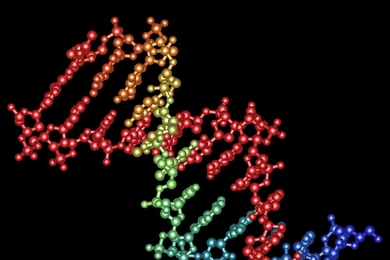
An easier way to control genes
New method for turning genes on and off could enable more complex synthetic biology circuits.
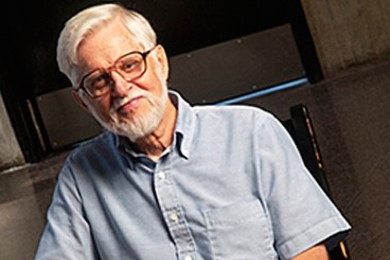
Kenneth Stevens, professor emeritus in EECS, dies at 89
Stevens’ pioneering work as the originator of the quantal theory of speech helped earn him the National Medal of Science.
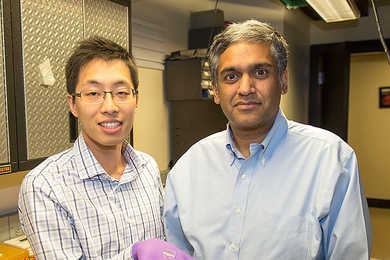
Detecting early-stage malarial infection
New prototype device recognizes electrical properties of infected cells as signatures of disease.
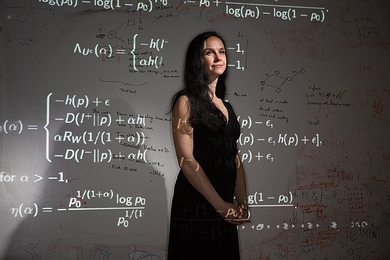
Encryption is less secure than we thought
For 65 years, most information-theoretic analyses of cryptographic systems have made a mathematical assumption that turns out to be wrong.
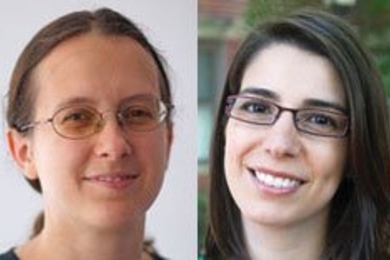
Four from MIT named to ‘AI’s 10 to Watch’ list
Ranking celebrates rising researchers in the field of artificial intelligence
Commemorating the LORAN
One of the MIT Radiation Lab’s first creations, a radio navigation system, recognized by the IEEE as a ‘milestone’ in engineering.
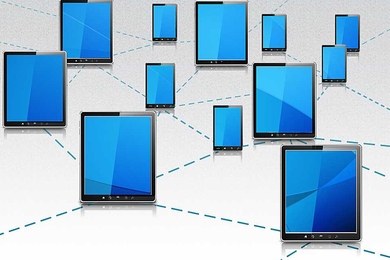
Reliable communication, unreliable networks
A new model of wireless networks that better represents the real world could lead to more robust communications protocols.

Researchers develop new method for understanding network connections
Technique could be applied to the study of disease, social networks and other diverse fields.