Decoding sugar addiction
Separate neural circuits control sugar cravings and healthy eating, researchers find.
Separate neural circuits control sugar cravings and healthy eating, researchers find.
Discovery could lead to new treatments for cognitive disorders including autism and schizophrenia.
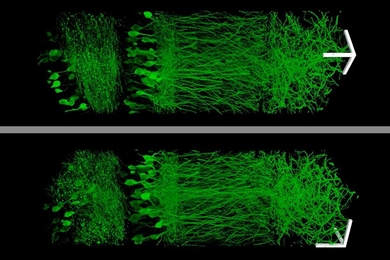
New technique enables nanoscale-resolution microscopy of large biological specimens.

Picower Institute researchers show that different causes of autism and intellectual disability respond to the same treatment.
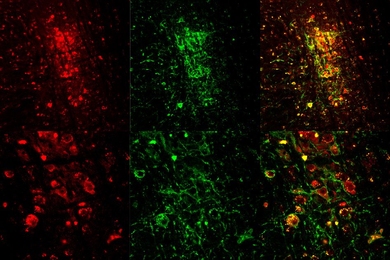
Researchers use optogenetics to trigger REM sleep in mice.

Newest computer neural networks can identify visual objects as well as the primate brain.
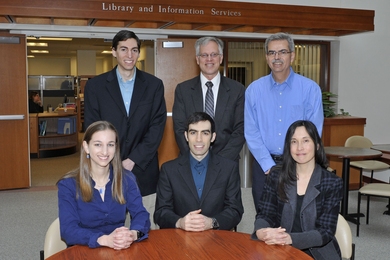
The laboratory's technology for automatic assessment of depression severity earns a second consecutive first place in AVEC subchallenge.
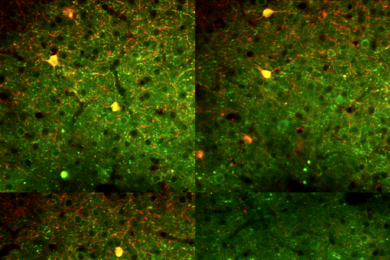
Inhibitory neuron functionality is not an immutable property of cortical cells, but a consequence of more complex network dynamics.
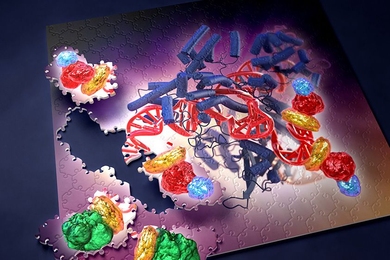
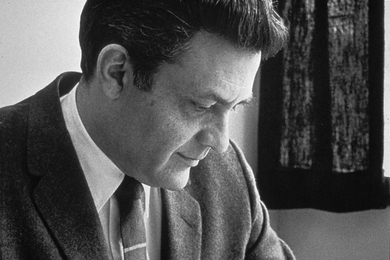
Five innovative, high-risk projects launch with support from Prof. Amar G. Bose Research Grants.
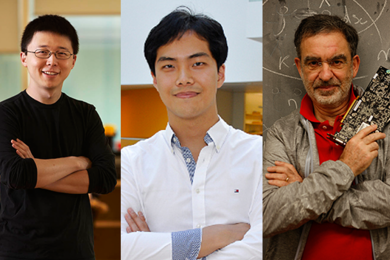
Three neuroscientists at MIT have been selected to receive awards from the Society for Neuroscience.
Researchers suggest autism stems from a reduced ability to make predictions, leading to anxiety.