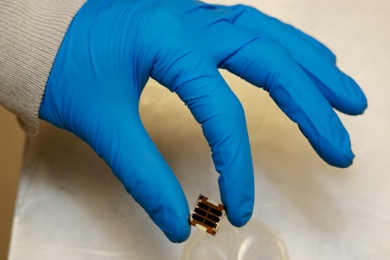
Cheap, flexible solar
Tuning energy levels through surface chemistry shows promise for higher efficiency quantum dot solar cells, MIT graduate student Patrick R. Brown's work shows.
Tuning energy levels through surface chemistry shows promise for higher efficiency quantum dot solar cells, MIT graduate student Patrick R. Brown's work shows.

Circuit that reduces power leakage when transmitters are idle could greatly extend battery life.
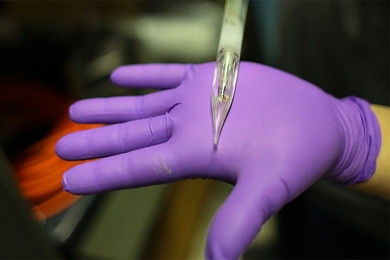
New approach could enable low-cost silicon devices in fibers that could be made into fabrics.
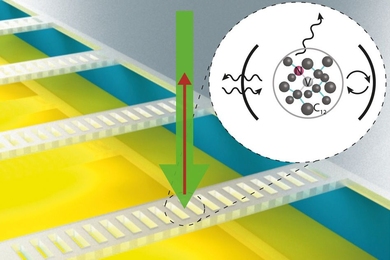
Technique greatly extends duration of fragile quantum states, pointing toward practical quantum computers.
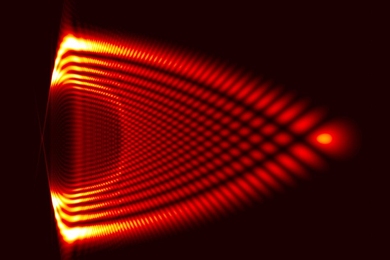
New analysis shows a way to self-propel subatomic particles, extend the lifetime of unstable isotopes.
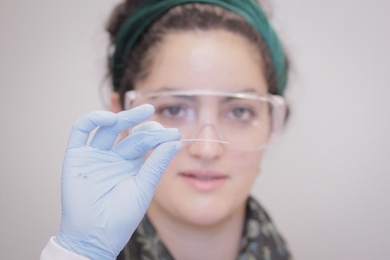
Implanted into the brain or spinal column, they can transmit drugs, light, and electrical signals.
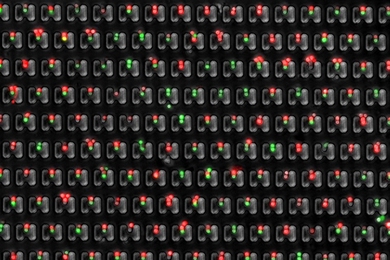
New device allows scientists to glimpse communication between immune cells.
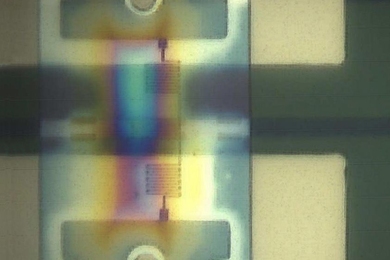
Packing single-photon detectors on an optical chip is a crucial step toward quantum-computational circuits.
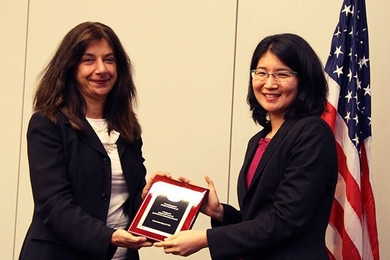
Award honors work on real-time energy-efficient visual data processing for portable media, which will impact elderly-assistance and advanced driver-assistance systems.
Mathematical description of relationship between thickness, temperature, and resistivity could spur advances.
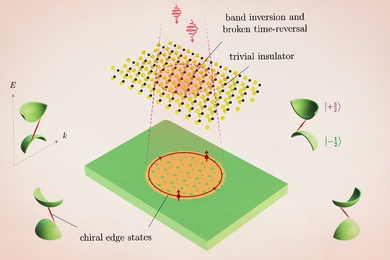
Researchers clear hurdles toward a new kind of 2-D microchip using different electron properties.

Madrid-MIT collaboration recognized for accelerating health technology innovation.

Five innovative, high-risk projects launch with support from Prof. Amar G. Bose Research Grants.

Engineered E. coli can store long-term memories of chemical exposure, other events in their DNA.
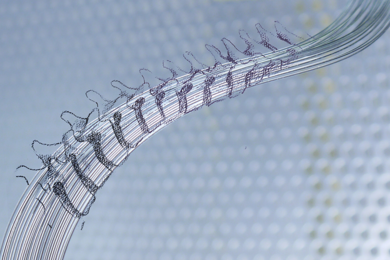
Grad student Chi Lu and colleagues demonstrate a highly flexible polymer probe for triggering spinal-cord neurons with light and simultaneously recording their activity.