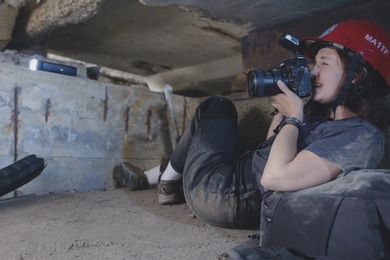
Featured video: Behind the lens at Lincoln Laboratory
Staff photographer Niki Fandel captures the people and technology advancing Lincoln Laboratory’s national security mission.
Staff photographer Niki Fandel captures the people and technology advancing Lincoln Laboratory’s national security mission.

New Audit Division leader brings track record of collaboration, deep knowledge of audit program and MIT operations to role.
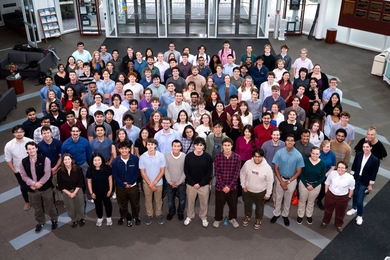
Anna Raymaker and Vivek Jagadeesh tackled cybersecurity threats to ships and inside operating systems, respectively.

Inaugural artist Amy Karle will join astrophysicists at MIT’s Kavli Institute to explore questions about the universe and translate them into an immersive multimedia experience.
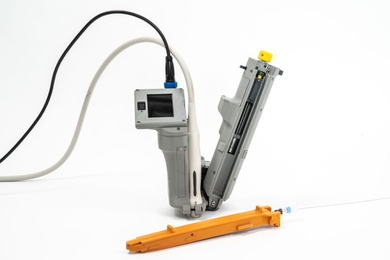
The handheld catheterization device AI-GUIDE, created by Lincoln Laboratory and Massachusetts General Hospital, promises improved health outcomes for injured service members and civilians.
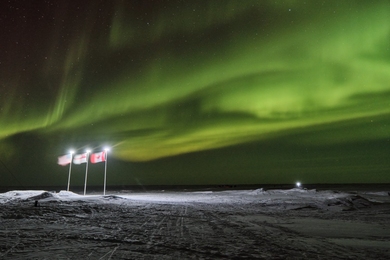
The work is part of a multiyear effort to develop a distributed sensor network for relaying data collected from this critical region.

The modified aircraft will support an ongoing US Air Force program to assess and enhance the survivability of air and space vehicles.
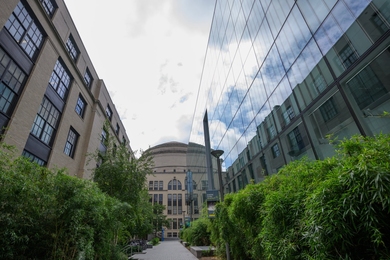
The Institute welcomes its first cohort of QMIT Fellows this fall to advance interdisciplinary quantum research.
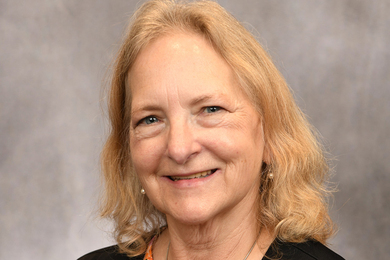
The MIT Haystack Observatory principal research scientist is honored for lifetime contributions to ionospheric research.
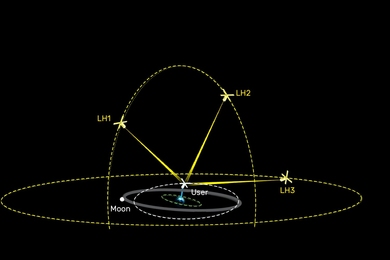
Acting as cooperative optical beacons, the satellites could provide GPS-like navigation and communications support for spacecraft operating across cislunar space.
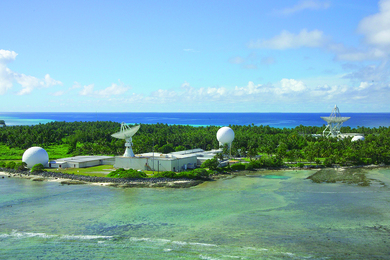
Members of the laboratory community reflect on technology impacts that shaped the United States and the world over the past 75 years.

A new technique produces wafer-scale samples, overcoming a major roadblock to using these materials in quantum technologies.
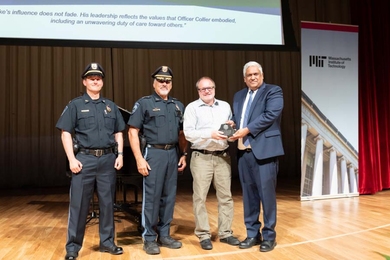
The MIT community celebrated the talent, dedication, and impact of its staff.
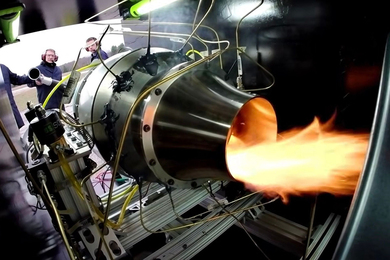
MIT students designed, built, and tested a jet engine with AI copilots, assessing AI’s usefulness in developing high-performance aerospace systems.
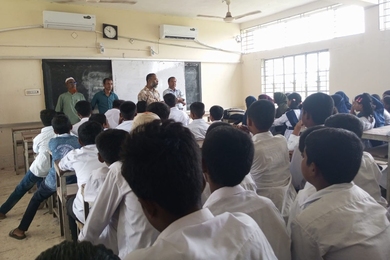
The Jameel Observatory-CREWSnet project opens a solar-powered “adaptation fortress” in Satkhira, a region facing severe and growing climate threats.