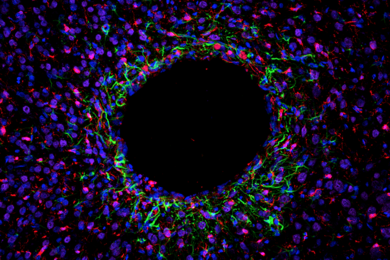
Neural implants modulate microstructures in the brain with pinpoint accuracy
MIT researchers develop new tools to enable targeted delivery of drugs to deep brain structures through implanted microprobes.
MIT researchers develop new tools to enable targeted delivery of drugs to deep brain structures through implanted microprobes.
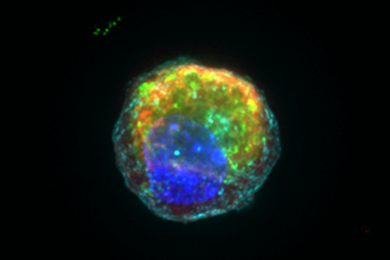
Researchers generate an intestinal cell mimic that can be harnessed in studies of diseases such as inflammatory bowel disease.
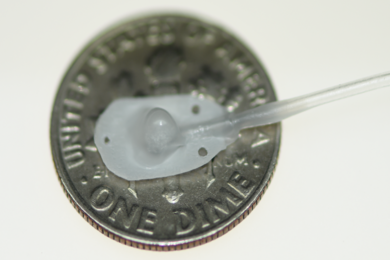
“Therepi” device attaches directly to damaged heart, enabling delivery of medicine from a port under a patient’s skin to augment cardiac function.
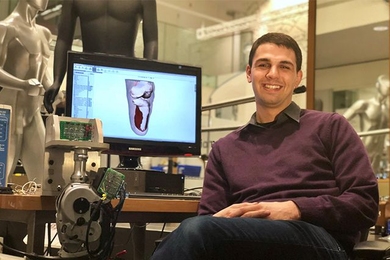
Award honors top collegiate inventors in the United States.

Longtime biology professor and expert in hemoglobin synthesis was committed to the integration of biomedical research, education, and medical practice.

A faculty member at MIT and Harvard and a practicing cardiologist, Edelman will lead MIT’s hub for health science research, innovation, and education.

Award honors immigrants’ contributions to the United States.
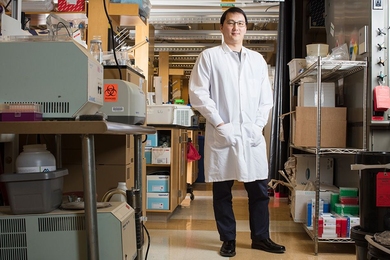
Synthetic biologist hopes to develop treatments for cancer and other diseases.
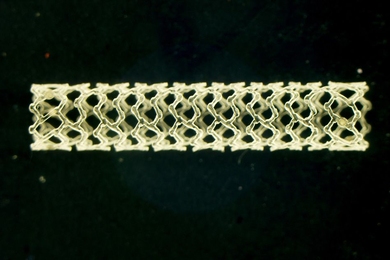
Microscopic flaws in material structure can lead to stent deformation after implantation.
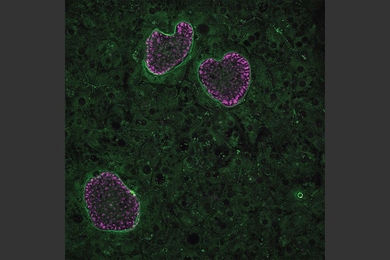
Novel technology could allow researchers to develop and test new antimalaria drugs.
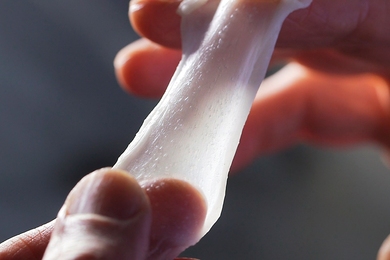
Dennis Orgill SM ’80, PhD ’83 applies mechanical engineering principles to the operating room.
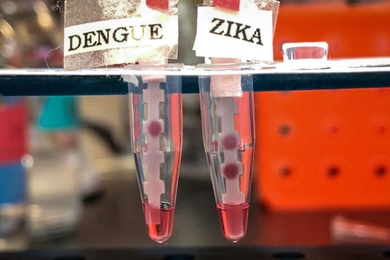
Paper-based diagnostic avoids false positives from Dengue fever and other related viruses.
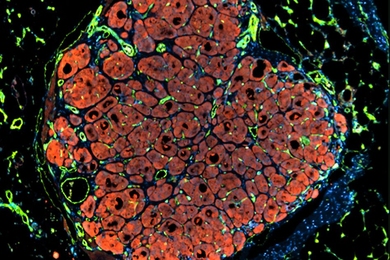
Tiny implantable “seeds” of tissue produce fully functional livers.

Targeted treatment could be used for pneumonia and other bacterial infections.

Marking its first anniversary, the Koch Institute’s Marble Center for Cancer Nanomedicine goes full steam ahead.