
Detecting fake news at its source
Machine learning system aims to determine if an information outlet is accurate or biased.
Machine learning system aims to determine if an information outlet is accurate or biased.

In simulations, robots move through new environments by exploring, observing, and drawing from learned experiences.

Inaugural director of The Quest discusses what's been accomplished since last spring's launch and what is on the horizon.

Laboratory for Information and Decision Systems alumnus and CSAIL lecturer Jehangir Amjad uses statistical methods to predict likely outcomes with limited data.

CSAIL system could help athletes, dancers, and others better analyze how they move.

Agarwal is recognized for making education more accessible to people around the world, via edX open-source online platform.

Model learns to pick out objects within an image, using spoken descriptions.

Machine learning system efficiently recognizes activities by observing how objects change in only a few key frames.
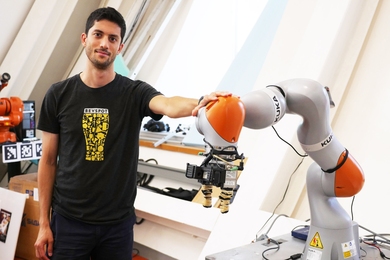
Breakthrough CSAIL system suggests robots could one day be able to see well enough to be useful in people’s homes and offices.

Neural network learns speech patterns that predict depression in clinical interviews.

By training on patients grouped by health status, neural network can better estimate if patients will die in the hospital.

The dynamic programming language, which is free and open source, combines the speed and popular features of the best scientific and technical software.

CSAIL wireless system suggests future where doctors could implant sensors to track tumors or even dispense drugs.

Novel combination of two encryption techniques protects private data, while keeping neural networks running quickly.

Users can quickly visualize designs that optimize multiple parameters at once.