Skip to content ↓

📬 Want a dose of MIT in your inbox? Subscribe to the MIT Daily and/or MIT Weekly newsletters.

Top News

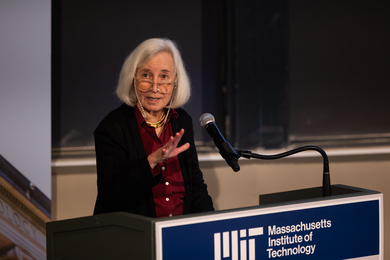
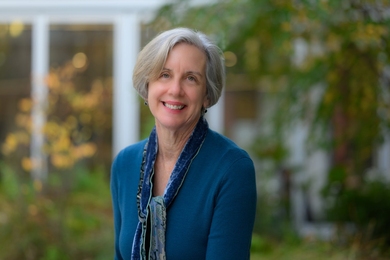
An engineer’s guide to birds

In her new book, “Birds Up Close,” MIT materials engineer Lorna Gibson explores feathers, bones, bills, eggs, and flight, and the mechanics behind birds’ extraordinary abilities.

Read full story

Looking for audio? Listen to the MIT News podcast

Recent Highlights

More MIT News articles

In the Media

Scientific American

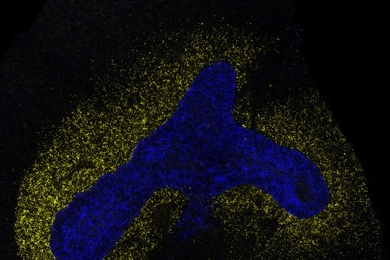
Scientific American reporter Bob Henderson spotlights how graduate student Jiaruo Li and Prof. Riccardo Comin are developing a new device for storing digital data using “an exotic kind of magnetism discovered in the same lab the previous year to make the device faster and more energy-efficient than any competing technology.” 

Tech Briefs

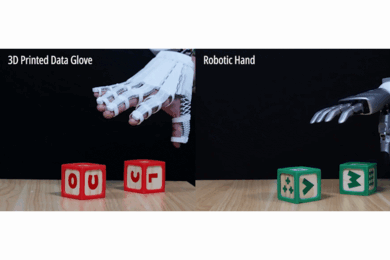
Prof. Xuanhe Zhao speaks with Tech Briefs reporter Andrew Corselli about his team’s work developing an ultrasound wristband that precisely tracks a wearer’s hand movements in real time and can communicate device these motions to a robot or a virtual environment. “For the future of human society, humanized robots will do lots of different work for us. For that work, we need a dexterous robotic hand,” explains Zhao. “We believe this ultrasound wristband, based on variable imaging, could be the future of really knowing the human hand motions.”

Slate

Prof. Daron Acemoglu joins Slate’s “Money Talks” podcast to explain his research into pro-worker technologies and how we can not only avoid the AI job apocalypse but also improve workers’ lives by shifting the goal of AI from automation to collaboration. “Artificial intelligence is quite different than human intelligence,” says Acemgou. “And when two things are different, a natural way to combine them is in a complimentary way, not try to replace everything that one does with one type of intelligence using the other type of.”

National Public Radio (NPR)

President Emeritus L. Rafael Reif joins Rob Schmitz of NPR’s All Things Considered about how the U.S. can regain its edge as the global leader in science and innovation. Reif makes the case for investing in basic research in the country, and finding “a way so that the innovative ideas coming out of our labs don't end up in another country like China, that we develop them here by giving them a longer runway for them to materialize and make an impact.”

Scientific American

Prof. Susan Solomon joins Rachel Feltman on Scientific American’s Science Quickly podcast to discuss her experience researching the cause and solution for the Antarctic ozone hole in the 1980s. “Amazingly, we can show, with 95 percent confidence, now the Antarctic ozone hole is beginning to heal,” says Solomon, who published a paper on that topic last year. “That was a real incredible moment for me…I was there in 1986, and in 2026 I saw this paper appear that actually shows that we can be confident we’re seeing recovery.”

NewsNation

A new study from MIT researchers shows that plants can ‘hear’ rain coming. “Plants have external sensing resulting from cellular structures called statoliths, which shift and settle at the bottom of plant cells, while assisting the organisms in detecting changes in stability and position,” reports Rob Taub for NewsNation.

The Boston Globe

Prof. Shu-Heng Shao was one of 15 recipients of the New Horizon Prizes, a Breakthrough Prize that is awarded to early-career physicists and mathematicians. “Shao worked alongside other researchers to develop the theory of “generalized symmetries” in quantum field theory, which helped create a “new language” of possibilities in the field beyond the traditional understanding of symmetries,” reports Bryan Hecht for The Boston Globe.

Scientific American

In discussion with Deni Ellis Bechard for Scientific American, Prof. Emeritus Rodney Brooks shares his thoughts on a robot that ran a half marathon faster than a human. “When you see a performance of an AI system or a robot on one thing, that fools us into thinking that it has the same general competence as a human,” says Brooks. “And that’s a mistake people make.” 

CNBC

Prof. Andrew Lo speaks with with Greg Iacurci at CNBC about using AI for personal finances. “One of the things about [large language models] that I find particularly concerning is that no matter what you ask it, it’ll always come back with an answer that sounds authoritative, even if it’s not,” said Lo. ″[People] should be using AI for financial planning — but it’s how they use it that’s important.” 

The Boston Globe

Prof. Thomas Malone and his colleagues at MIT Sloan have developed a way to analyze work, which may help predict which jobs are likely most vulnerable to AI. The researchers found that “AI mainly threatens workers who manage information. But not all of them,” writes Hiawatha Bray for The Boston Globe. “Malone noted that some industries demand human empathy, a sense of ethics, and a knack for teamwork. That’s why he thinks health care jobs are relatively safe.” 

Popular Science

MIT scientists have developed a new model, dubbed "PlanetWaves," that predicts wave behavior on different planets, showing that the "smallest gust of wind on Titan could generate huge, roiling waves across seas of hydrocarbons," reports Andrew Paul for Popular Science. “PlanetWaves is far more than a novel simulator,” writes Paul. “Calculating fluid behaviors on distant planets and moons could help inform engineers building new spacecraft and probes.”

Community Updates

Featured Multimedia

Video thumbnail

What if time could be measured with near-perfect precision? Atomic clocks do exactly that, using atoms as nature’s most reliable timekeepers. Here’s how they work and why modern life depends on them.

Video thumbnail

MIT researcher Ryan Williams has uncovered a surprising connection between how long a computation takes and how much memory it needs. His new result shows that even very time-consuming problems can sometimes be solved using far less memory than expected, by cleverly reusing space.

Video thumbnail

Engineers have long struggled to replicate the strength, speed, and control of natural muscles. Now, new artificial fibers developed at the MIT Media Lab move closer to matching those qualities.

Video thumbnail

MIT engineers have designed an ultrasound wristband that precisely tracks a wearer’s hand movements in real- time. By moving their hands and fingers, users can direct a robot to perform specific hand gestures and tasks, or they can manipulate objects in a virtual environment with high dexterity control.

Video thumbnail

Dean of the MIT Sloan School of Management, Rick Locke is a scholar of international labor standards and comparative political economy. He discusses the MIT Sloan community and the future of management education.

More News