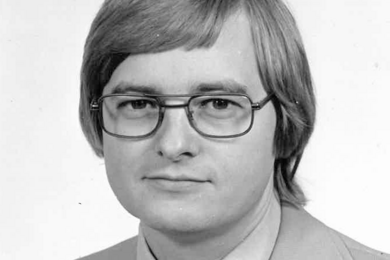
The National Academy of Engineering (NAE) has announced T. Alan Hatton, MIT’s Ralph Landau Professor of Chemical Engineering Practice, Post-Tenure, as the recipient of the 2026 Bernard M. Gordon Prize for Innovation in Engineering and Technology Education, recognizing his transformative leadership of the Institute’s David H. Koch School of Chemical Engineering Practice. The award citation highlights his efforts to advance “an immersive, industry-integrated educational model that has produced thousands of engineering leaders, strengthening U.S. technological competitiveness and workforce readiness.”
The Gordon Prize recognizes “new modalities and experiments in education that develop effective engineering leaders.” The prize is awarded annually and carries a $500,000 cash award, half granted to the recipient and the remainder granted to their institution to support the recognized innovation.
“As engineering challenges become more complex and interdisciplinary, education must evolve alongside them,” says Paula Hammond, Institute Professor and dean of the School of Engineering. “Under Alan’s leadership, the Practice School has demonstrated how rigorous academics, real industrial problems, and student responsibility can be woven together into an educational experience that is both powerful and adaptable. His work offers a compelling blueprint for the future of engineering education.”
Hatton served as director of the Practice School for 36 years, from 1989 until his retirement in 2025. When he assumed the role, the program worked with a limited number of host companies, largely within traditional chemical industries. Over time, Hatton reshaped the program’s scope and structure, enabling it to operate across continents and sectors to offer students exposure to diverse technologies, organizational cultures, and geographic settings.
“The MIT Chemical Engineering Practice School represents a level of experiential learning that few programs anywhere can match,” says Kristala L. J. Prather, the Arthur D. Little Professor and head of the Department of Chemical Engineering. “This recognition reflects not only Alan’s extraordinary personal contributions, but also the enduring value of a program that prepares students to deliver impact from their very first day as engineers.”
Central to Hatton’s approach was a deliberate strategy of adaptability. He introduced a model in which new companies are recruited regularly as Practice School hosts, broadening participation while keeping the program aligned with emerging technologies and industry needs. He also strengthened on-campus preparation by launching an intensive project management course during MIT’s Independent Activities Period (IAP) — training that has since become foundational for students entering complex, team-based industrial environments.
This forward-looking vision is shared by current Practice School leadership. Fikile Brushett, Ralph Landau Professor of Chemical Engineering Practice and director of the program, emphasizes that Hatton’s legacy is not a static one. “Alan consistently positioned the Practice School to respond to change — whether in technology, industry expectations, or educational practice,” Brushett says. “The Gordon Prize provides an opportunity to further evolve the program while staying true to its core principles of immersion, rigor, and partnership.”
In recognition of Hatton’s service, the department established the T. Alan Hatton Fund in fall 2025 with support from Practice School alumni. The fund is dedicated to helping launch new Practice School stations, lowering barriers for emerging partners and sustaining the program’s ability to engage with a broad and diverse set of industries.
Learning that delivers value on both sides
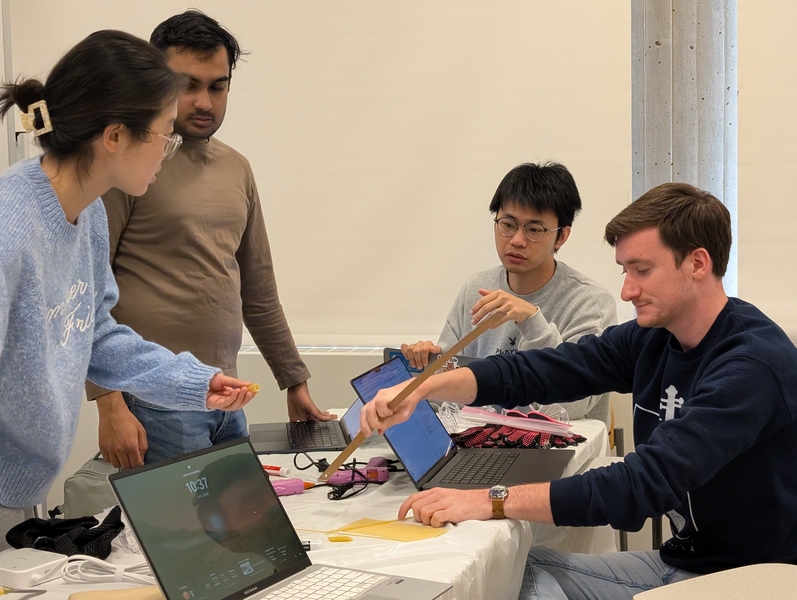
The Practice School’s impact extends well beyond the classroom. Student teams are embedded directly within host organizations — often in manufacturing plants or research and development centers — where they tackle open-ended technical problems under real operational constraints. Sponsors routinely cite tangible outcomes from these projects, including improved processes, reduced costs, and new technical directions informed by MIT-level analysis.
For students, the experience offers something difficult to replicate in traditional academic settings: sustained responsibility for complex work, direct interaction with industry professionals, and repeated opportunities to present, defend, and refine their ideas. The result is a training environment that closely mirrors professional engineering practice, while retaining the reflective depth of an academic program.
A program shaped by history — and by change
The Practice School was established in 1916 to complement classroom instruction with hands-on industrial experience, an idea that was unconventional at the time. More than a century later, the program has not only endured but continually reinvented itself, expanding far beyond its early focus on regional chemical manufacturing.
Today, Practice School students work with companies around the world in fields that include pharmaceuticals, food production, energy, advanced materials, software, and finance. The program remains a defining feature of graduate education in MIT’s Department of Chemical Engineering, linking research strengths with the practical demands of industry.
Participation in the Practice School is a required component of the department’s Master of Science in Chemical Engineering Practice (MSCEP) and PhD/ScD Chemical Engineering Practice (CEP) programs. After completing coursework, students attend two off-campus stations, spending two months at each site. Teams of two or three students work on month-long projects, culminating in formal presentations and written reports delivered to host organizations. Recent stations have included placements with Evonik in Germany, AstraZeneca in Maryland, EGA in the United Arab Emirates, AspenTech in Massachusetts, and Shell Technology Center and Dimensional Energy in Texas.
“I’m deeply honored by this recognition,” Hatton says. “The Practice School has always been about learning through responsibility — placing students in situations where their work matters. This award will help MIT build on that foundation and explore ways to extend the model so it can serve even more students and partners in the years ahead.”
Hatton obtained his BS and MS degrees in chemical engineering at the University of Natal in Durban, South Africa, before spending three years as a researcher at the Council for Scientific and Industrial Research in Pretoria. He later earned his PhD at the University of Wisconsin at Madison and joined the MIT faculty in 1982 as an assistant professor.
Over the course of his career at MIT, Hatton helped extend the Practice School model beyond campus through his involvement in the Singapore–MIT Alliance for Research and Technology and the Cambridge–MIT Institute, contributing to the development of practice-based engineering education in international settings. He also served as co-director of the MIT Energy Initiative’s Low-Carbon Energy Center focused on carbon capture, utilization, and storage.
Hatton has long been recognized for his commitment to education and service. From 1983 to 1986, he served as a junior faculty housemaster (now known as an associate head of house) in MacGregor House and received MIT’s Everett Moore Baker Teaching Award in 1983. His professional honors include being named a founding fellow of the American Institute of Medical and Biological Engineering and an honorary professorial fellow at the University of Melbourne in Australia.
In addition to his educational leadership, Hatton has made substantial contributions to the broader engineering community, chairing multiple national and international conferences in the areas of colloids and separation processes and delivering numerous plenary, keynote, and invited lectures worldwide.
Hatton will formally receive the Bernard M. Gordon Prize at a ceremony hosted by the National Academy of Engineering at MIT on April 30.