In southwestern Bangladesh, where extreme heat and severe tropical cyclones threaten the lives of millions of people, a new kind of climate refuge has opened its doors.
At the Baradal Aftab Uddin Collegiate School in the Satkhira district, the Jameel Observatory Climate Resilience Early Warning System Network (Jameel Observatory-CREWSnet) opened its first “adaptation fortress,” a solar-powered community shelter designed to protect residents from extreme heat and tropical storms.
A year-round refuge
When the heat arrives in southwestern Bangladesh, people have traditionally looked for relief under the shade of trees or near bodies of water. Now, during heatwaves, temperatures can reach 44 degrees Celsius (111 degrees Fahrenheit), levels at which shade is no longer enough.
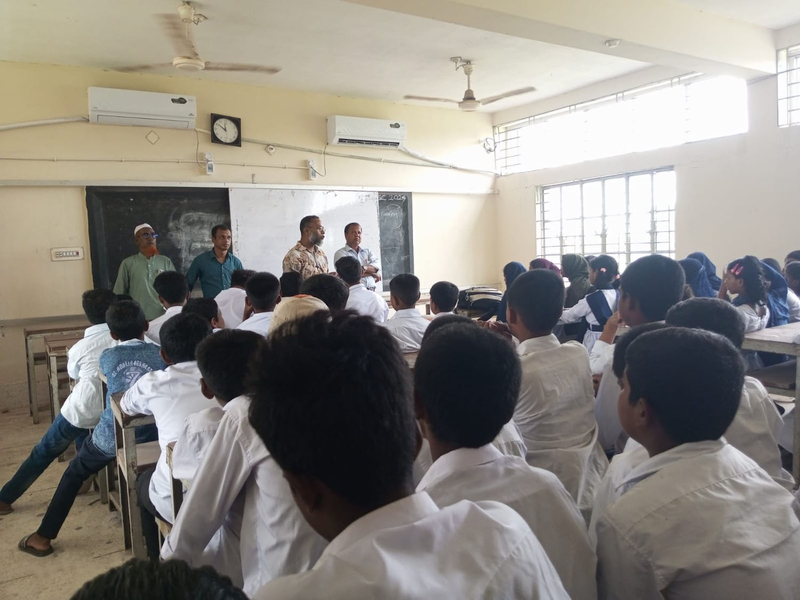
A school by day and refuge from disaster, the adaptation fortress transforms the traditional concept of a cyclone shelter into a permanent year-round community resilience hub.
The facility offers residents protection from two of the region’s fastest-growing climate threats. During government-declared heat emergencies, it can host up to 200 people in four air-conditioned rooms supplied with clean drinking water. As a cyclone shelter, it can accommodate up to 500 people in additional rooms.
For the 30 million residents in southwestern Bangladesh, caught in a compounding cycle of cyclones and record-breaking heatwaves, the fortress represents something larger: a shift from reacting to disasters to preparing for them.
From forecast to fortress
That shift is the founding premise of the Jameel Observatory-CREWSnet project, which develops climate-resilience solutions that help vulnerable communities prepare for and adapt to life-altering conditions.
The opening of the adaptation fortress marks a milestone for the project, and for MIT’s broader climate mission. Jameel Observatory-CREWSnet was one of MIT's five Climate Grand Challenges flagship projects, selected to translate climate research into tangible solutions for underserved communities facing some of the world’s most urgent climate threats.
The project started in 2022 with Community Jameel and a research team at MIT led by Elfatih Eltahir, the H.M. King Bhumibol Professor of Hydrology and Climate in the Department of Civil and Environmental Engineering, along with John Aldridge, assistant leader of the Human Resilience Technology Group at MIT Lincoln Laboratory, and Deborah Campbell, senior staff scientist at MIT Lincoln Laboratory.
Working in collaboration with BRAC International, a Bangladesh-founded nonprofit organization, the project combines advanced climate and socioeconomic forecasting with practical adaptation solutions. The adaptation fortress extends the project’s mission from forecasting climate threats to building permanent protection against them.
“When we launched the Jameel Observatory-CREWSnet, our goal was to close the gap between what climate science tells us is coming and what communities can actually do about it,” says Eltahir. “The adaptation fortress is that idea made concrete. Our models project more intense heatwaves for this region, and now residents of Satkhira have a place built to withstand them.”
The project’s climate modeling gives the fortress its urgency. Developed over decades in Eltahir’s research group, the models predict increasingly intense heatwaves across southwestern Bangladesh in the years ahead — dangerous heat layered on top of the cyclone risks they already endure.
That same evidence shaped who gets through the door first. A priority access list focuses on those the heat endangers most: the elderly, people with respiratory conditions such as asthma, expectant mothers and mothers with infants, and students of the Baradal school.
Built to outlast the grid
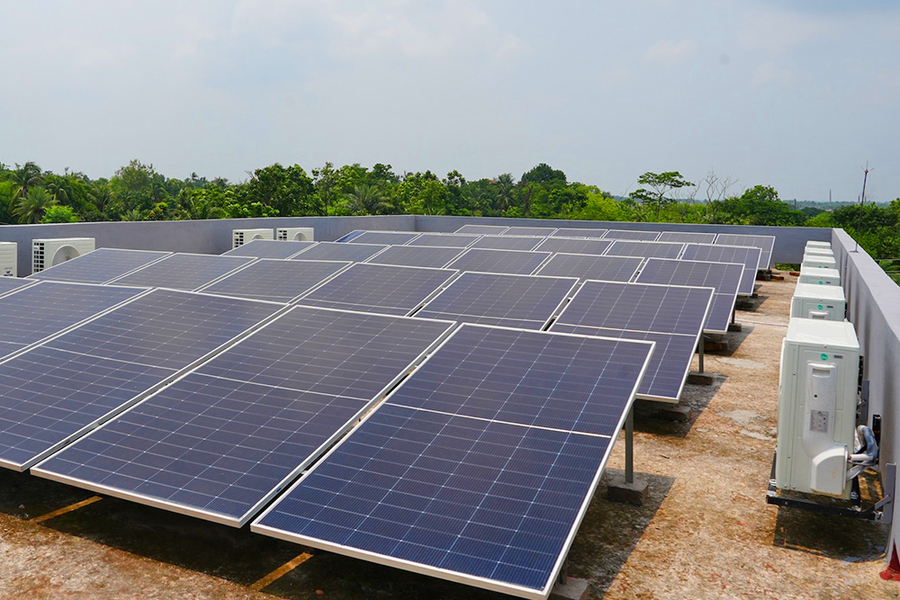
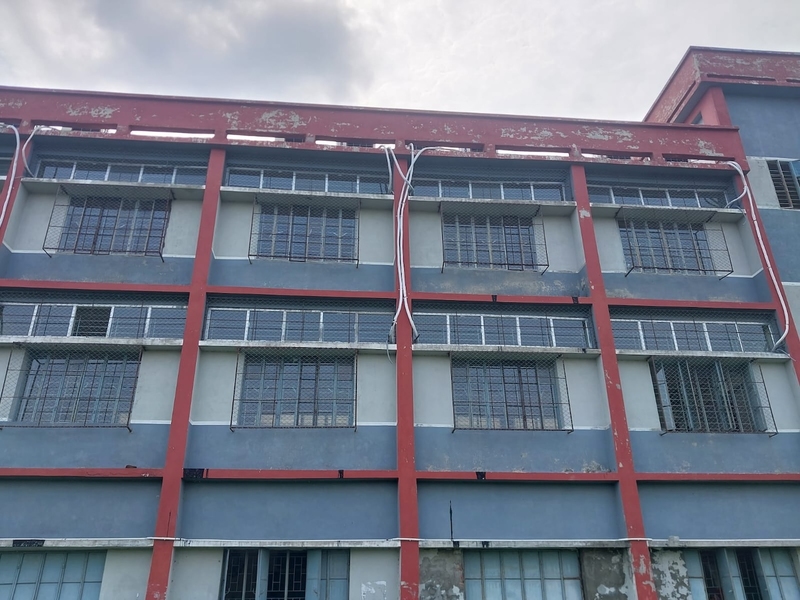
The building was designed to weather climate shocks. A rooftop solar array powers the building as its primary energy source, with a battery backup that keeps it fully operational during grid outages. Solar grid-based air conditioning units combat extreme heat, and windows of glass encased in iron protect against breakage while sealing in the cool air.
The facility also integrates rainwater harvesting to mitigate the severe salinity that plagues local groundwater, and is designed to help cover its own upkeep. A net-metering interface allows surplus electricity generated during low-occupancy periods to be sold back to the national grid, creating a circular revenue stream that funds long-term maintenance.
The fortress is built with the community. A school committee oversees day-to-day operations and emergency protocols in partnership with BRAC, formalized through a signed memorandum of understanding to ensure long-term sustainability. The facility is supported by a comprehensive user guide translated into Bangla to empower local management.
Engineered to scale
The Satkhira adaptation fortress is a pilot, and will be rigorously assessed. Remote sensors will track temperature, humidity, and power consumption. The findings will directly inform a second adaptation fortress planned for a secondary school in the Jashore district, where construction is scheduled to begin before the end of 2026.
If the evidence supports the model’s effectiveness, the concept could ultimately scale to as many as 1,250 fortresses across southwestern Bangladesh.
“From the start, our vision for this project has been a capability that could extend far beyond any single community,” says Campbell. “The adaptation fortress is a model we can learn from and refine in Satkhira, then carry to the many other places facing these same compounding climate threats.”
The work is supported by Community Jameel for Jameel Observatory CREWSnet, and by MIT Climate Grand Challenges.