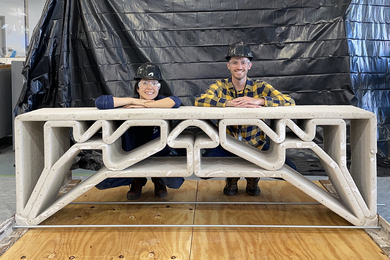
3D-printed bridge points the way to greener construction
MIT researchers developed a framework that folds a printer’s real-world limits into the optimization, while revealing that better hardware could sharply reduce material use.
MIT researchers developed a framework that folds a printer’s real-world limits into the optimization, while revealing that better hardware could sharply reduce material use.
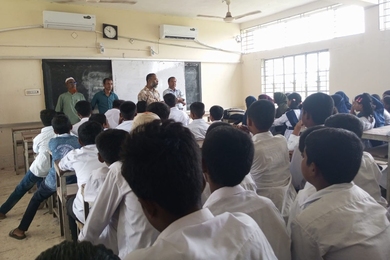
The Jameel Observatory-CREWSnet project opens a solar-powered “adaptation fortress” in Satkhira, a region facing severe and growing climate threats.

Four new professors join the Department of Architecture and MIT Media Lab.
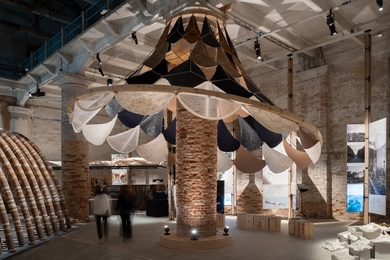
A project at the Venice Biennale showcases biodegradable materials and structural systems using tension and compression.
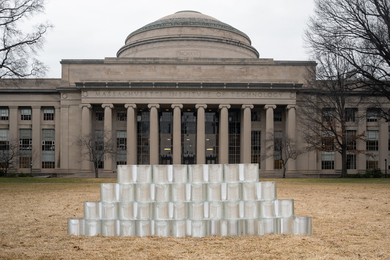
The interlocking bricks, which can be repurposed many times over, can withstand similar pressures as their concrete counterparts.
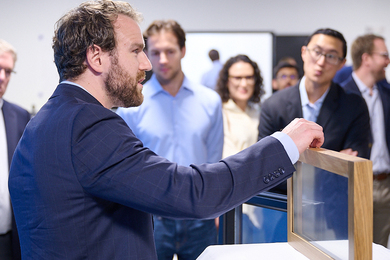
MIT startup AeroShield has opened a new facility for manufacturing highly insulating windows that will reduce building energy use and cut carbon emissions.
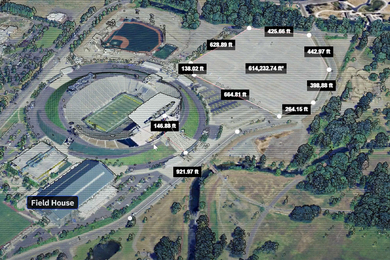
The company, founded by Clark Yuan MBA ’22, has developed a cloud platform that makes 3D data sharing, visualizing, and editing easy.

The PhD student is honing algorithms for designing large structures with less material — helping to shrink the construction industry’s huge carbon footprint.

The technology of MIT alumni-founded Hosta a.i. creates detailed property assessments from photos.
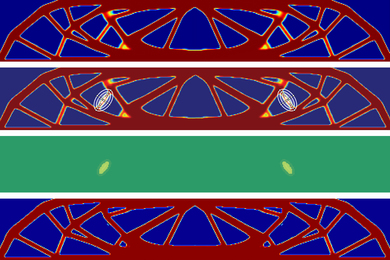
A process that seeks feedback from human specialists proves more effective at optimization than automated systems working alone.
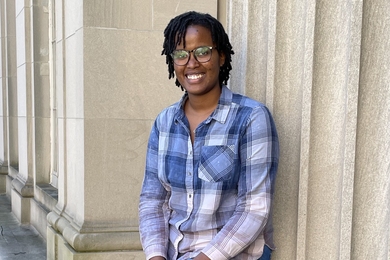
Senior Carene Umubyeyi seeks to advance sustainable structural design in her home country of Rwanda and beyond.
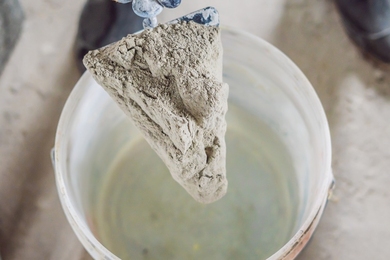
MIT-IBM Watson AI Lab researchers aim to design concrete mixtures that use AI to shrink environmental footprint and cost, while recycling byproducts and increasing performance.

New analysis could help identify optimal materials for the crisscrossing struts that bolster bridges, towers, and buildings.
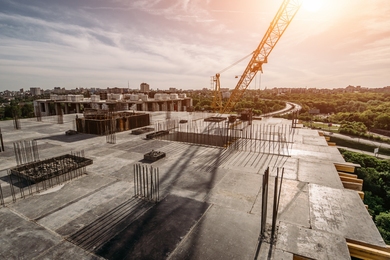
MIT researchers find emissions of U.S. buildings and pavements can be reduced by around 50 percent even as concrete use increases.
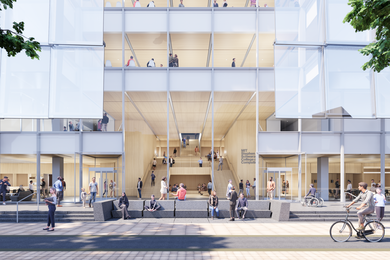
New building will create a hub for computing research and education at MIT, including spaces designed to be inviting to members of the campus community and the public.