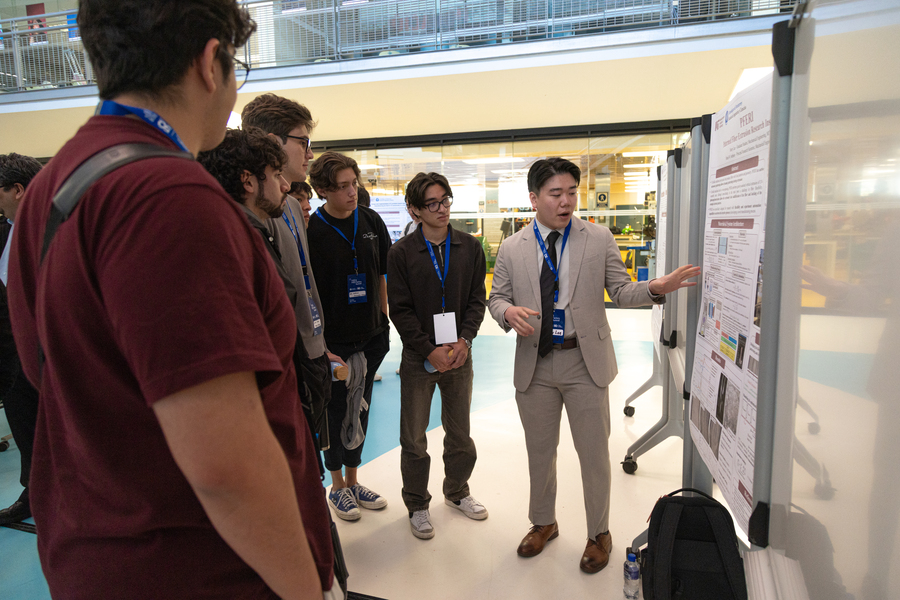
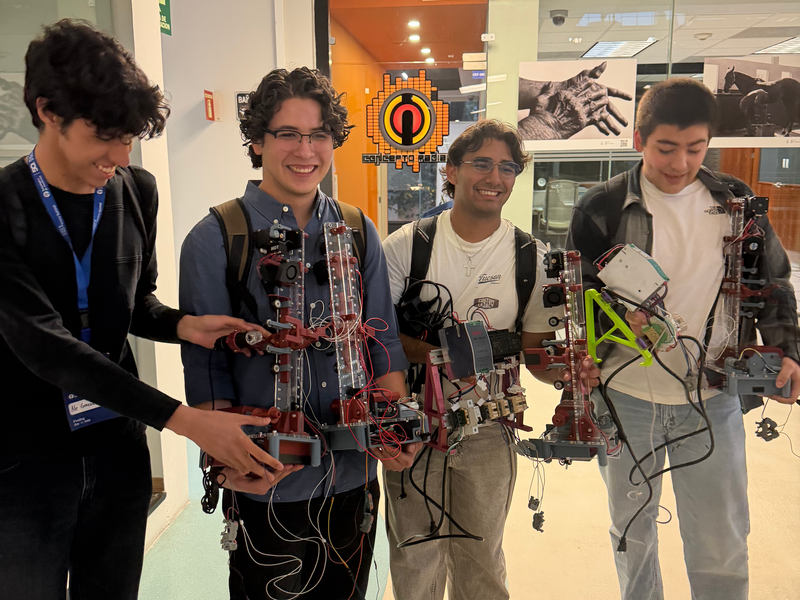
From the basement of MIT’s Building 35 to Monterrey, Mexico, and now beyond. That is the journey of FrED, a low-cost desktop fiber (Fr) extrusion (E) device (D), designed and assembled by students in an educational factory at MIT.
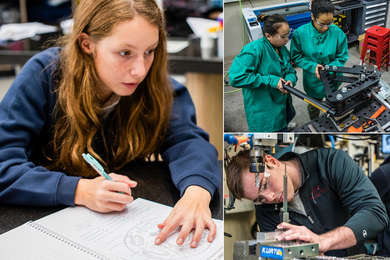
That factory is transforming how manufacturing is taught — replacing textbook learning with hands-on experience in a space where tinkering is encouraged and information flows continuously. Through a collaboration between MIT and Tecnológico de Monterrey (Tec) managed by MIT.nano, FrED has been refined across dozens of graduate theses and undergraduate research stays. It is used to study manufacturing systems in academic and professional courses, and at FrED factories, first established at MIT and now at Tec’s campuses in Monterrey and Mexico City.
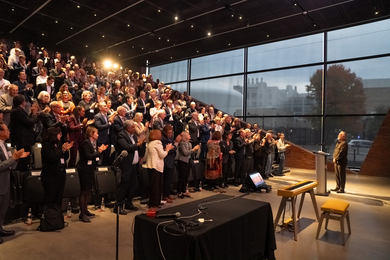
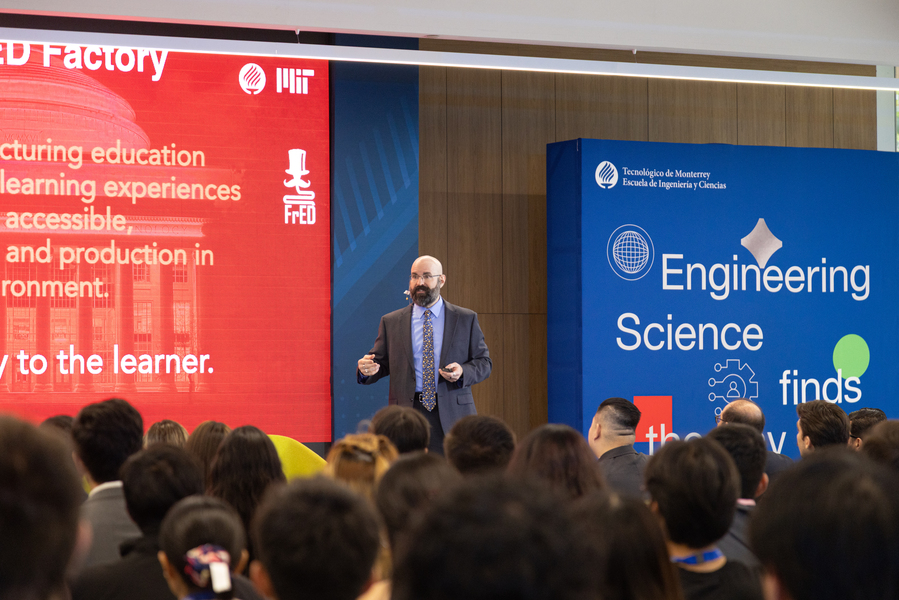
“What does it mean to bring the factory to the learner?” asked Brian W. Anthony, MIT.nano associate director and principal research scientist in the MIT Department of Mechanical Engineering (MechE) at the second annual FrED summit in Mexico City. “We have FrED as a process that manufactures a fiber, and we also have the FrED factory that’s an education and practice factory where we are manufacturing a real product. It’s not just a learning factory where we tear apart the product when we’re done. We really ship FrEDs to our online learners, to educators at MIT and Tec, and soon, to new partners around the world.”
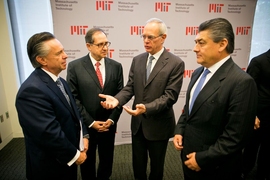
Designed from the start for multi-node community scaling, FrED and the FrED factory have created a thriving, collaborative ecosystem for current and future manufacturing engineers. The next step is to expand that ecosystem globally. Announced at the FrED summit by Tec professor Pedro Ponce Cruz, a new FrED factory at Tec’s Saltillo campus will be opening in the next academic year. After that, the team plans to expand to other campuses across the United States and Mexico.
“Together, we are helping build a global engineering talent pipeline,” says Adriana Vargas Martinez, executive director of research strategy at Tec. “Through the FrED and FrED factory initiative, nearly 500 students have already been trained in advanced manufacturing automation, moving from Tec classrooms into research laboratories and collaborative projects with MIT.”
Discussing FrED and FrED factory’s research impact, she notes 25 publications and seven papers in development. “International mobility has also been an important dimension of this partnership,” she says.
A shift toward modern manufacturing deep-tech themes
FrED’s expansion comes at a time when manufacturing at MIT and across industry is shifting toward smart manufacturing, or Industry 4.0, integrating automation, machine learning, and artificial intelligence. One of MIT’s strategic priorities, the MIT Initiative for New Manufacturing (INM), is working to support new manufacturing research, development of new courses and workforce training, and building of shared facilities to pilot production lines and immersive manufacturing experiences. FrED and the FrED factory are already designed to support these efforts, and at an international scale.
“FrED and the FrED factory is really, I think, solving at least one problem: how we give real, physically meaningful physical context and production-level data, production-level problems in an academic environment that is directly transferable to the knowledge that you need on the factory floor,” says Anthony. It’s difficult to get data out of a real factory, he adds; what FrED offers is physical context crossed with data science, providing an open platform and open data for learning and experimenting.
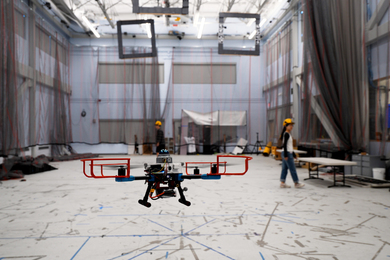
FrED naturally generates the multi-modal data required for digital twins, analytics, and AI-driven process improvement, turning abstract AI/manufacturing integration into hands-on practice. The next set of research objectives in the FrED factory will focus on developing a realistic and interactive digital twin of the factory, immersive technology for collaborative learning, integrating agentic controllers. They will include new downstream manufacturing processes and machines that take as input the fiber from FrED — all to enhance smart manufacturing education.
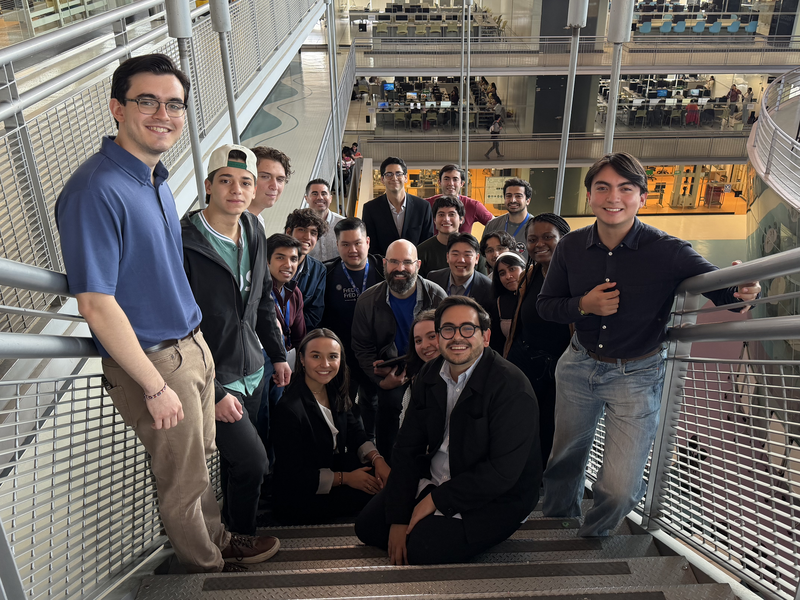
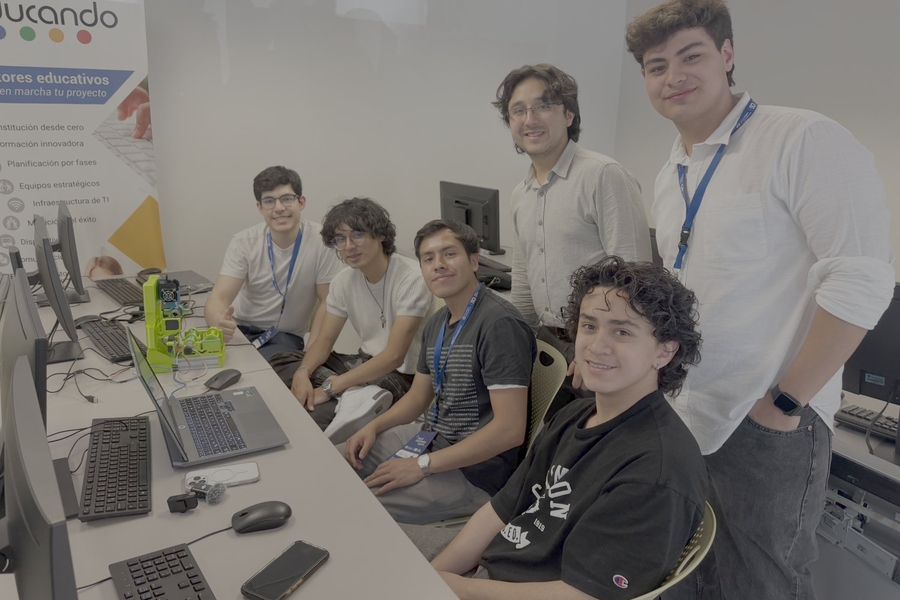
These goals will be worked on by MIT and Tecnológico de Monterrey students as part of a FrED factory research stay. This program brings Tec undergraduates to MIT to work side-by-side with MIT students — not observing, but fully integrated into the research team. The students then take what they’ve learned back to Mexico, to enhance FrED factories at their home institution.
“Beyond the technical side, FrED gave me memories, friendships, and a lot more confidence in myself than I knew I had,” says Naomi Najera, a Tec undergraduate student who completed a research stay at MIT in 2025. “It also gave me a space where I could make mistakes and learn from them. And also to realize how much I can achieve with my team. That human side of this project really changed my whole experience.”
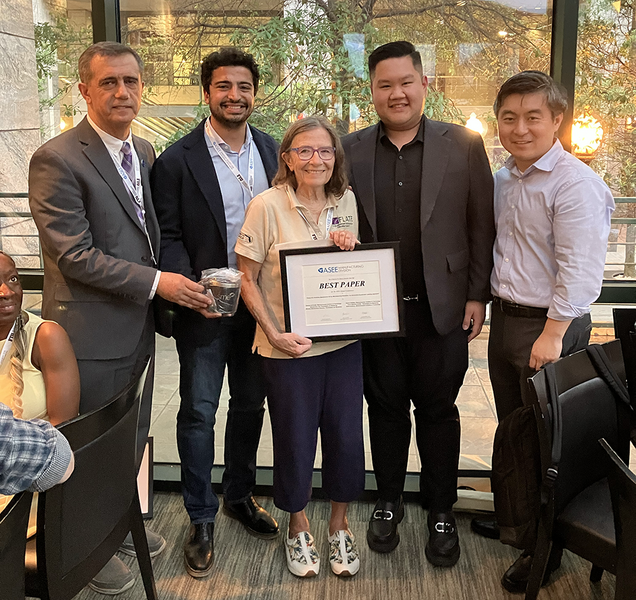
A recent result from this exchange, announced June 23 by the American Society for Engineering Education (ASEE), a paper entitled “Hands-On Predictive Maintenance Kit for Manufacturing Education: An Accessible Experiential Learning Approach,” written by Tec and MIT students, received the 2026 ASEE Manufacturing Division Best Paper Award.
Shifting classroom learning to factory operations
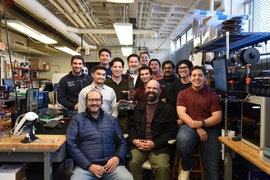
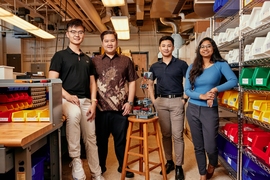
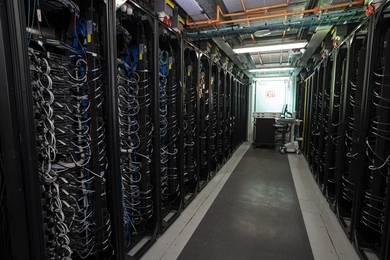
At MIT’s campus in Cambridge, Massachusetts, passersby can look down into the Building 35 basement windows to see a constant flow of activity, materials, and knowledge in the MIT FrED factory. In Mexico, seven cohorts of students over four years each designed a custom version of FrED and built and operated an automated FrED factory production line. Indeed, FrED has restructured how Tec teaches mechatronics and manufacturing systems. “This collaboration integrates research directly into education,” says Vargas Martinez, “combining learning factories and our manufacturing environments with student-centered research.”
The Tec students’ enthusiasm has led to the launch of an Undergraduate Research Opportunities Program-like curriculum (FRAME: Factory-based Research for All in Mechatronics Education) in Mexico, where first-year undergraduates are working alongside graduate level students in the FrED factory.
“Joining FrED as a first-semester university student has been an amazing opportunity for me to get hands-on experience in real-world projects in areas such as coding, manufacturing, and robotics,” says Katherine Lucia McLean. “It’s helped me grow a lot as an engineering student.”
The FrED factory model forces real leadership behaviors: coordinating multi-station systems, managing bottlenecks, building maintenance logic into the student experience, enforcing quality measurement, and iterating system design year after year. As each class graduates and a new one begins, knowledge is transferred, some of it lost, most of it built upon. In this way, FrED never becomes outdated, as each cohort is reimagining manufacturing technologies and systems for a smarter, more productive factory.
FrED and the FrED factory have momentum. Anthony taught the global capstone course at the Monterrey campus last year, and will expand to teach at all five international Tec campuses in 2027. The FrED Factory Conference will take place at MIT in 2027.