Early mornings in the halls of Building 68 feature the sounds of rolling wheels on big metal carts, the rattling of glassware, the whooshing of faucets, and the clanking of autoclaves.
These aren’t the sounds of researchers at work, but rather those of keeping the labs sterilized and stocked with the sundries of research: pipette tips, test tubes, flasks, petri dishes, and more.
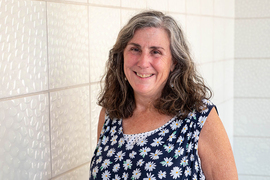
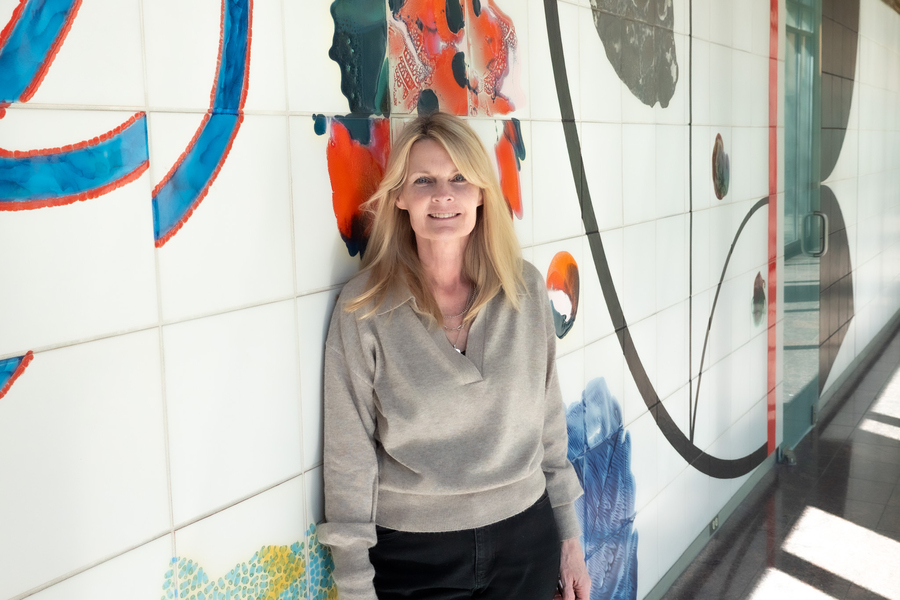
Orchestrating this sunrise cacophony and the staff that undertakes it is Karen O’Leary, lab associate and acting supervisor in the Glassware Sterilization Facility, also known as the “kitchen.”
Thanks, in part, to O’Leary’s proactivity and hard work, the kitchen staff were recently recognized with an MIT Excellence Award in 2025 for exceptional contributions in service of the community.
“My goal is to get the scientists everything they need to do their research,” O’Leary says. “I’m good at what I do.”
O’Leary admits she did not always possess such confidence. In almost 40 years at MIT, O’Leary has grown into this critical role for the department, and the department itself has evolved, moving into a brand-new building and away from previously standard practices like submerging equipment in acid for sterilization.
From rookie to running the show
On Sept. 7, 1987, Karen O’Leary joined the MIT community as a staff member for the first time. The 18-year-old was fresh from vocational high school, where she studied cosmetology but felt too shy to pursue that as a career. She was also nervous about joining a research institution.
“When I started, I didn’t even know what a beaker was,” she recalls.
Too embarrassed to admit in her interview that she couldn’t remember her brand-new home phone number, “I just made one up.” Fortunately, this didn’t prevent her from getting the job, where she worked under the mentorship of Thelma Watkins, who would retire in 1996 after 21 years at MIT. Watkins was critical for instilling a good work ethic and boosting O’Leary’s confidence.
“She taught me to show up every day, and work hard, and laugh,” O’Leary says.
Even now, O’Leary continues to bring joy to that daily diligence, for herself and for her staff.
“Karen is always on top of things,” says longtime friend and fellow Lab Associate AnnMarie Budhai. “She doesn’t refuse work and always goes above and beyond.”
Facilities and Operations Manager Cesar Duarte says that O’Leary’s long tenure, support, and knowledge have been invaluable as he transitioned into his role in Building 68 starting in 2023.
“Karen is one of those people who makes everything around her run more smoothly and more pleasantly,” Duarte says.
Better, faster, safer
Although some might consider it drudgery, O’Leary says that washing glassware is her favorite task.
“I like that when I wash, I can see the job is complete at the end of the day,” she says.
Although washing glassware is a perennial task, safety and efficiency have come a long way in the past 38 years. More-effective autoclaves and dishwashers have eliminated steps like steaming to dissolve agar solvents before autoclaving, and scrubbing individual test tubes before washing.
O’Leary was working for the department in 2011 when Building 68 piloted a new approach to MIT’s management of regulated medical waste (RMW), such as petri dishes, blood, and needles — the new system, which is cheaper and produces less waste, is now used by all departments at MIT that produce RMW.
“EHS [the Environment, Health and Safety Office] has come really far — I’m glad we got away from acid,” O’Leary notes of the bygone era of submerging glass pipettes for sterilization. “Back then, no one knew of a better way.”
Other tasks include cleaning velvets, which are used for replicating bacterial colonies on petri dishes, and pouring agar plates.
“Everyone knows how to do almost every job, so we can take turns doing different tasks,” O’Leary says. “If you get sick, there’s always someone to cover.”
All in the family
For O’Leary, kinship with MIT has spanned generations. O’Leary was raised in Weymouth, Massachusetts, by a father who worked at MIT as a supervisor in the sheet metal shop. Having raised children of her own, now grown, O’Leary came to greatly appreciate the flexibility her job has granted her.
“I’ve had great work-family balance here,” she says. Even though she’s often at work more than an hour before the researchers that the kitchen serves, “The hours are great, and with MIT Health right across the street, it was easy to take everyone to doctors’ appointments.”
She’s also gained a chosen family at MIT, spending breaks at work taking long walks along the Charles River, “talking about anything and everything” with colleagues like Budhai and Lab Aide Janet Katin.
“We really grew up together,” she says.
Working at MIT has provided O’Leary with support and community, and she’d like to pay it forward. In addition to strolling with colleagues, she hits the gym to help maintain the energy required for her highly active work.
“I don’t like sitting around,” she says.
In addition to maintaining her stamina at work, she hopes that taking care of herself will keep her actively involved if she ever has grandchildren, and enable her to help neighborhood kids when she someday retires.
“I owe a lot to MIT,” she says. “I have been allowed to work hard and get satisfaction and have been appreciated and given space to care for my family.”
O’Leary returns this care to the Department of Biology in spades.
“It’s an understatement to say that Biology is lucky to have her,” says Duarte. “Karen’s overflowing energy, attention to detail, and care for the Biology research community are nothing short of amazing.”