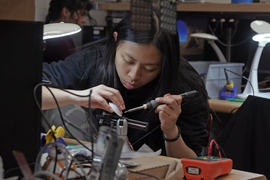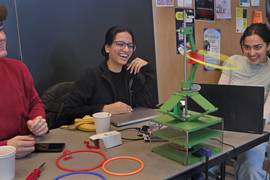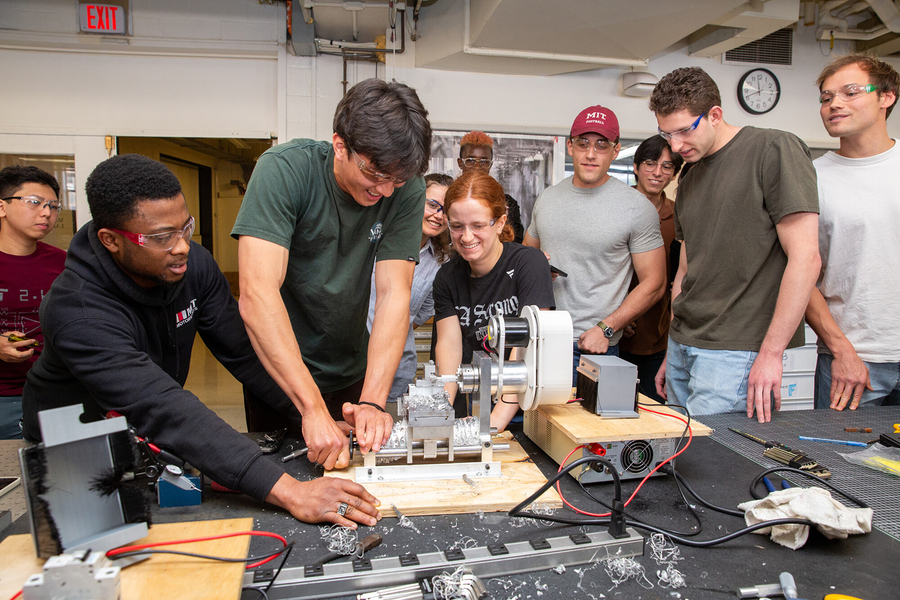
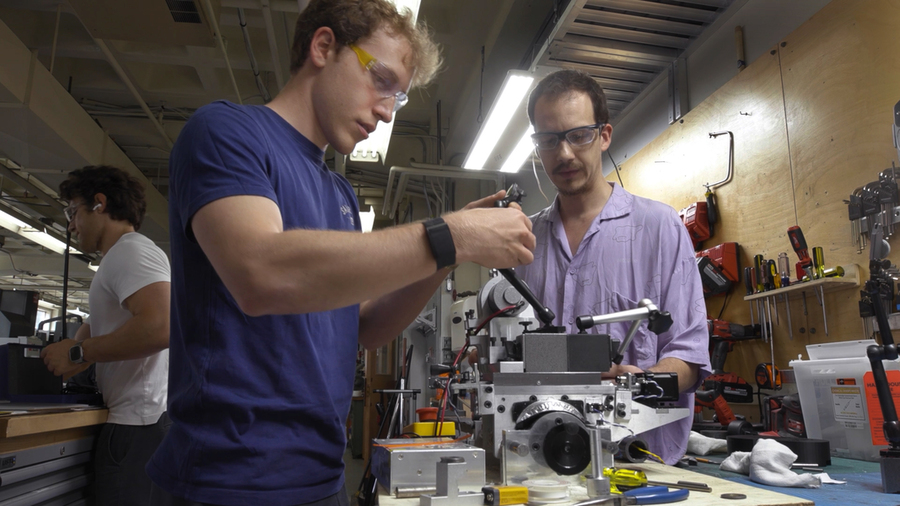
MIT class 2.72/2.270 (Elements of Mechanical Design) offers undergraduate and graduate students advanced study of modeling, design, and integration, along with best practices for use of machine elements like bearings, bolts, belts, flexures, and gears.
“[Students] learn how to use basically everything from the MechE undergraduate curriculum to build hardcore advanced machines,” says Martin Culpepper, the Ralph E. and Eloise F. Cross Professor in Manufacturing and professor of mechanical engineering (MechE) at MIT.
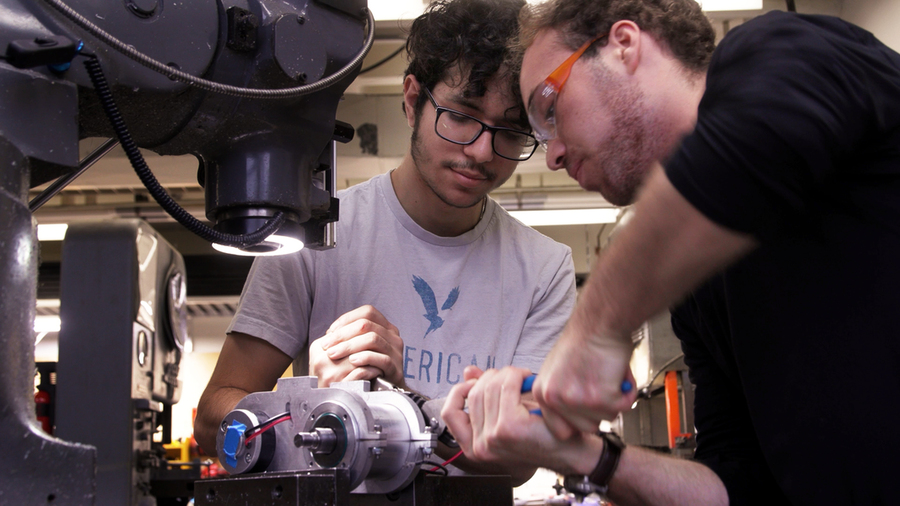
The course employs modeling and analysis exercises based on rigorous application of physics, mathematics, and core mechanical engineering principles, which are then reinforced through lab experiences and a mechanical system design project.
Culpepper, known to students and colleagues as Marty, says one of his main goals in the course is to “make students into stronger engineers.” His methods involve a mix of teaching and coaching techniques that push students to explore the bounds of what’s possible.

“Marty likes to say that ‘as long as something doesn't break the laws of physics, it’s possible. You just have to figure out how to engineer it,’” says Yasin Hamed, a teaching assistant for the course.
For the system design projects, students build a lathe that can meet repeatability, accuracy, and functional requirements, and that can also “pass ‘Marty’s death test,’” says MechE graduate student Sarah Stoops. “What that means practically,” explains fellow graduate student Amber Velez, “is, at the end of class, Marty takes all our lathes and drops them and hits them with a hammer, and if they explode, you don’t pass the class.”
This final test may seem harsh, but it is an important part of the process and helps build to additional, critical skills: resilience and perseverance.
“The students are very resilient. They learn to persevere and take some time to try and figure things out, and through that process … you learn so much,” says Hannah Gazdus, a teaching assistant for the course.
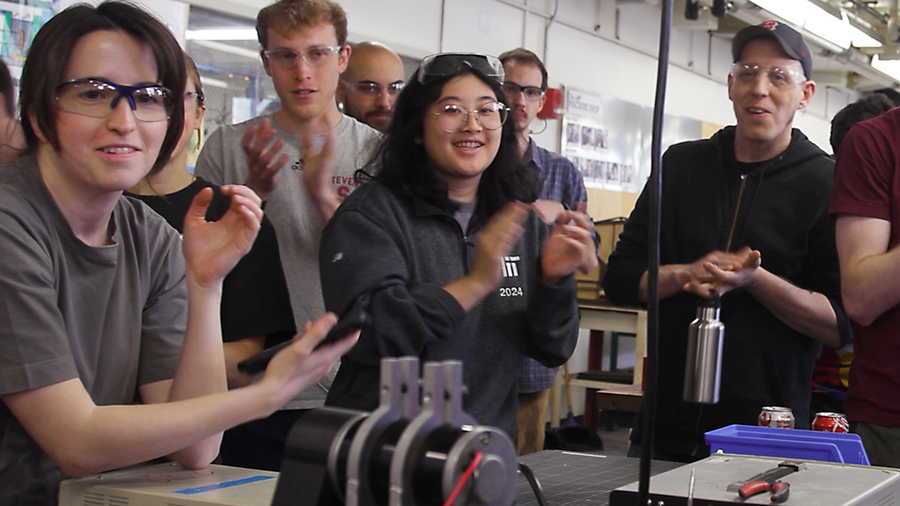
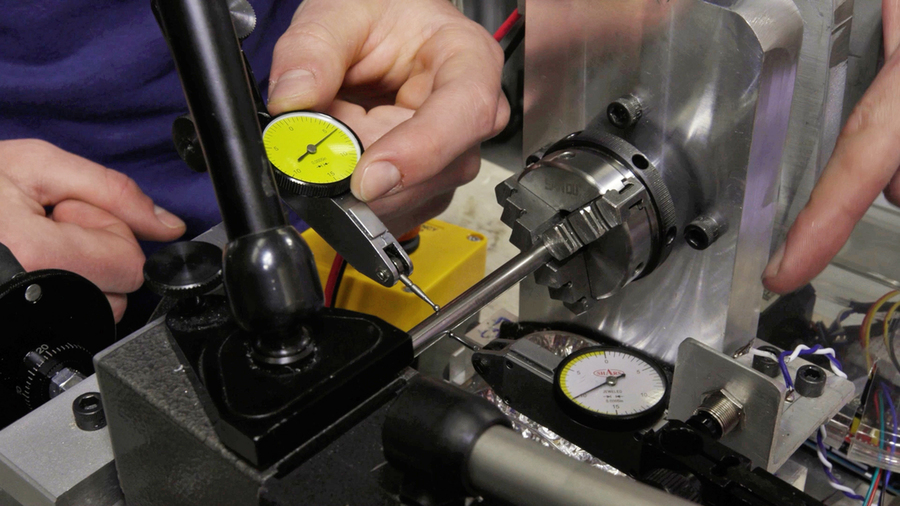
Before the so-called “death test,” students tackle two other challenges: precision and material removal. “All of our lathes are required to cut to within 50 microns of precision,” explains Velez. In the material removal rate competition, teams compete to see who can turn down a piece of stock by one inch the fastest. Velez’s team completed the later task in approximately 27 seconds.
“The core classes are important — things like mechanics, materials, dynamics, controls — but many of them have a degree of abstraction that separates the content within those courses from the mechanical elements that you use in designing an actual machine,” says Hamed. “I feel like this class serves very well to bridge that [and] inspire that confidence as working engineers.”