
Behind the scenes, brain circuit ensures vision remains reliable
A study of mice watching movies shows our brain cells rely on a circuit of inhibitory neurons to help ensure that the same images are represented consistently.
A study of mice watching movies shows our brain cells rely on a circuit of inhibitory neurons to help ensure that the same images are represented consistently.

By temporarily suspending retinal activity in the non-amblyopic eye of animal models, neuroscientists restrengthen the visual response in the "lazy" eye, even at ages after the critical period when patch therapy fails.
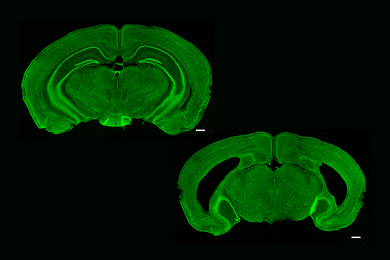
The visual cortex stores and remembers individual images, but mice can’t recognize image sequences without guidance from the hippocampus.
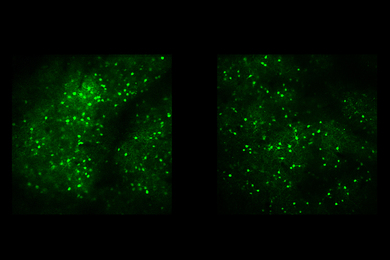
As “visual recognition memory” emerges in the visual cortex, one circuit of inhibitory neurons supplants another, and slower neural oscillations prevail.
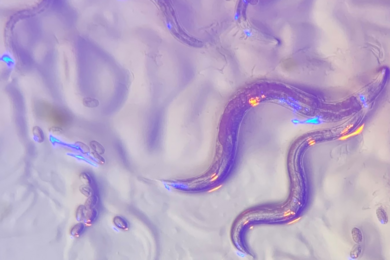
C. elegans compares the ratio of wavelengths in its environment to avoid dangerous bacteria that secrete colorful toxins.
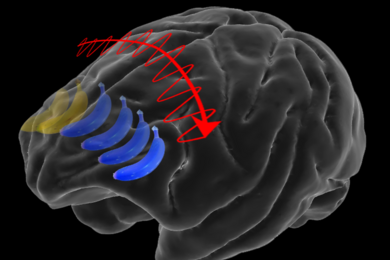
Research finds that as one looks around, mental images bounce between right and left brain as they shift around in our visual system.
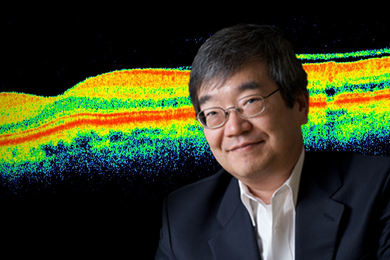
Historic effort to eradicate blindness marks major milestone with leading scientists recognized for pioneering work.
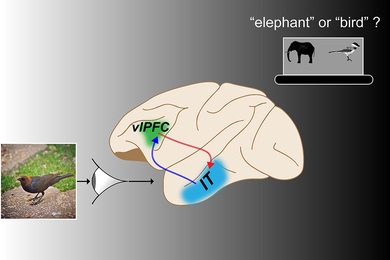
Recurrent processing via prefrontal cortex, necessary for quick visual object processing in primates, provides a key insight for developing brain-like artificial intelligence.
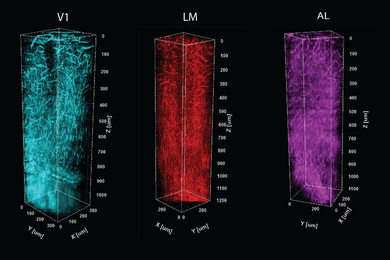
Scientists distinguish brain regions based on what they do, but now have a new way to overlay information about how they are built.

Neuroscientists delve into how background brightness influences our perception of an object.
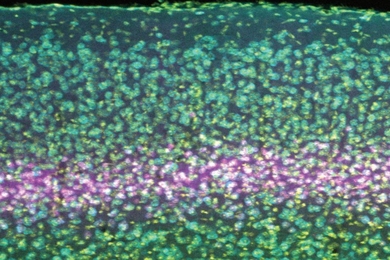
Scientists pinpoint the role of a receptor in vision degradation in amblyopia.

Study shows that artificial neural networks can be used to drive brain activity.
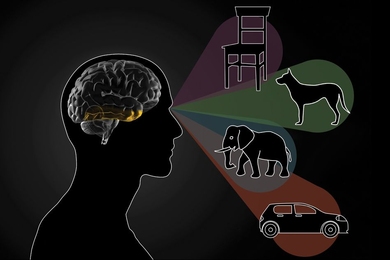
Study shows that a brain region called the inferotemporal cortex is key to differentiating bears from chairs.

Professor Pawan Sinha addresses a humanitarian need — treatable blindness — and advances our understanding of visual development in the brain.

Six brain regions participate in a more blended way than has been appreciated.