
MIT study compares the four largest internet meganetworks
With thousands of satellites, each network could beam down tens of terabits per second, filling gaps left by land-based services.
With thousands of satellites, each network could beam down tens of terabits per second, filling gaps left by land-based services.

In a first, the digital fiber contains memory, temperature sensors, and a trained neural network program for inferring physical activity.

Kate Kellogg advocates for “experimentalist governance,” to find what works best for employees at all levels, then implement it widely.

Nearly 1,400 joined the AI for Health Care Equity Conference that explored new AI technologies as a platform for change.
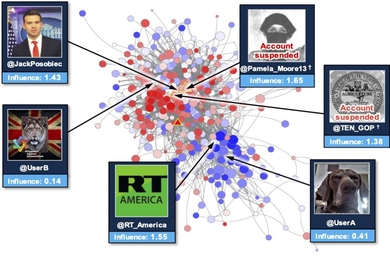
Built at MIT Lincoln Laboratory, the RIO program automatically detects and analyzes social media accounts that spread disinformation across a network.

HASTS PhD student Caroline White-Nockleby aims to advance climate justice by minimizing localized burdens of renewable energy implementation.
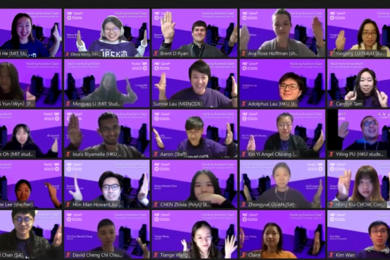
Activating technology for urban life with a virtual site visit to Hong Kong in collaboration with the Department of Urban Studies and Planning.
![Golden-toned photo of a young woman holding an armload of folders and "MIT SOLV[ED]" superimposed](/sites/default/files/styles/term_page__news_article/public/images/202105/Solv%5BED%5D.png?itok=SpHFKE8S)
MIT Solve program will equip people under 24 with resources to practice problem-solving, prioritizing experiential learning, accessibility, and community-building.

A machine learning model developed jointly by Janssen and MIT data scientists played a key role in the clinical trial process for the Johnson & Johnson Covid-19 vaccine.

The Institute commits to net-zero emissions by 2026, charts course marshaling all of MIT’s capabilities toward decarbonization.
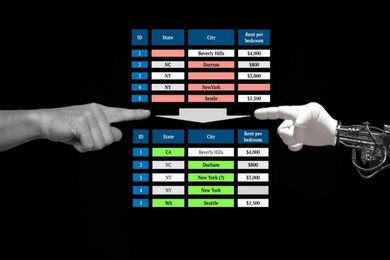
With just 50 lines of code, the program spots and fixes likely errors.
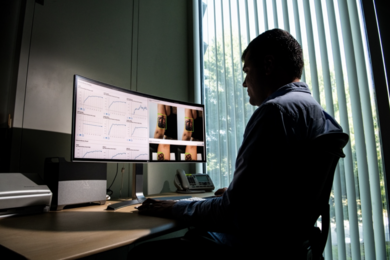
Lincoln Laboratory connects counter–human trafficking community in pursuit of technology to help investigate cases.

On May 6 and 7, researchers from the AI Policy Forum will present their preliminary AI public policy proposals aimed at shaping specific and significant uses of AI in our lives.

“Programmable matter” technique could enable product designers to churn out prototypes with ease.

SMART research finds US road congestion increased by almost 1 percent while the duration of congestion rose by 4.5 percent.