
Discerning the texture of urban resilience
MIT Concrete Sustainability Hub researchers are investigating how the layouts, or textures, of cities influence extreme weather events.
MIT Concrete Sustainability Hub researchers are investigating how the layouts, or textures, of cities influence extreme weather events.

MIT researchers describe factors governing how oceans and atmospheres move heat around on Earth and other planetary bodies.
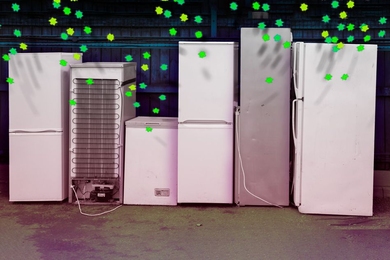
Recovering and safely destroying the sources of these chemicals could speed ozone recovery and reduce climate change.
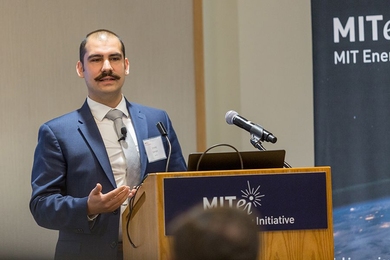
With support from renewable energy sources, the MIT research scientist says, we can consider hydrogen fuel as a tool for decarbonization.
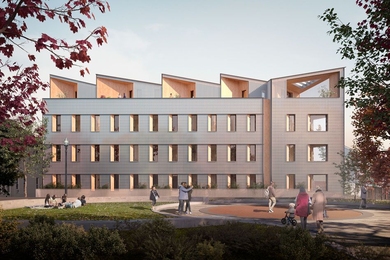
A five-story mixed-use structure in Roxbury represents a new kind of net-zero-energy building, made from wood.
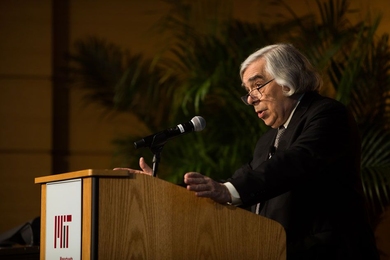
Speakers at MIT climate symposium outline the steps needed to achieve global carbon neutrality by midcentury.
Investments in energy efficiency projects, sustainable design elements essential as campus transforms.
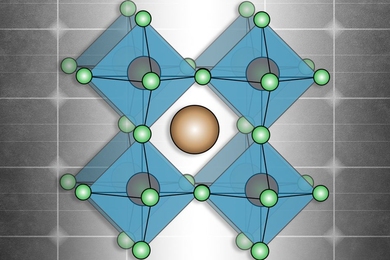
Starting with higher-value niche markets and then expanding could help perovskite-based solar panels become competitive with silicon.
Device developed within the Department of Civil and Environmental Engineering has the potential to replace damaged organs with lab-grown ones.
Fikile Brushett and his team are designing electrochemical technology to secure the planet’s energy future.
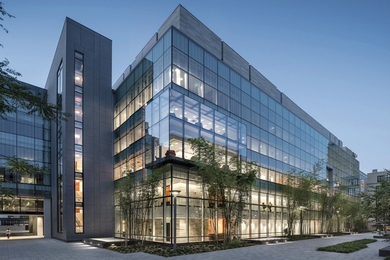
“Go Beyond” Award celebrates commitment to excellence in efficiency and sustainability.
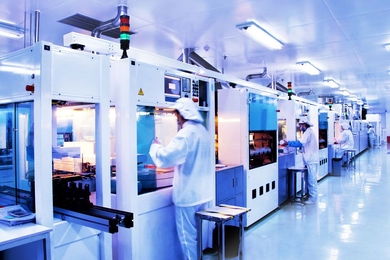
Solar panel costs have dropped lately, but slimming down silicon wafers could lead to even lower costs and faster industry expansion.
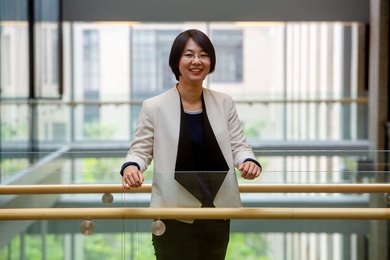
Assistant Professor Sili Deng is on a quest to understand the chemistry involved in combustion and develop strategies to make it cleaner.
![Julie Newman, director of sustainability at MIT, says the final project for course 2.S999 “uses the campus as a test bed for engaging and exposing students to the complexity of solving [for] global issues in their own backyard.”](/sites/default/files/styles/term_page__news_article/public/images/202001/mit-campus-reuter-A1.png?itok=pnIFMHvM)
Students in class 2.S999 (Solving for Carbon Neutrality at MIT) are charged with developing plans to make MIT’s campus carbon neutral by 2060.
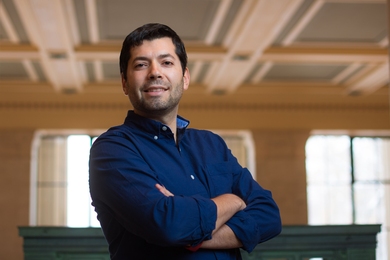
Wielding complex algorithms, nuclear science and engineering doctoral candidate Nestor Sepulveda spins out scenarios for combating climate change.