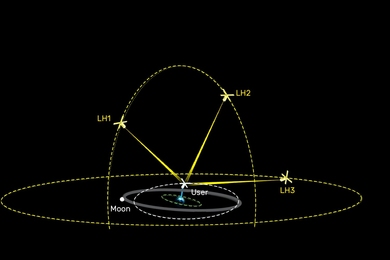
High-orbit satellites could light the way for travel to the moon
Acting as cooperative optical beacons, the satellites could provide GPS-like navigation and communications support for spacecraft operating across cislunar space.
Acting as cooperative optical beacons, the satellites could provide GPS-like navigation and communications support for spacecraft operating across cislunar space.

“Scientific American” showcases the history and future of America’s scientific engine, highlighting promising young scientists and icons at MIT and beyond.
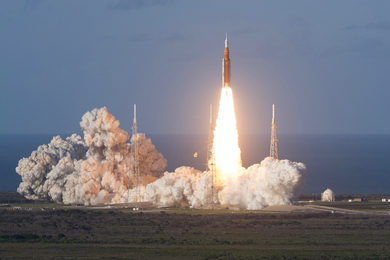
High-definition video and data sent from the lunar vicinity to Earth will demonstrate the first use of laser communications on a crewed mission.

On GBH’s new show The Curiosity Desk, MIT LIGO researchers revel in the beauties of fundamental discovery science and MIT astronomers talk planetary defense.
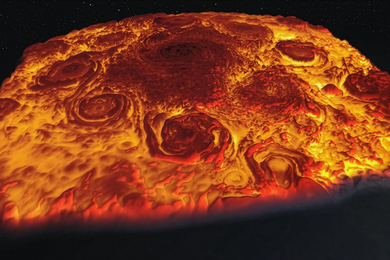
New research may explain the striking differences between the two planets’ polar vortex patterns.
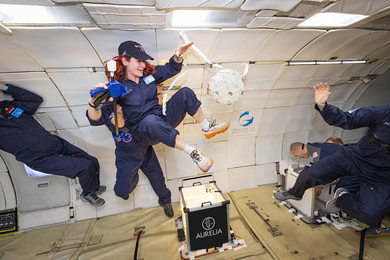
Aurelia Institute, founded by a team from MIT, serves as a research lab, an education and outreach center, and a policy hub for the space industry.
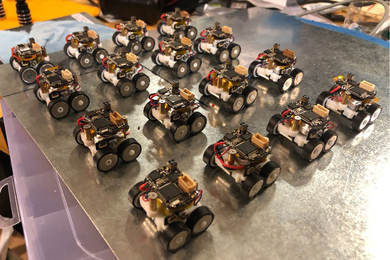
Data from the devices will help future astronauts navigate the moon’s south polar region and search for frozen water.
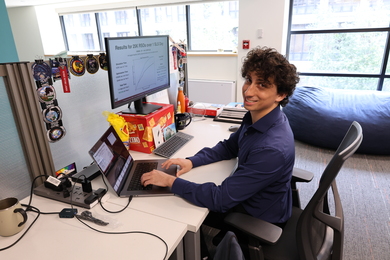
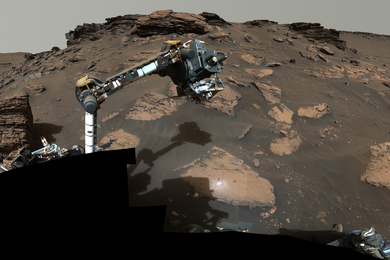
The presence of organic matter is inconclusive, but the rocks could be scientists’ best chance at finding remnants of ancient Martian life.
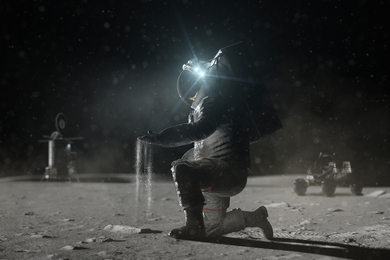
The barely-there lunar atmosphere is likely the product of meteorite impacts over billions of years, a new study finds.
Research sheds light on the properties of novel materials that could be used in electronics operating in extremely hot environments.
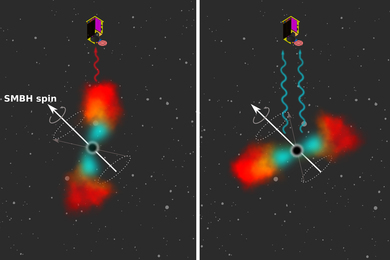
The results offer a new way to probe supermassive black holes and their evolution across the universe.
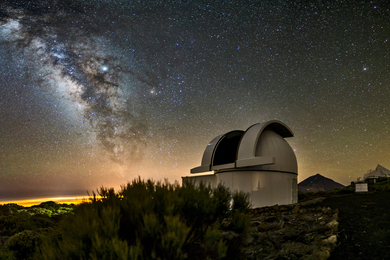
Circling a cold, Jupiter-sized star, the new world could offer an unobstructed view of its surface composition and history.
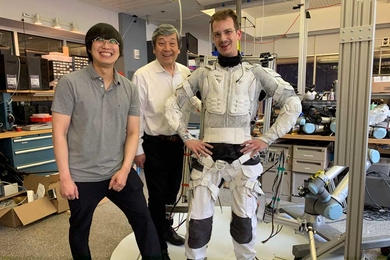
A new MIT system could help astronauts conserve energy and extend missions on the lunar surface.
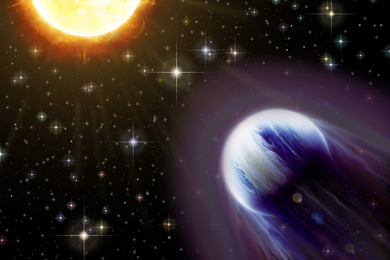
The new world is the second-lightest planet discovered to date.