Magnetic fields make the excitons go ’round
Theorists find a new way to improve efficiency of solar cells by overcoming exciton “traps.”
Theorists find a new way to improve efficiency of solar cells by overcoming exciton “traps.”

Off-grid Indian communities with salty groundwater could get potable water through a proposed solar technique.

Silvija Gradečak customizes nanoscale systems for large-scale impact in light and energy.

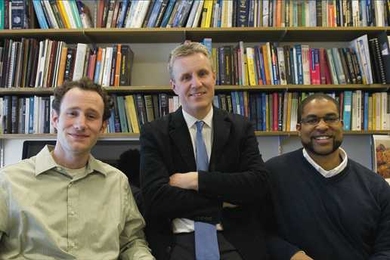
Low-cost, high-capacity, rechargeable battery could one day enable widespread adoption of intermittent energy sources such as solar and wind.
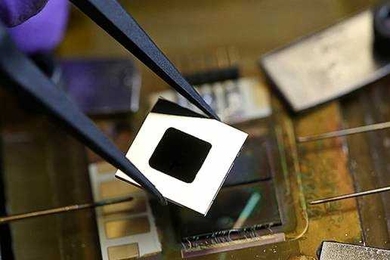
Centers selected from more than 200 proposals from across the country.
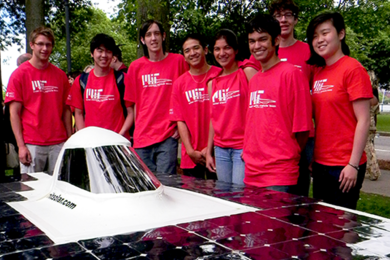
MIT team members preparing "Valkyrie" for Austin to St. Paul run in July.
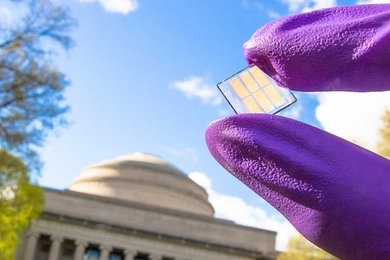
Quantum-dot photovoltaics set new record for efficiency in such devices, could unlock new uses.

Alexander Slocum tackles “impossible” engineering problems to help meet growing world energy demand.
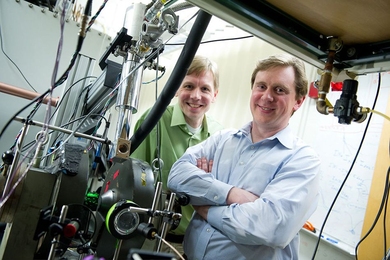
New MIT model can guide design of solar cells that produce less waste heat, more useful current.
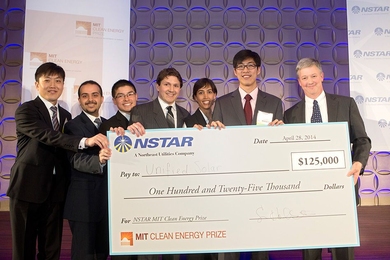
Unified Solar takes home $225,000 for a circuit that augments the output of partially shaded solar cells.
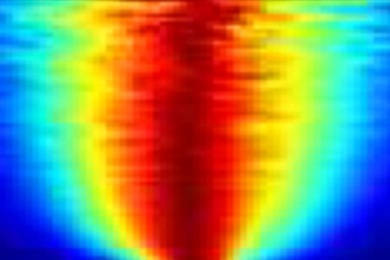
Technique developed at MIT reveals the motion of energy-carrying quasiparticles in solid material.
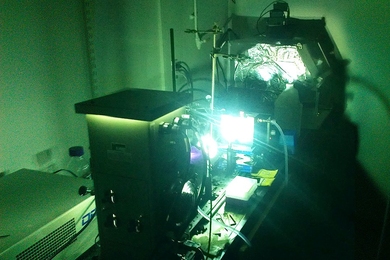
Switchable material could harness the power of the sun — even when it’s not shining.
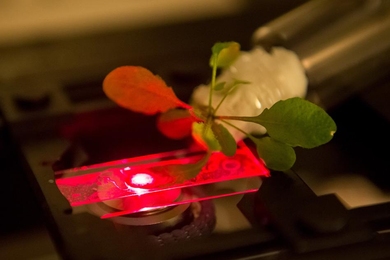
Nanotechnology could turn shrubbery into supercharged energy producers or sensors for explosives.