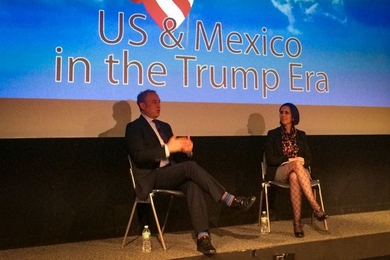
The U.S. and Mexico: What’s the way forward?
MIT event offers look at how U.S.-Mexico relations could revive.
MIT event offers look at how U.S.-Mexico relations could revive.
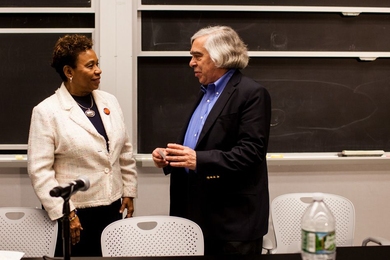
In conference on nuclear threat, former Energy Secretary Moniz and Rep. Lee call for diplomacy to defuse rising risks.

Security Studies Program expert on biological weapons discusses the April 4 attack on Syrian civilians that killed at least 80.
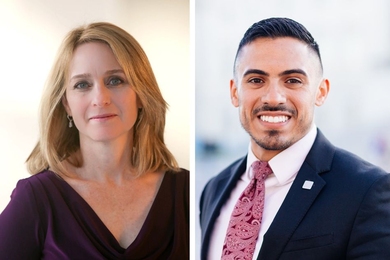
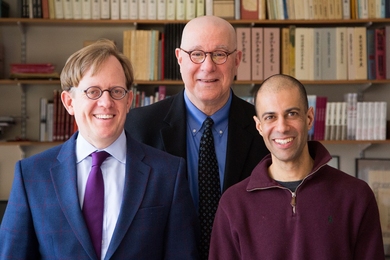
Influential team counsels leaders, educates students, and informs policy.

Report warns of hacking risk to electric grid, oil pipelines, and other critical infrastructure.
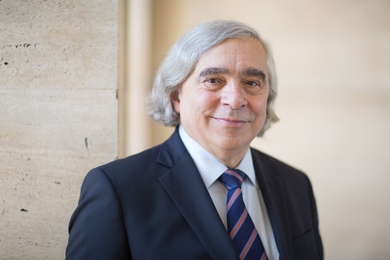
Physics professor and former U.S. Energy Secretary will lead nuclear security nonprofit while continuing his work at MIT.
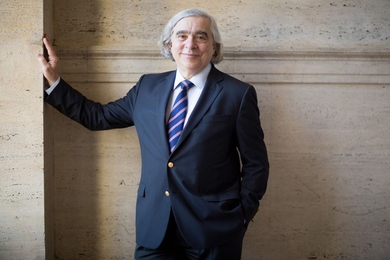
Fresh from nearly four years as U.S. Energy Secretary, Moniz returns to his roots at MIT.

Lincoln Laboratory’s imaging system can uncover what's under the trees.
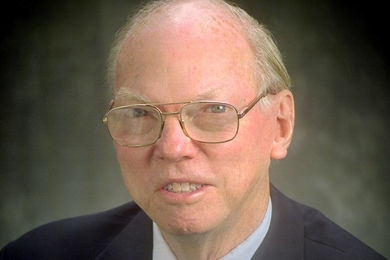
A leader in the development of advanced satellite communication systems, Morrow led Lincoln Laboratory for 21 years.
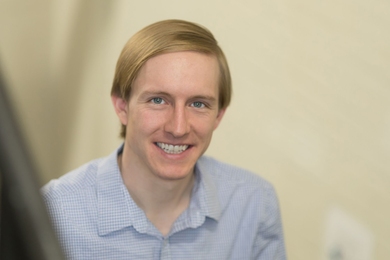
Nuclear Science and Engineering Stanton Fellow Brian Henderson brings his physics experience to bear on nuclear weapons disarmament policies.
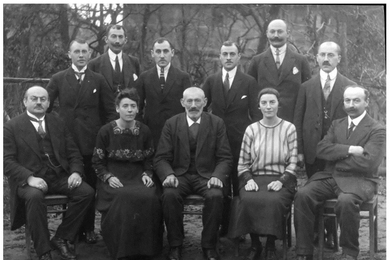
For graduate student Amanda Rothschild, political science meets personal history in her studies of how the United States responds to genocide.
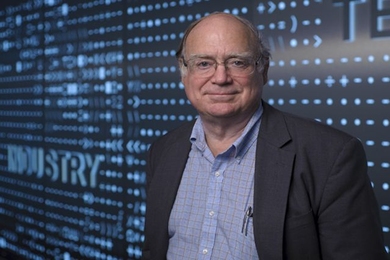
James Kirtley discusses the transition from gas to electric motors and the impact these motors have had on modern technologies.
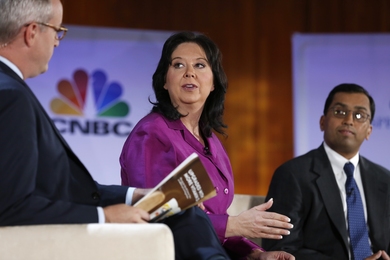
Hosted by CSAIL, event featured discussions on cybersecurity with tech leaders and officials from the NSA and FBI.