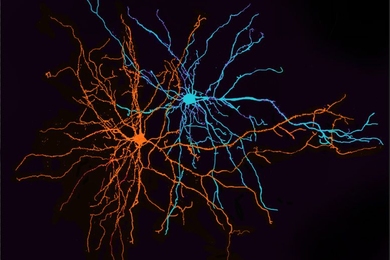
How the brain processes emotions
Neuroscientists identify circuits that could play a role in mental illnesses, including depression.
![“For China, it looks like industrial growth [has the greatest impact on water shortages] as people get wealthier,” Charles Fant says. “In India, population growth has a huge effect. It varies by region.”](/sites/default/files/styles/term_page__news_article/public/images/201603/MIT-WaterChina.jpg?itok=gsXDDhia)
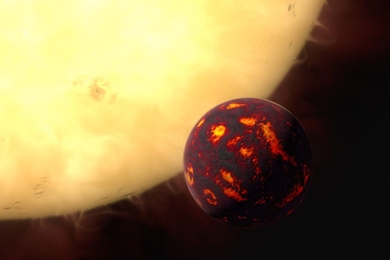
First temperature map of a “super-Earth” reveals lava world
Exoplanet lacks atmosphere, is covered in rivers of magma.



A highly eccentric exoplanet
Observations of an extreme-weather planet raise questions about hot Jupiters’ origins.

Learning more about the brain
Pawan Sinha explores the cognitive dynamics behind our visual understanding of the world around us.
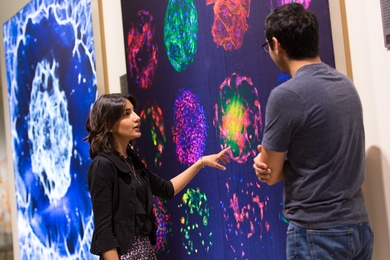
Scientific art lights up Main Street
Art and science converge in the public galleries at MIT's Koch Institute for Integrative Cancer Research.
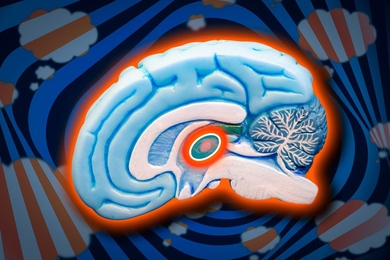
Study reveals a basis for attention deficits
New findings could help scientists develop treatments for ADHD and other disorders.
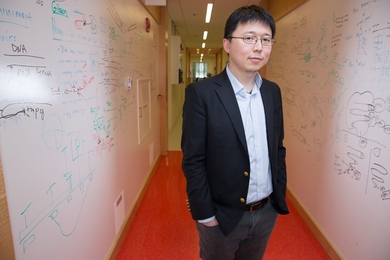
Toward a better understanding of the brain
Genome-editing pioneer Feng Zhang hopes his work will shed light on neurological disorders.
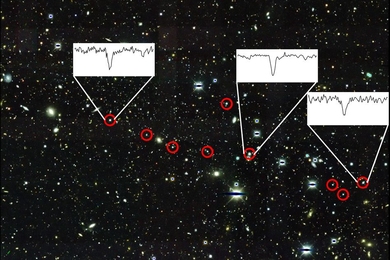
3 Questions: The origin of the cosmos’ heaviest elements
Unique galaxy offers clues to the extreme conditions that yield the heavies of the periodic table.
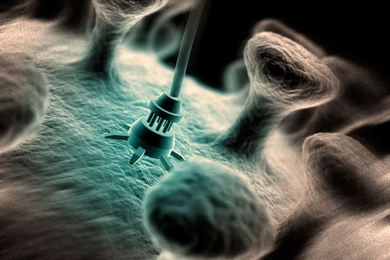
Physicists prove energy input predicts molecular behavior
Theoretical proof could lead to more reliable nanomachines.
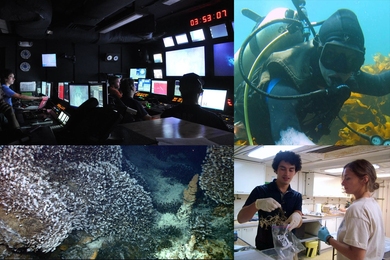
DNA markers tell the story of deep sea adaptation
Santiago Herrera studies the genome to establish new connections between species living in the deep sea.
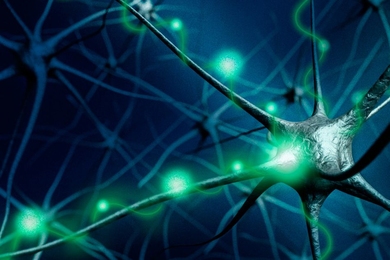
A new glimpse into working memory
Study finds bursts of neural activity as the brain holds information in mind, overturns a long-held model.