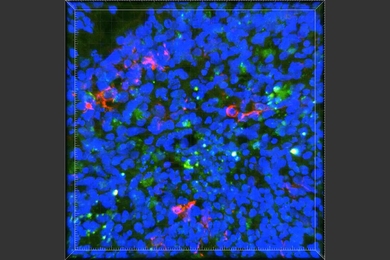
Neuroscientists discover roles of gene linked to Alzheimer’s
Study reveals why people with the APOE4 gene have higher risk of the disease.
Study reveals why people with the APOE4 gene have higher risk of the disease.
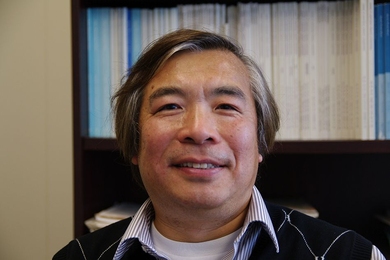
MIT senior research scientist is one of six U.S. scientists to join French President Emmanuel Macron's "Make Our Planet Great Again" program.
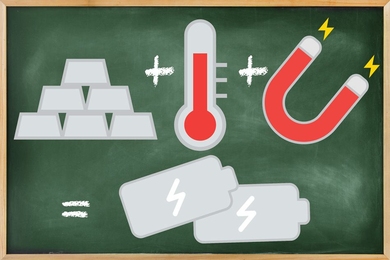
New materials, heated under high magnetic fields, could produce record levels of energy, model shows.
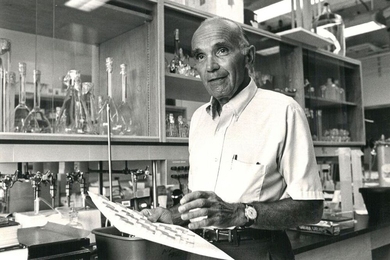
Longtime biology professor and expert in hemoglobin synthesis was committed to the integration of biomedical research, education, and medical practice.
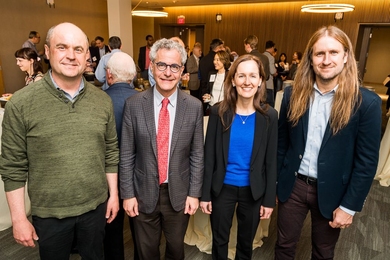
Department of Chemistry alumni and friends enjoyed an evening of food, drink, and talks by associate professors Elizabeth Nolan and Jeremiah Johnson.
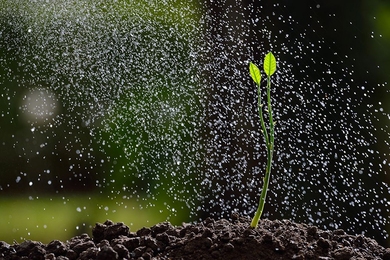
Eleven principal investigators from six MIT departments will receive grants totaling over $1.3 million, overhead free, for research on food and water challenges.
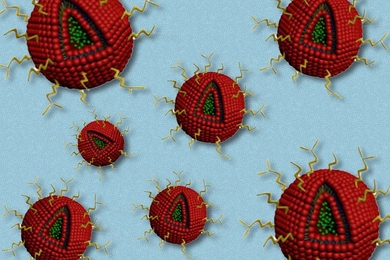
Nanoparticles carrying two drugs can cross the blood-brain barrier and shrink glioblastoma tumors.
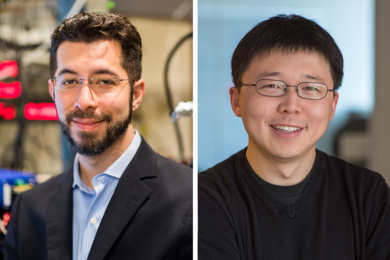
MIT faculty members are among 19 top scientists selected from across the nation.

Study tracks eye movement to determine how well people understand English as a foreign language.
New technology could lead to development of novel “xenoprotein” drugs against infectious diseases.
![“I’ve always been interested in technology and in the different ways in which you can make people’s lives better through [technological] tools,” Rodríguez says.](/sites/default/files/styles/term_page__news_article/public/images/201805/MIT-Student-Rodriguez.jpg?itok=eWApbX5x)
MIT senior and Model UN leader William Rodríguez works to encourage the global exchange of ideas.

Exoplanet-seeking satellite developed by MIT swings by moon toward final orbit.
Graduating students and alumni will conduct research abroad in 2018-19 academic year.
MIT researchers and industry form new consortium to aid the drug discovery process.
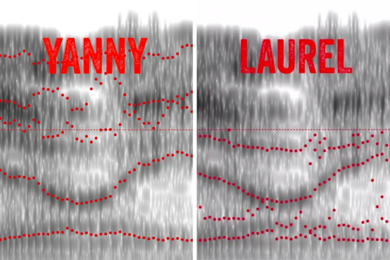
MIT grad students explain why some people hear "Yanny" and others hear "Laurel" in the audio clip that's taken the world by storm.