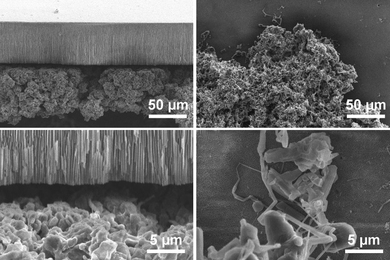
In batteries, a metal reveals its dual personality
Branchlike deposits grow on lithium electrode surfaces in two ways, one much more damaging.
Branchlike deposits grow on lithium electrode surfaces in two ways, one much more damaging.
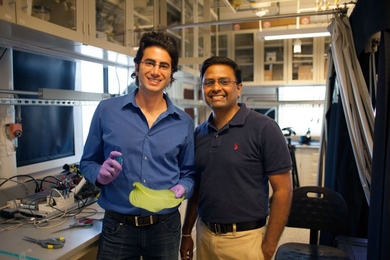
MIT researchers find a way to make pesticides stick to leaves instead of bouncing off.

Summer Scholar Jennifer Coulter works on computer simulations with associate professor of materials science Alfredo Alexander-Katz.

Big-data analysis could give city planners timelier, more accurate alternatives to commuter surveys.
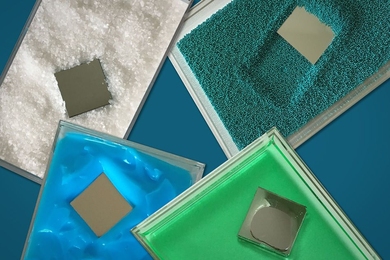
Simple equation predicts force needed to push objects through granular and pasty materials.

Exposed in step-like formation, layers of new photovoltaic cell harvest more of sun’s energy.

Study shows long-lasting health, economic impacts of lead emissions from U.S. general aviation flights.
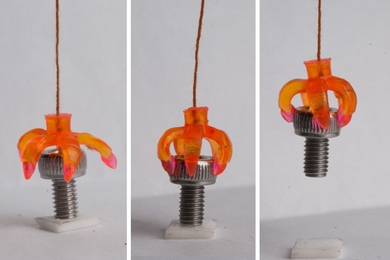
Heat-responsive materials may aid in controlled drug delivery and solar panel tracking.
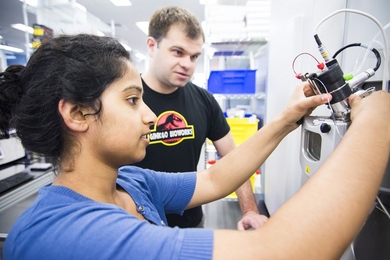
Startup’s engineered yeast helps clients produce fragrances and flavors more efficiently.

New technique offers precise manipulation of when and where genes are targeted.
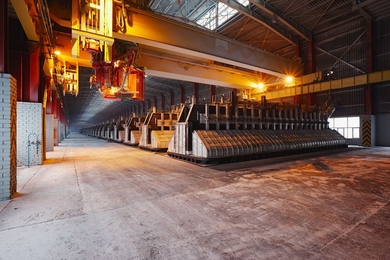
Using electricity rather than heat can reduce both energy costs and greenhouse gas emissions.

New design should enable much more flexible traffic management, without sacrificing speed.

Professor Philip Gschwend discusses the importance of comprehensive systems approaches to curing environmental ills.
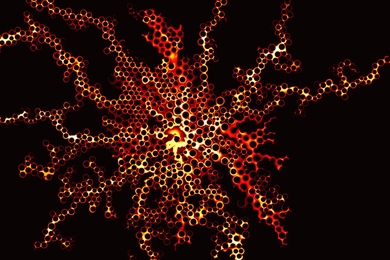
Key flow mechanisms, crucial to carbon sequestration and fuel-cell operation, have been visualized.
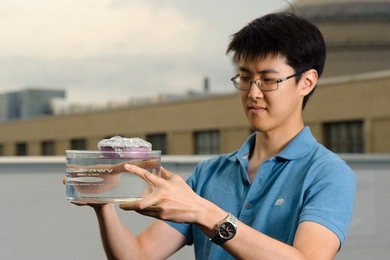
Bubble-wrapped structure requires no mirrors or lenses to focus the sun’s heat.