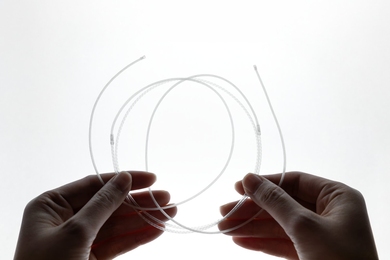
A new type of electrically driven artificial muscle fiber
Electrofluidic fibers mimic how natural muscle fibers bundle, and could enable compact, silent robotic and prosthetic systems.
Electrofluidic fibers mimic how natural muscle fibers bundle, and could enable compact, silent robotic and prosthetic systems.

Researchers use control theory to shed unnecessary complexity from AI models during training, cutting compute costs without sacrificing performance.
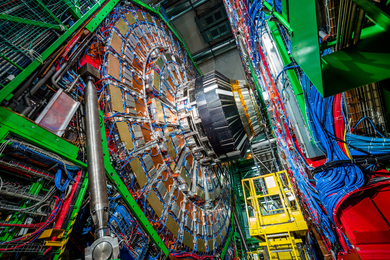
The team’s ultra-precise measurement confirms the Standard Model’s predictions.
This new technique will allow chemists to efficiently fine-tune the chemical structure of an organic molecule.

Researchers uncovered how cells selectively destroy certain microRNAs — key gene regulators — through a mechanism that requires two RNA signals working together.
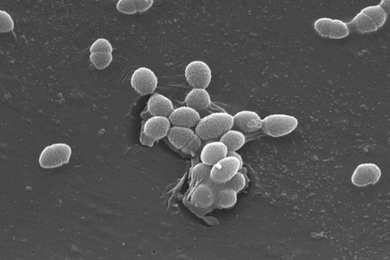
Study finds a common bacterium can suppress the body’s early warning system in wounds, causing infections to persist and create an environment that allows other bacteria to take hold.

Researchers developed a system that intelligently balances workloads to improve the efficiency of flash storage hardware in a data center.
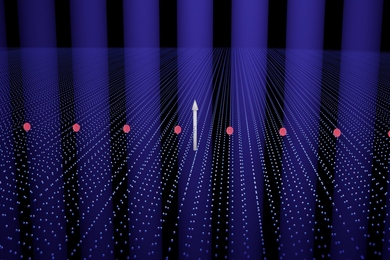
MIT physicists have discovered 3D “moiré crystals” that simulate four-dimensional quantum materials to a T.

A new study pieces together existing data sources in order to develop a detailed, dynamic picture of auto emissions.

MIT researchers developed a testing framework that pinpoints situations where AI decision-support systems are not treating people and communities fairly.
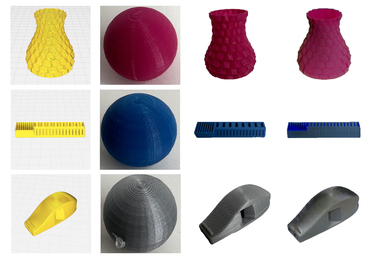
By quickly generating aesthetically accurate previews of fabricated objects, the VisiPrint system could make prototyping faster and less wasteful.

On GBH’s new show The Curiosity Desk, MIT LIGO researchers revel in the beauties of fundamental discovery science and MIT astronomers talk planetary defense.
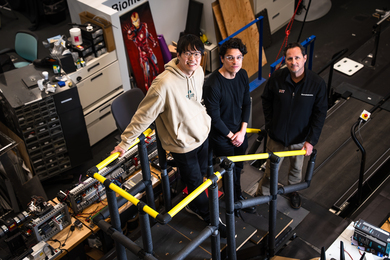
A new biohybrid system developed at MIT is the first living implant that uses rewired nerves to revive paralyzed organs.

With warmer ocean temperatures, the composition of marine plankton could shift from protein-rich to carb-heavy, a new study suggests.
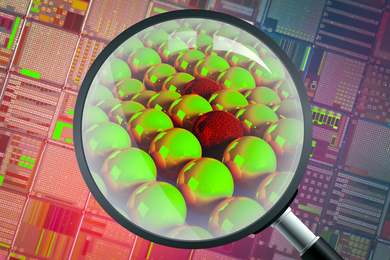
A new model measures defects that can be leveraged to improve materials’ mechanical strength, heat transfer, and energy-conversion efficiency.