
Life on an aquaplanet
MIT study finds an exoplanet, tilted on its side, could still be habitable if covered in ocean.
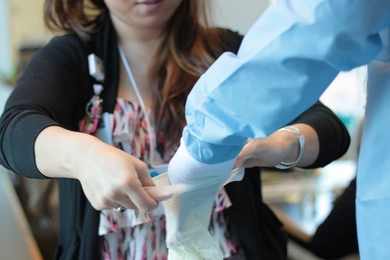
3Q: Hacking Ebola health care
More than 100 spend a weekend devising better personal protections, diagnostics, and medical records in the face of a deadly disease.
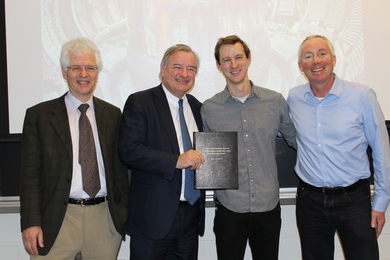
The future of fusion power
In inaugural Del Favero Doctoral Thesis Prize Lecture, Zach Hartwig PhD '14 explains why fusion research should be at the top of NSE's agenda.
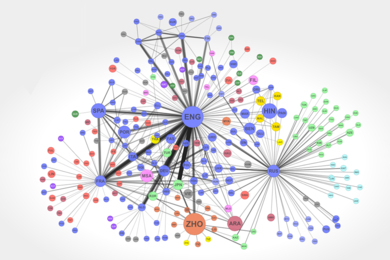
How information moves between cultures
Networks that map strength of connections between languages predict global influence of their speakers.
New law for superconductors
Mathematical description of relationship between thickness, temperature, and resistivity could spur advances.
In a body that rebels, the search for a delicate balance
Rhodes Scholar Elliot Akama-Garren seeks to harness the power of the immune system to combat cancer.
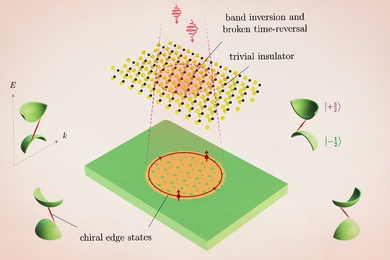
New findings could point the way to “valleytronics”
Researchers clear hurdles toward a new kind of 2-D microchip using different electron properties.

Lincoln Laboratory team takes honors at Audio/Visual Emotion Challenge and Workshop
The laboratory's technology for automatic assessment of depression severity earns a second consecutive first place in AVEC subchallenge.

What really killed the dinosaurs?
Before an asteroid wiped out the dinosaurs, Earth experienced a short burst of intense volcanism.
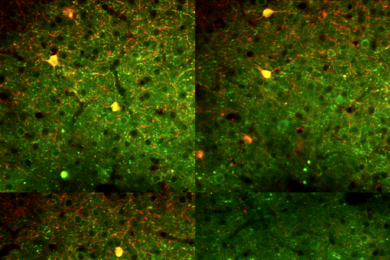
Picower neuroscientists reveal fundamental discovery about cortical neurons
Inhibitory neuron functionality is not an immutable property of cortical cells, but a consequence of more complex network dynamics.
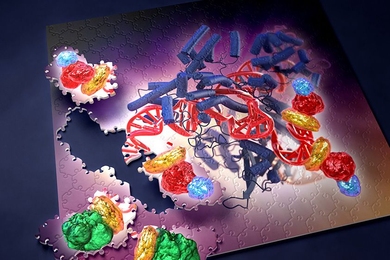
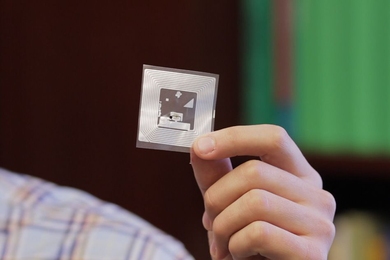
Detecting gases wirelessly and cheaply
New sensor can transmit information on hazardous chemicals or food spoilage to a smartphone.