
Scientists set traps for atoms with single-particle precision
Technique may enable large-scale atom arrays for quantum computing.
Technique may enable large-scale atom arrays for quantum computing.

Real Estate Innovation Lab to promote the future of urban development by showing investors how it can work.

“Morphing” wing could enable more efficient plane manufacturing and flight.

Industry speakers and MIT faculty offer solutions to problems ranging from small portable devices to large fixed installations.
Antimicrobial peptides can kill strains resistant to existing antibiotics.

Measuring DNA repair capability can reveal tumors’ sensitivity to drugs.

After sensing dangerous chemicals, the carbon-nanotube-enhanced plants send an alert.


New training technique would reveal the basis for machine-learning systems’ decisions.

Scientists reconstruct first hours after a giant impact created one of the largest craters on the moon.

MIT team awarded U.S. Department of Energy grant to investigate cost reductions in solar energy systems.

New model-fitting technique is efficient even for data sets with hundreds of variables.
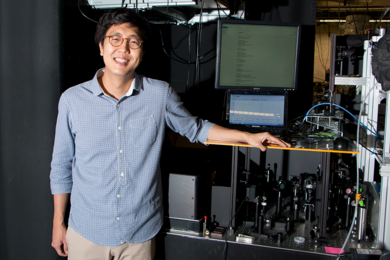
MIT researchers use an optical technique to probe magnetism at a hidden interface between two exotic thin films.

CSAIL team's “Gitless” fixes Git’s biggest issues — and suggests their approach could help improve systems like Gmail and Dropbox.