
Learning words from pictures
System correlates recorded speech with images, could lead to fully automated speech recognition.
System correlates recorded speech with images, could lead to fully automated speech recognition.
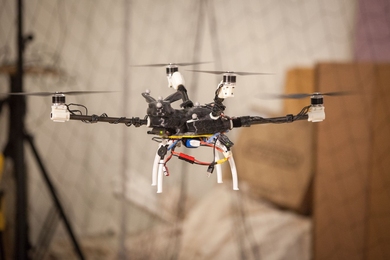
CSAIL system lets users design and fabricate drones with a wide range of shapes and structures.
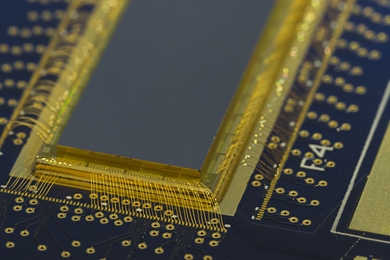
Infrared digital-pixel focal plane arrays are deemed a groundbreaking technology.
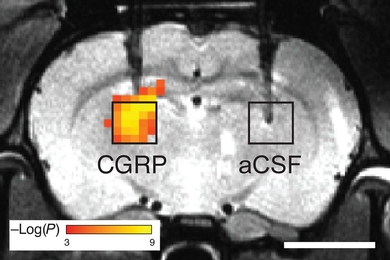
New probe induces blood flow changes that can be seen by MRI.

Machine-learning system doesn’t require costly hand-annotated data.
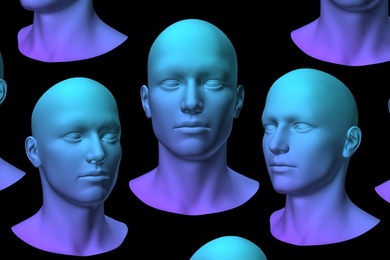
Machine-learning system spontaneously reproduces aspects of human neurology.
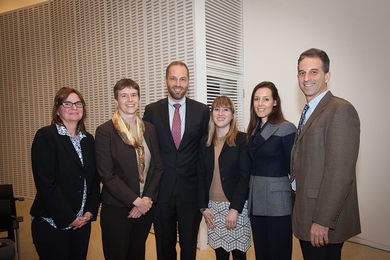
Four proposals from six MIT faculty members to receive Professor Amar G. Bose Research Grants.
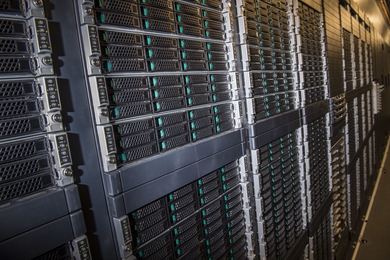
New Dell EMC petaflop-scale supercomputer has 6 times more processing power and 20 times more bandwidth than its predecessor.
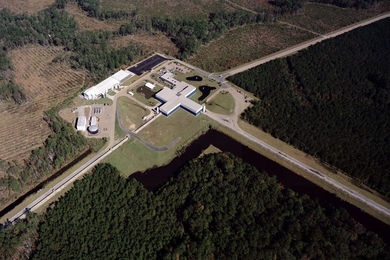
Upgrades make detectors more sensitive to gravitational waves.
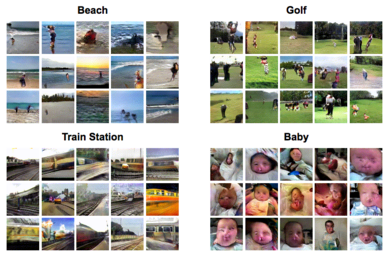
Given a still image, CSAIL deep-learning system generates videos that predict what will happen next in a scene.
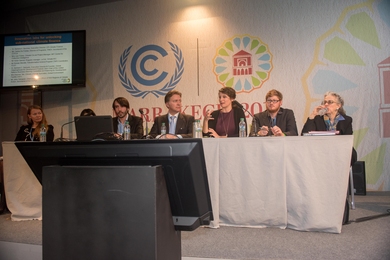
MIT Climate CoLab presents an innovative approach at the UN international climate talks in Marrakech, Morocco.
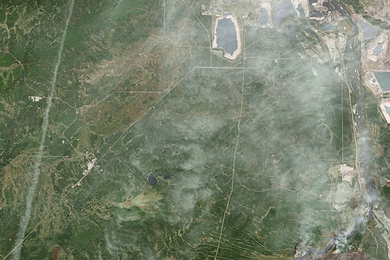
Study finds accounting for year-to-year variability enables more accurate projections of climate change and its impacts.

Funding available to MIT faculty and researchers for projects that could benefit Skoltech or the mission of the Skolkovo Foundation.
MIT researchers discover astonishing behavior of water confined in carbon nanotubes.
Exotic materials called photonic crystals reveal their internal characteristics with new method.