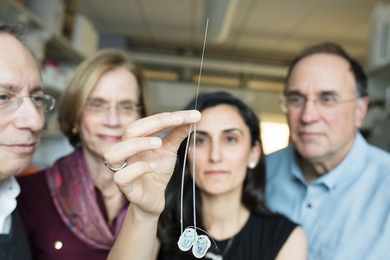
Ultrathin needle can deliver drugs directly to the brain
Miniaturized system could be used to treat neurological disorders that affect specific brain regions.
Miniaturized system could be used to treat neurological disorders that affect specific brain regions.
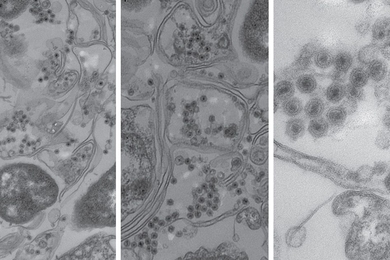
The unusual characteristics of these abundant, bacteria-killing viruses could lead to evolutionary insights.
Study explains why mutations that would seemingly affect all cells lead to face-specific birth defects.

Researchers map the amygdala's distinct but diverse and dynamic neighborhoods where feelings are assigned.
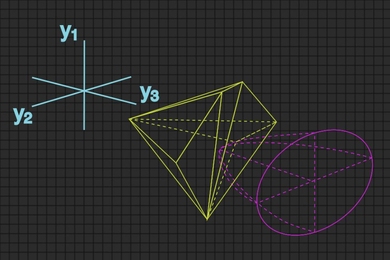
Theoretical study shows how to make wireless localization much more accurate.
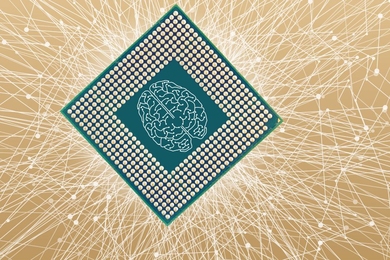
Design is major stepping stone toward portable artificial-intelligence devices.
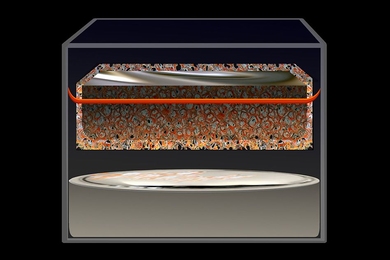
New metal-mesh membrane could solve longstanding problems and lead to inexpensive power storage.
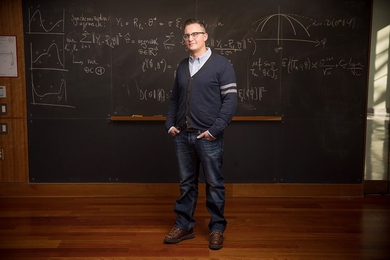
Math professor Philippe Rigollet, once a “not very disciplined” student, moves between computer science and statistics.

MIT Haystack Observatory researchers find that the moon's shadow created long-predicted ionospheric bow waves during the August eclipse.

Using electric fields to manipulate droplets on a surface could enable high-volume, low-cost biology experiments.

Study finds topological materials could boost the efficiency of thermoelectric devices.
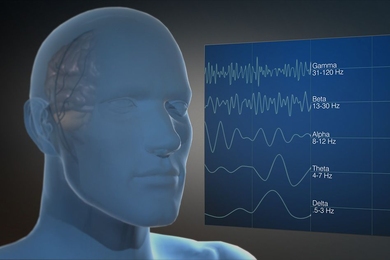
MIT neuroscientists suggest a model for how we gain volitional control of what we hold in our minds.
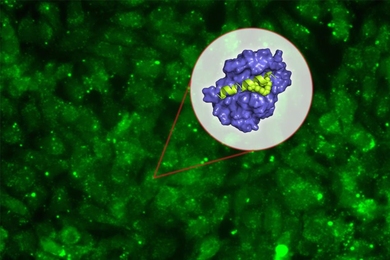
Drug that targets a key cancer protein could combat leukemia and other types of cancer.

The planetary system’s dense configuration gives clues to its formation
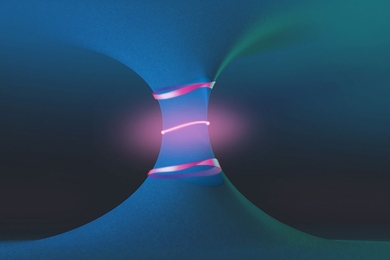
Researchers observe, for the first time, topological effects unique to an “open” system.