
Jing Li: Applying economics to energy technology
Soon-to-be assistant professor of applied economics focuses on development and deployment solutions that can help the world move to a low-carbon future.
Soon-to-be assistant professor of applied economics focuses on development and deployment solutions that can help the world move to a low-carbon future.

MIT students work to improve ski goggles to mitigate the hazards of “flat light.”
CSAIL system uses custom ink and ultraviolet light to repeatedly change an object's color.
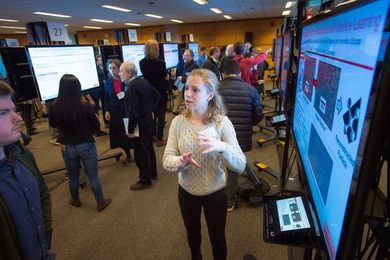
More than 130 MIT juniors and seniors dig deeply into research in the Advanced Undergraduate Research Program (SuperUROP).
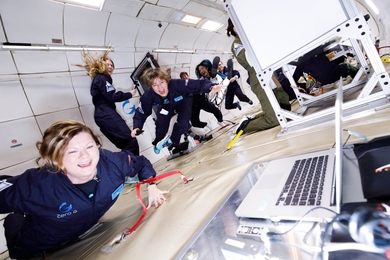
The Media Lab Space Exploration Initiative shares results and next steps from its first zero gravity research mission.
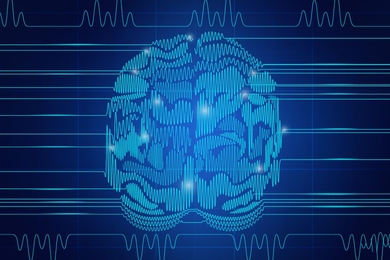
Brain rhythms act as a gate for information entering and leaving the mind.

Abdul Latif Jameel Poverty Action Lab initiative aims to help U.S. education leaders identify technology-based solutions to key challenges in education.
High-frequency gamma oscillations sort similar-looking objects; lower-frequency beta oscillations kick in when connections are more abstract.
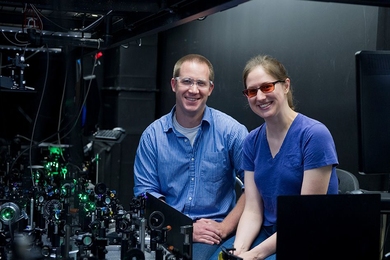
MIT researchers are optimizing nanostructures for energy devices such as solar cells.
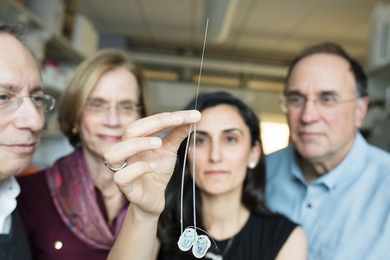
Miniaturized system could be used to treat neurological disorders that affect specific brain regions.

The unusual characteristics of these abundant, bacteria-killing viruses could lead to evolutionary insights.

Study explains why mutations that would seemingly affect all cells lead to face-specific birth defects.
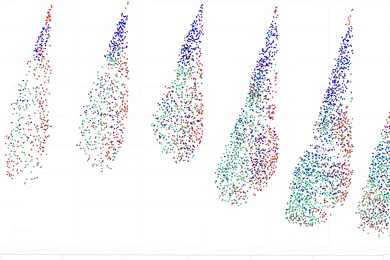
Researchers map the amygdala's distinct but diverse and dynamic neighborhoods where feelings are assigned.
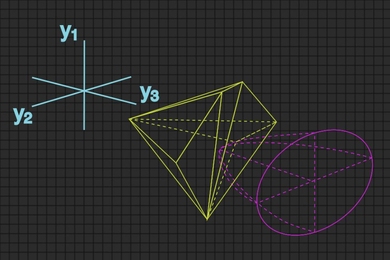
Theoretical study shows how to make wireless localization much more accurate.
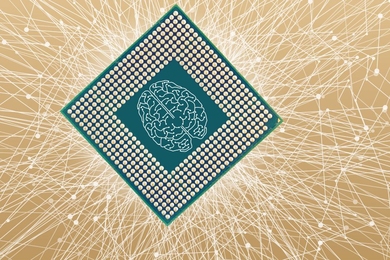
Design is major stepping stone toward portable artificial-intelligence devices.