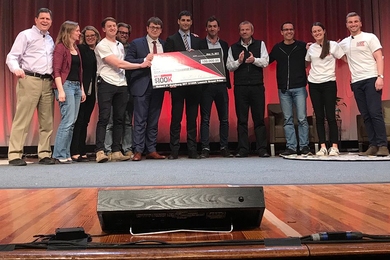
Solution for remotely monitoring oil wells wins MIT $100K
MIT startup Acoustic Wells earned the grand prize at the annual entrepreneurship competition.
MIT startup Acoustic Wells earned the grand prize at the annual entrepreneurship competition.

Surveys spanning recent decades also reveal geographic differences and gender gap in economic views.
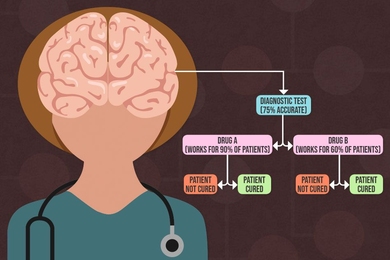
Neuroscientists identify a brain circuit that helps break decisions down into smaller pieces.
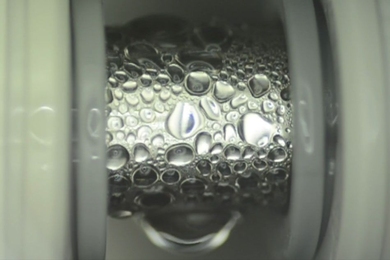
A slippery surface for liquids with very low surface tension promotes droplet formation, facilitating heat transfer.

New dual-cavity design emits more single photons that can carry quantum information at room temperature.

Study finds that competition between bacterial species can be upended when conditions deteriorate.
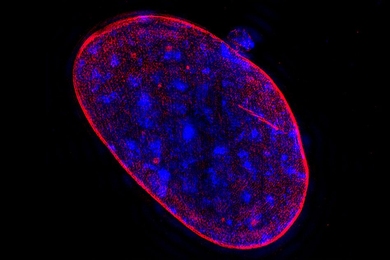
A study of prostate cancer finds “aneuploid” tumors are more likely to be lethal than tumors with normal chromosome numbers.
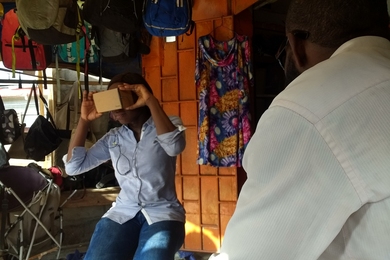
Using virtual reality, doctoral candidate Andrew Miller gauges citizens' faith in law enforcement in the face of gang violence.
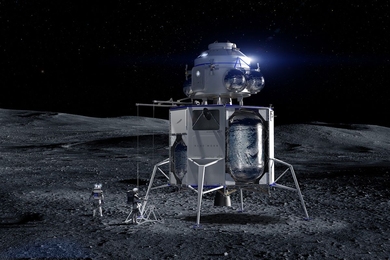
MIT community input will help determine the focus of the study to be carried aboard Blue Moon lander.
Third annual MIT Statistics and Data Science conference gathers a growing interdisciplinary community of researchers and practitioners.
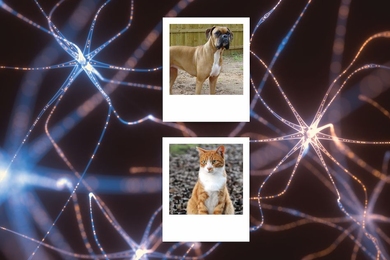
New method quickly detects instances when neural networks make mistakes they shouldn’t.

Collaboration between MIT architect and chemical engineer could be at the center of new sustainable infrastructure for buildings.

Machine learning reveals metabolic pathways disrupted by the drugs, offering new targets to combat resistance.
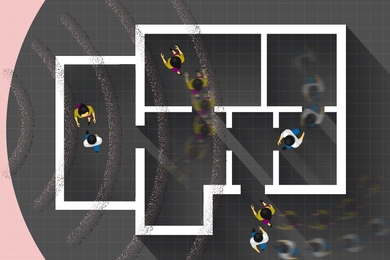
In some cases, radio frequency signals may be more useful for caregivers than cameras or other data-collection methods.
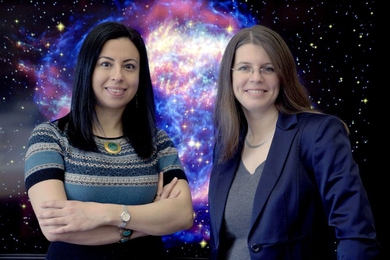
Instead of ballooning into spheres, as once thought, early supernovae ejected jets that may have seeded new stars.