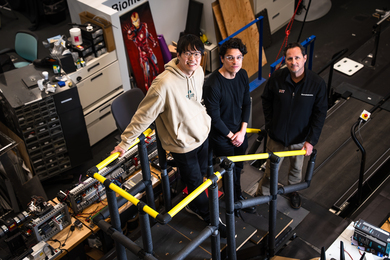
Turning muscles into motors gives static organs new life
A new biohybrid system developed at MIT is the first living implant that uses rewired nerves to revive paralyzed organs.
A new biohybrid system developed at MIT is the first living implant that uses rewired nerves to revive paralyzed organs.
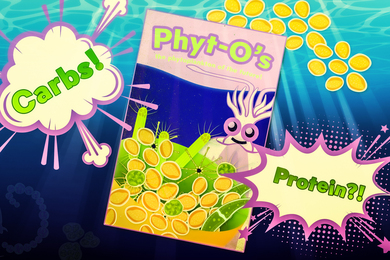
With warmer ocean temperatures, the composition of marine plankton could shift from protein-rich to carb-heavy, a new study suggests.
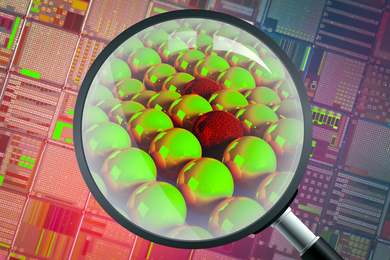
A new model measures defects that can be leveraged to improve materials’ mechanical strength, heat transfer, and energy-conversion efficiency.
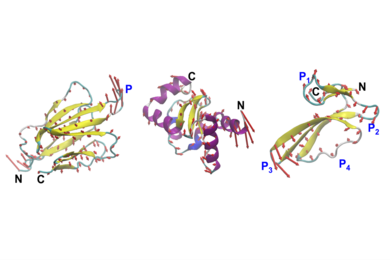
An AI model generates novel proteins based on how they vibrate and move, opening new possibilities for dynamic biomaterials and adaptive therapeutics.
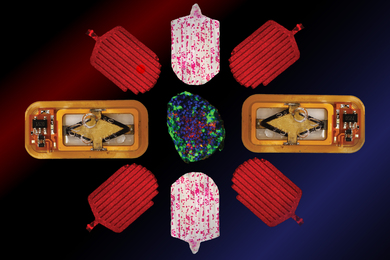
The cells can survive in the body for at least three months, producing enough insulin to control blood sugar levels, research shows.
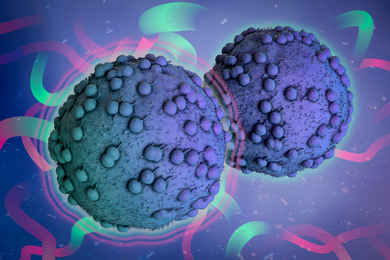
A backup survival pathway can help tumor cells resist certain lung cancer and other drugs. Combining therapies may offer a solution.
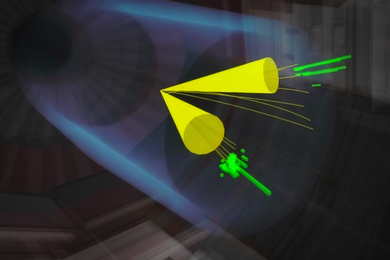
Physicists discovered new properties of the strong force by analyzing what happens when light-speed particles skim by each other.
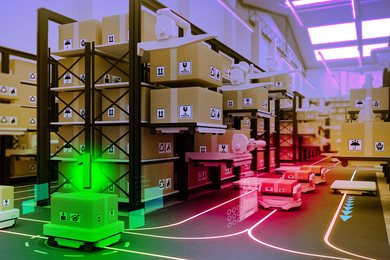
This new approach adapts to decide which robots should get the right of way at every moment, avoiding congestion and increasing throughput.
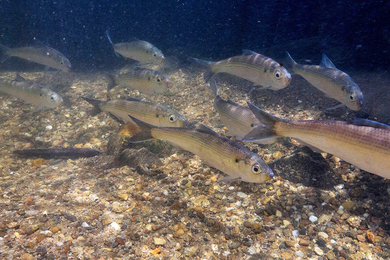
MIT Sea Grant works with the Woodwell Climate Research Center and other collaborators to demonstrate a deep learning-based system for fish monitoring.
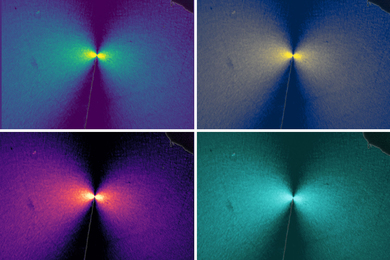
New insights into metallic cracks that harm battery performance could advance the longstanding quest to develop energy-dense solid-state batteries.
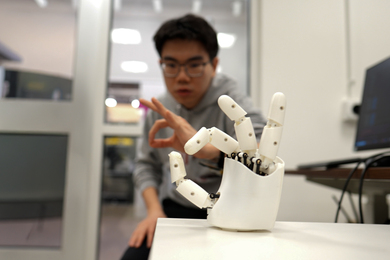
By moving their hands and fingers, users can direct a robot to play piano or shoot a basketball, or they can manipulate objects in a virtual environment.
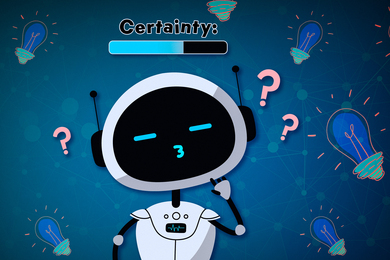
An MIT-led team is designing artificial intelligence systems for medical diagnosis that are more collaborative and forthcoming about uncertainty.
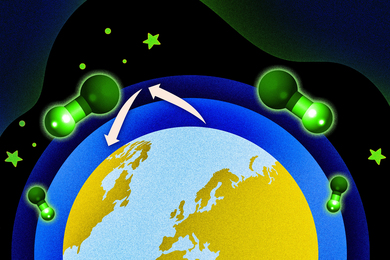
A new model shows how levels of the “atmosphere’s detergent” may rise and fall in response to climate change.

Observations suggest a major melting event at the Ross Ice Shelf was connected to atmospheric turbulence.
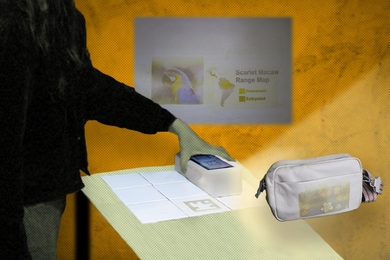
The portable “ChromoLCD” device combines LCD and LED lighting to customize high-quality designs onto things like shirts and whiteboards.