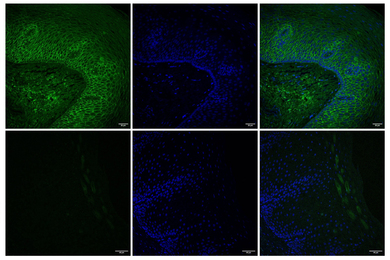
MIT engineers find a way to deliver drugs directly to the esophagus
Their new gel-like drug formulation can coat the esophageal lining and release drugs that could help treat inflammatory conditions affecting the esophagus.
Their new gel-like drug formulation can coat the esophageal lining and release drugs that could help treat inflammatory conditions affecting the esophagus.

MIT researchers provide a major upgrade to the nearly century-old idea of random utility models.
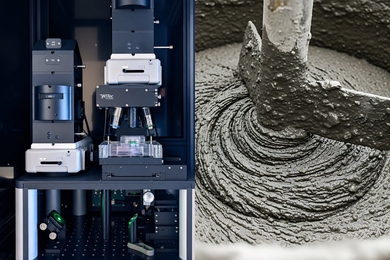
New research reveals the chemical sequence triggered by CO₂ injection in cement paste, capturing a fleeting intermediate reaction for the first time using real-time Raman spectroscopy.

A new study shows people expect reciprocal generosity only in interactions with friends or others of equal social status.
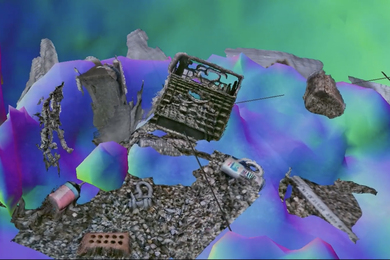
The “Sonar-MASt3R” combines sonar and visual data to create real-time 3D maps, even in cloudy water.
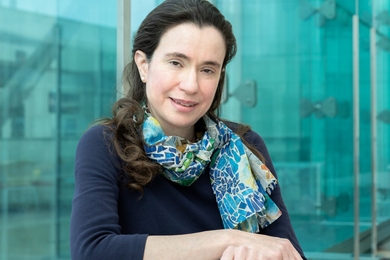
Heiman, who studies neurodegenerative diseases such as Huntington’s and Parkinson’s, will lead the institute beginning July 1.

A new kernel called Fractal gives researchers a cleaner view of what’s happening inside a processor, and has already surfaced previously unknown behavior in Apple’s M1.
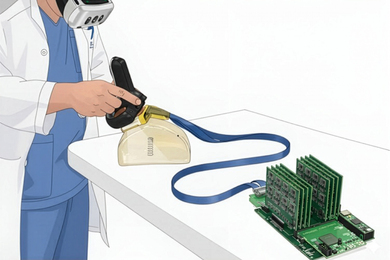
MIT researchers have designed an ultrasound system that creates a real-time 3D representation of the object being imaged.

A Media Lab study shows that, much like how GPS has weakened our navigation skills, AI can make us worse at detecting fake news.
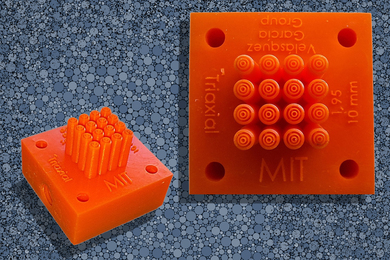
The cost-effective devices, which can be built in hours, leverage electrospray emitter technology to efficiently produce three-layered particles at scale.
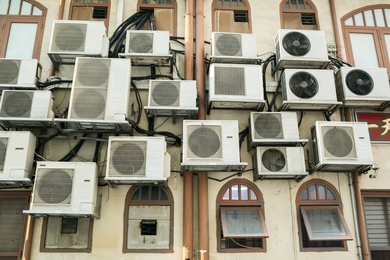
Low-cost personal cooling and emissions-free air conditioning among ideas studied with MIT’s Climate Project seed funding.

When the universe was just 850 million years old, this voracious black hole was already surprisingly mature, a new study finds.

By using a thin layer of diamond to manage excessive heat, researchers can boost the speed and energy-efficiency of next-generation wireless devices.

Using technology invented at MIT, Cartesian’s system for locating objects could also find uses in manufacturing, logistics, and robotics.
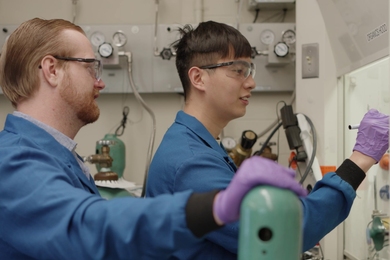
MIT researchers present a promising new approach to efficient, flexible carbon capture and removal.