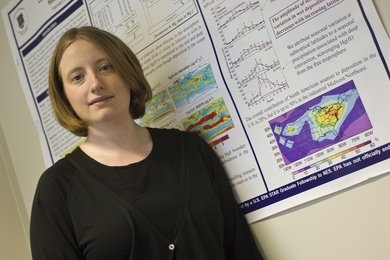
Noelle Selin named director of the MIT Technology and Policy Program
Selin will spearhead the master's program for students whose research addresses societal challenges at the intersection of technology and policy.
Selin will spearhead the master's program for students whose research addresses societal challenges at the intersection of technology and policy.
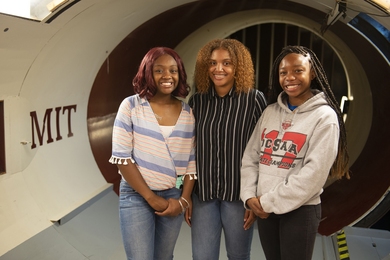
MIT student group welcomes an all-black, all-female team who had been targeted by racist and misogynistic members of an infamous online forum.

Doctoral student Parrish Bergquist investigates how politics affects environmental decision-making.
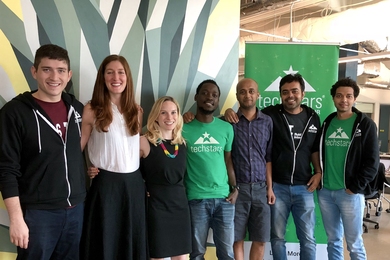
Base Operations, MDaaS Global, and Graviky Labs will head to Texas to be part of the first class at the new elite accelerator.
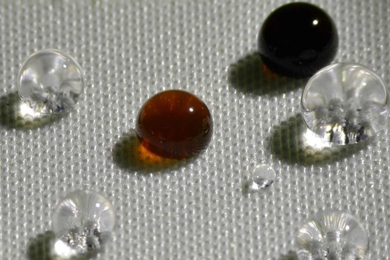
MIT-developed process could offer nontoxic alternative to environmentally harmful chemicals.
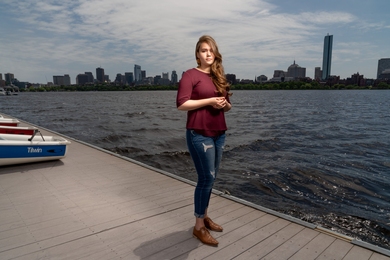
Graduate student Elena Sobrino looks beyond the headlines to study interactions between the city’s people and institutions.
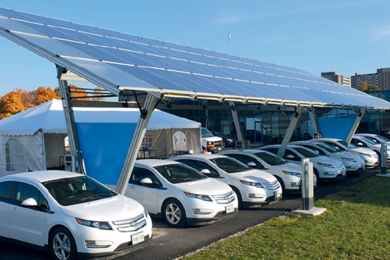
Toronto's Center for Social Innovation seeks solutions with a contest on MIT's Climate CoLab platform, providing up to $432,000 to fund pilot projects.
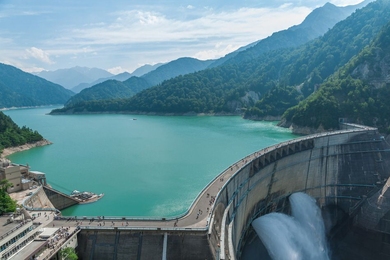
Following the Paris accord could reduce risk of severe water-access problems, researchers find.
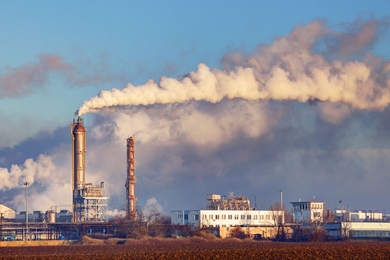
Study finds reduction in sulfur emissions from power plants.
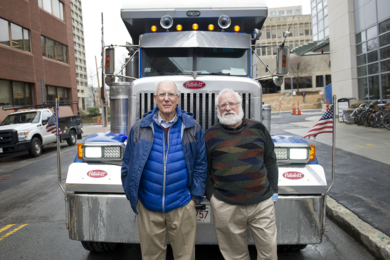
Gasoline-alcohol engines for heavy-duty trucks could produce a meaningful improvement in global air quality.
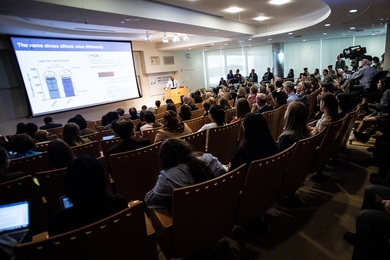
Taking time to understand underlying causes of stress can help children escape debilitating health effects, symposium speakers argue.
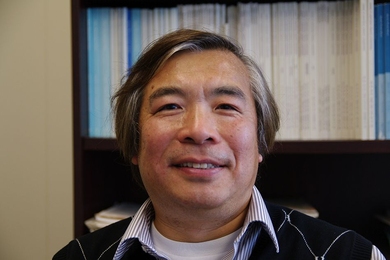
MIT senior research scientist is one of six U.S. scientists to join French President Emmanuel Macron's "Make Our Planet Great Again" program.
Eleven principal investigators from six MIT departments will receive grants totaling over $1.3 million, overhead free, for research on food and water challenges.
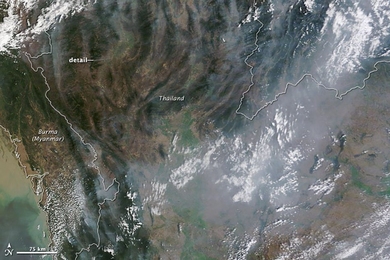
Study finds reducing biomass burning is not enough to significantly improve air quality in Southeast Asia.