
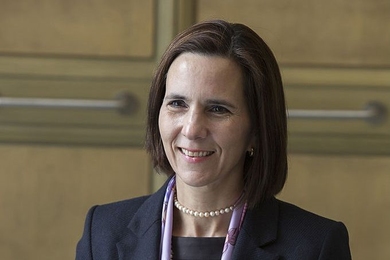
3 Questions: Lourdes Melgar on Mexico’s energy reform
MIT alumna, Robert Wilhelm Fellow, and former Mexican government official discusses opportunities and challenges of recent reforms.
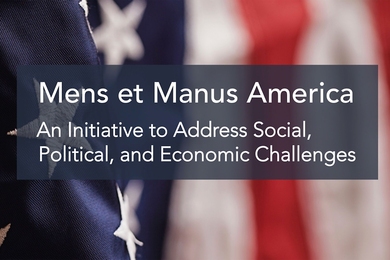
Mens et Manus America initiative launches with documentary event
Over 200 students and faculty attend kickoff as SHASS and Sloan begin an exploration of current U.S. social, political, economic challenges.
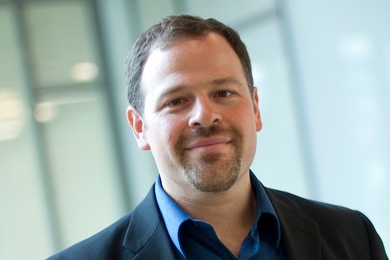

Strength in numbers
PhD student Dean Knox studies social networks and how individuals use them to access government goods and services.
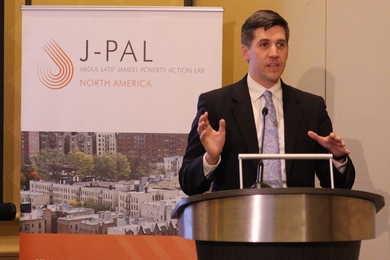
Government leaders gather at MIT to advance evidence-based policymaking
State and local policymakers joined with leading researchers to share experiences overcoming challenges to evaluating government programs.
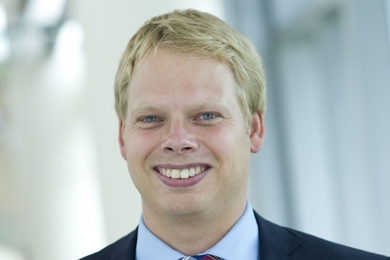
3 Questions with Richard Nielsen: How political science helps combat terrorism
Assistant Professor Richard Nielsen explores why some Muslim clerics adopt the ideology of militant jihad while most do not.
!["At a fundamental level, the conduct of elections affects the experience of voters and people’s trust in American democracy," writes the William and Flora Hewlett Foundation in a press release announcing their funding of the MIT Election Data and Science Lab. "It’s imperative that we, as a nation, get this right and we believe that this lab, under Professor [Charles] Stewart’s leadership, ca...](/sites/default/files/styles/term_page__news_article/public/images/201701/us-flag-circuits-mit-election-lab-00.jpeg?itok=UkLhbIal)
MIT Election Data and Science Lab launches
Founded by political scientist Charles Stewart III, the Election Lab focuses on non-partisan research, data, and analysis to improve elections.
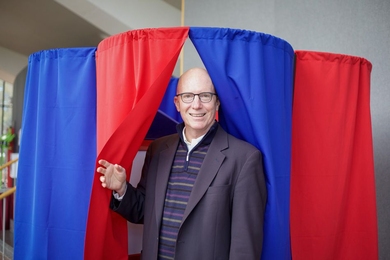
Evaluating voter experience
Wait times at polls in 2016 election improved in several key states, new survey results show.
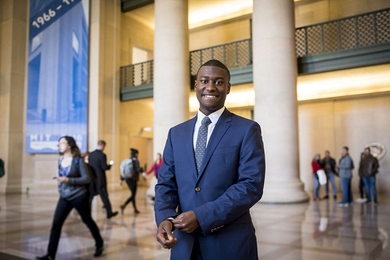
Nuclear engineering student advocates for change on campus and Capitol Hill
Senior Rasheed Auguste is fueled by passions for science, policy, and creating a more inclusive MIT.
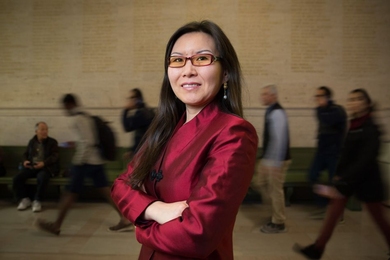

The courage to dissent
For graduate student Amanda Rothschild, political science meets personal history in her studies of how the United States responds to genocide.

State and local governments invited to apply for funding, support on pressing policy challenges
Selected governments will partner with MIT's J-PAL North America to test which programs work, which work best, and why.
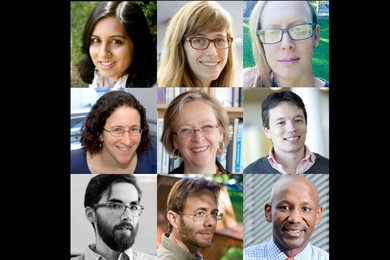
Nine SHASS faculty members awarded named professorships
Honored positions afford faculty additional support for research.