
How often do medical problems lead to bankruptcy?
Poor health is a less common cause of bankruptcy than commonly thought, but it brings other economic woes, study finds.
Poor health is a less common cause of bankruptcy than commonly thought, but it brings other economic woes, study finds.

Daniel Sperling of the University of California at Davis discusses the major transformations in store for mobility.

Government leaders, social service providers, and leading scholars gathered for the second conference of J-PAL North America’s State and Local Innovation Initiative.

Appointment recognizes Thompson's expertise in urban politics and coalition building.
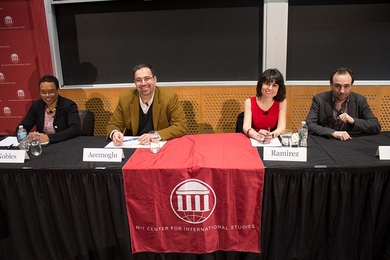

Institute-wide effort will study the evolution of jobs in an age of technological advancement.

Experts cite immigration as engine of U.S. success, lament human damage done by current policies, and see signs of hope.

Serious medical problems reduce earnings, hurt employment, and increase debt.

Founder Teppei Yamamoto designs new tools to comprehend political behavior transformed by digital technology.
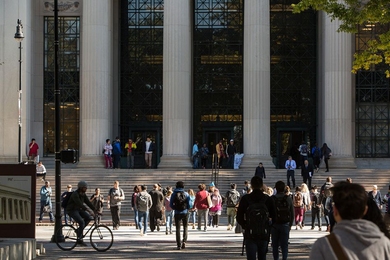
Many of the changes recommended by black students in 2015 have been implemented; departmental discussions are ongoing.

Christopher Knittel and Francis O'Sullivan, co-directors of the MITEI Low-Carbon Energy Center for Electric Power Systems Research, are exploring cleaner, more reliable, and more cost-effective solutions.

Panel at MIT explores benefits, costs, and political challenges.

Soon-to-be assistant professor of applied economics focuses on development and deployment solutions that can help the world move to a low-carbon future.

Abdul Latif Jameel Poverty Action Lab initiative aims to help U.S. education leaders identify technology-based solutions to key challenges in education.