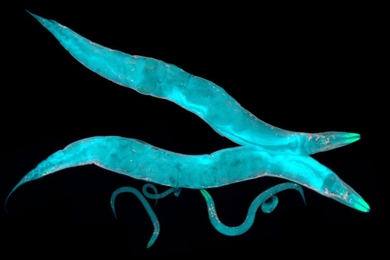
Gut-brain connection signals worms to alter behavior while eating
Study may lead to a better understanding of the digestive tract’s nervous system.
Study may lead to a better understanding of the digestive tract’s nervous system.

New open-source system provides fast, accurate neural decoding and real-time readouts of where rats think they are.
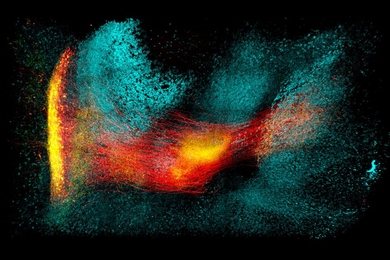
Technique for preserving tissue allows researchers to create maps of neural circuits with single-cell resolution.
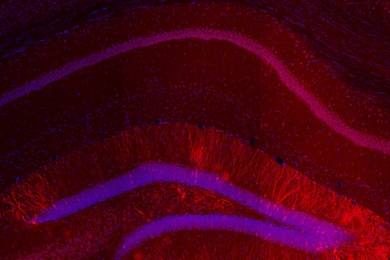
Picower Institute researchers discover the brain mechanism that helps details come flooding back when you visit a scene again.
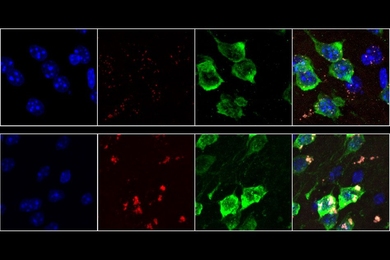
Snippets of RNA that accumulate in brain cells could interfere with normal function.

Neuroscientists discover a circuit that helps redirect attention to focus on potential threats.
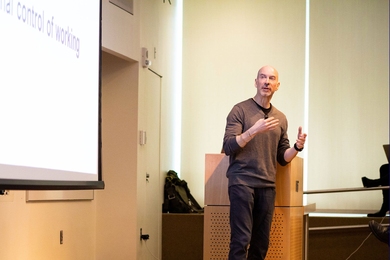
A new model shows how brain waves are key to both maintenance and control of information in the mind.
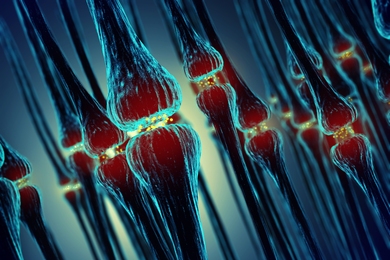
Picower Institute researchers find that a key protein linked to intellectual disability shapes electrical currents in neural connections.
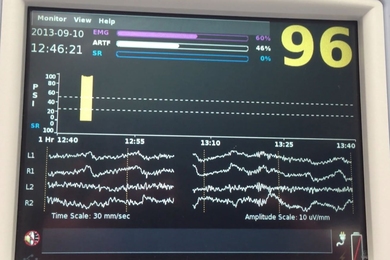
A principled approach can lead to less need for drugs, especially opioids, Emery Brown and colleagues say.

Three MIT postdocs earn competitive Howard Hughes Medical Institute fellowships that support diversity in the sciences.
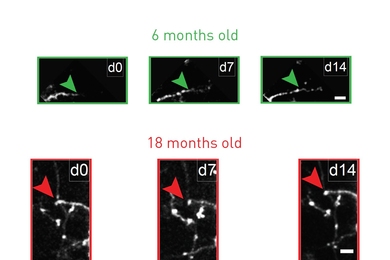
Neural plasticity and arbor growth decline with age, study in mice shows.
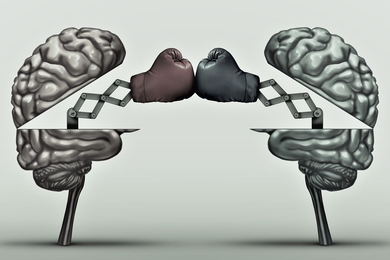
Scientists present dueling theories in the high-stakes quest to understand how we hold and juggle multiple pieces of information in mind.

Six brain regions participate in a more blended way than has been appreciated.
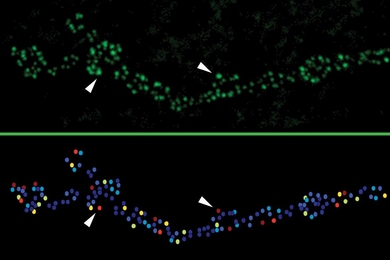
MIT study finds synapses develop strength with calcium, maturation.
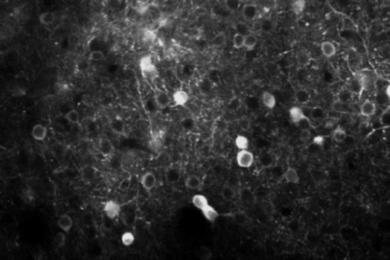
MIT neuroscientists find posterior parietal cortex region is crucial to connecting perception to action.