
Explained: Thermoelectricity
Turning temperature differences directly into electricity could be an efficient way of harnessing heat that is wasted in cars and power plants.
Turning temperature differences directly into electricity could be an efficient way of harnessing heat that is wasted in cars and power plants.

Latest research shows that efficiency improves when multiple devices are charged at once.

Made fundamental contributions in the field of laser science; applied physics to biomedical problems

A former national champion, he pioneered the use of physics principles in the analysis of dives.

Scientists celebrate as the Large Hadron Collider achieves its highest-energy collisions yet.
No-strings-attached awards last up to five years
MIT researchers show how circadian rhythms in bacteria control their rate of reproduction.
MIT team coaxes polymers to line up, transforming them into materials that could dissipate heat.
New discovery shows carbon nanotubes can produce powerful waves that could be harnessed for new energy systems.
MIT physicists explore the possibility of life in universes with laws different from our own.

Retrograde spin of supermassive black holes may create jets that control galaxy evolution
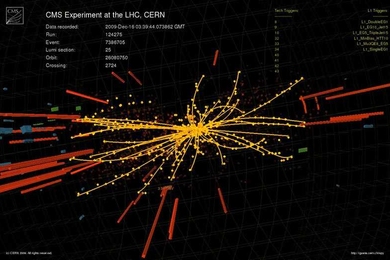
Initial results from high-energy proton collisions at the Large Hadron Collider offer first glimpse of physics at new energy frontier.
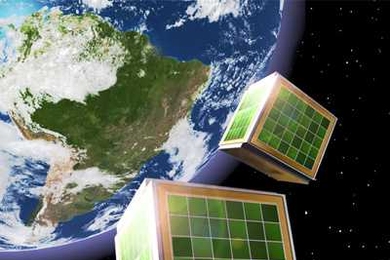
An electric propulsion technology for miniature satellites aims to give them more mobility — and may eventually allow them to take on deep-space missions.

Techniques developed by MIT center provide detailed images from the inside of hellishly hot core of advanced fusion experiments